


Oksana Kovalenko
Autrice, apprendimento delle lingue · Pubblicato 22 maggio 2026
Inglese per situazioni quotidiane: frasi pronte per ogni scenario
In vacanza a Londra, in trasferta a New York, in coda all’aeroporto di Dubai: l’inglese che serve davvero non è quello dei libri. È quello che chiedi al cameriere quando vuoi cambiare ordine, o al medico quando hai mal di gola.
Perché l’inglese situazionale conta davvero
Hai studiato grammatica per anni. Sai i tempi verbali. Eppure in farmacia non ti viene la parola per cerotti, e davanti al banco del check-in non sai come chiedere il posto al finestrino. È un fenomeno comune: il vocabolario “da situazione” sta in compartimenti separati, e va costruito mattoncino per mattoncino.
Questa guida copre nove scenari concreti. Per ognuno trovi le frasi pronte all’uso, divise per chi parla per primo (tu) e chi risponde (loro). L’obiettivo: arrivare alla situazione con un copione mentale già pronto.
Presentarsi

Lo scenario più universale e più temuto. Saper presentarsi bene apre conversazioni che altrimenti non avresti.
Le formule base
- Hi, I’m Marco.
- Nice to meet you.
- Pleased to meet you. (più formale)
- I’m Marco — and you?
Da dove vieni
- I’m from Italy.
- Originally from Rome, but I live in Milan now.
- I’m Italian, but I’ve been living in London for two years.
Cosa fai
- I work in marketing.
- I’m a software engineer.
- I’m studying / I’m a student.
- I run my own business.
Mantenere viva la conversazione
- How about you?
- What brings you here?
- How do you know [name of host]?
- Have you been in [city] long?
Lasciare il gruppo
- It was great talking to you.
- I’d better get going.
- Hope to see you around.
Scusarsi
L’inglese è una lingua piena di scuse: gli inglesi si scusano se ti urtano in metro, se ti chiedono di passare, se ti chiedono l’ora.
Per piccoli inconvenienti
- Sorry.
- Excuse me. (per richiamare attenzione)
- Pardon me.
- My apologies.
Per qualcosa di più importante
- I’m really sorry about that.
- I owe you an apology.
- I sincerely apologize for…
- Please forgive me.
Per essere in ritardo
- Sorry I’m late.
- Apologies for the delay.
- Traffic was terrible.
- The train was cancelled.
Quando rovesci qualcosa
- Oh no, I’m so sorry! Let me help clean it up.
- Sorry about that, can I get you another?
Rispondere alle scuse
- No worries.
- Don’t worry about it.
- It’s fine.
- No problem.
- That’s alright.
Chiedere indicazioni
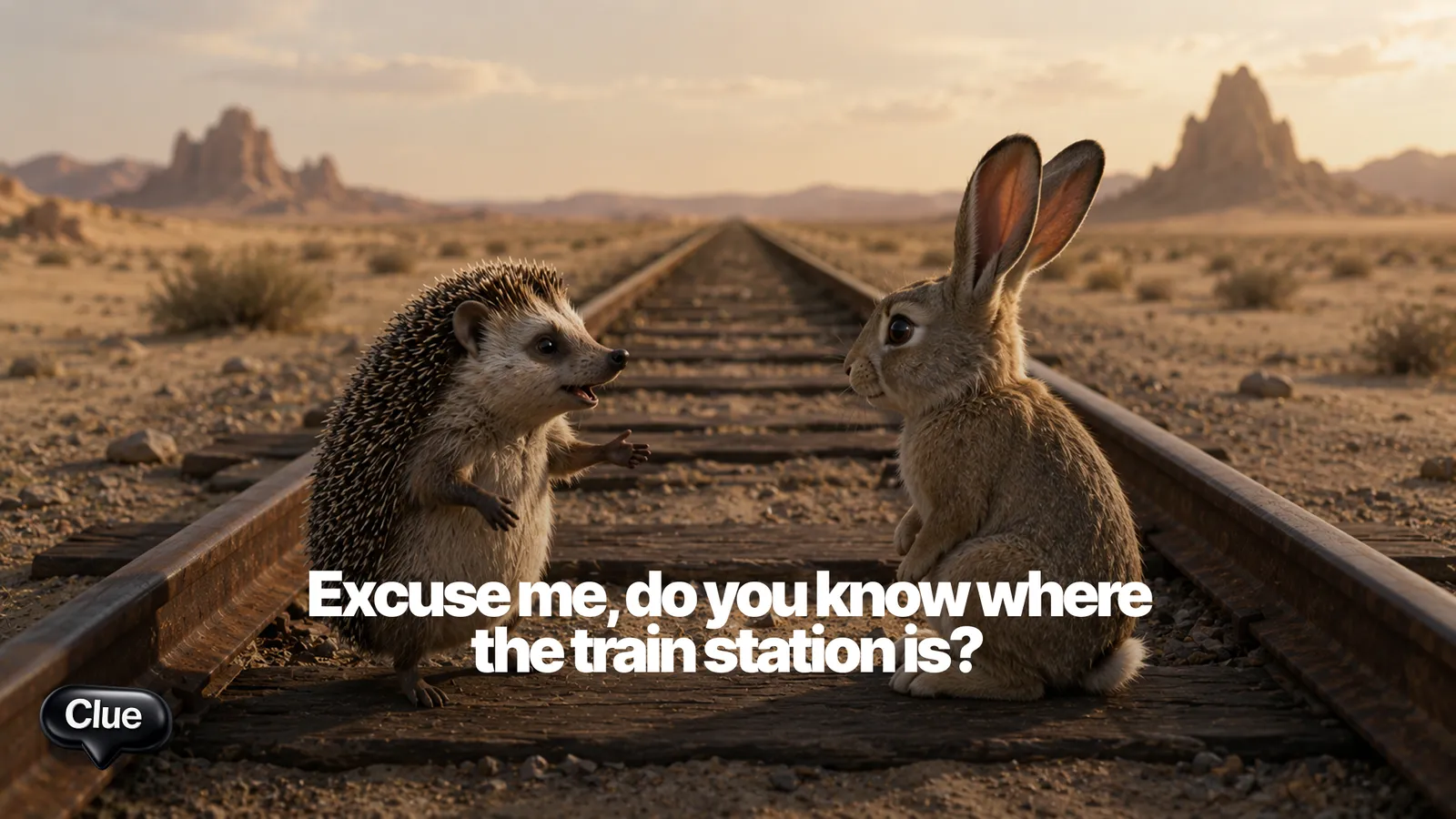
Sopravvivere senza GPS è un’arte antica.
Aprire la richiesta
- Excuse me, could you help me?
- Sorry to bother you, do you know where [posto] is?
- I’m a bit lost — is this the right way to [posto]?
Tipi di indicazioni
- Could you tell me how to get to the train station?
- Is there a pharmacy near here?
- How far is it from here?
- Can I walk there or should I take a taxi?
Capire le risposte
- Go straight on / straight ahead — vai dritto.
- Turn left / right — gira a sinistra/destra.
- At the next corner — al prossimo angolo.
- At the traffic lights — al semaforo.
- Cross the bridge — attraversa il ponte.
- It’s on your left / right — è sulla tua sinistra/destra.
- It’s opposite the bank — è di fronte alla banca.
- Next to the post office — accanto all’ufficio postale.
- Around the corner — dietro l’angolo.
Chiedere conferma
- Sorry, could you repeat that?
- So I go straight and then turn left?
- Is it walking distance?
Al ristorante
Mangiare fuori in inglese è un test di vocabolario non scontato. Ecco gli scenari principali.
Entrare e sedersi
- Hi, table for two, please.
- Do you have a table available?
- We have a reservation under [nome].
- Could we sit by the window?
Ordinare le bevande
- Could I see the drinks menu?
- I’ll have a sparkling water, please. — acqua frizzante.
- Still water — acqua naturale.
- Tap water — acqua del rubinetto (gratuita in molti paesi).
- A glass of red wine — un bicchiere di vino rosso.
- Could I get a beer on tap? — birra alla spina.
Ordinare il cibo
- I’ll have the [piatto].
- Could I get the steak medium-rare? (al sangue/al punto/ben cotto: rare / medium-rare / medium / medium-well / well-done)
- Does this have nuts in it? (allergie)
- I’m vegetarian / vegan / gluten-free.
- What do you recommend?
Durante il pasto
- Could I have some more bread, please?
- Excuse me, this isn’t quite what I ordered.
- Could we have the bill, please? (UK)
- Could we get the check, please? (US)
- Can we split the bill?
- Is service included?
Lasciare la mancia
In UK 10-12% è la norma se il servizio non è incluso. In US 18-22% è standard. In Australia non è obbligatoria. Quando in dubbio, chiedi: Is tipping expected here?
Dal medico

Speriamo non ti serva mai. Ma se ti serve, hai il vocabolario pronto.
Prendere appuntamento
- I’d like to book an appointment.
- Is the doctor available today?
- It’s a bit urgent.
Spiegare i sintomi
- I’ve had a headache for two days.
- My throat hurts.
- I have a fever / temperature.
- I feel dizzy.
- I have a cough.
- My stomach hurts.
- I think I sprained my ankle.
- I’m allergic to penicillin.
- I’m taking blood pressure medication.
Vocabolario utile
- Cold — raffreddore.
- Flu — influenza.
- Sore throat — mal di gola.
- Painkiller — antidolorifico.
- Antibiotics — antibiotici.
- Prescription — ricetta.
- Pharmacy / Chemist (UK) / Drugstore (US) — farmacia.
- X-ray — radiografia.
- Blood test — analisi del sangue.
Domande al medico
- Is it serious?
- Do I need to come back?
- How often should I take this medicine?
- Are there any side effects?
In farmacia
- Do you have anything for headaches?
- Is this available over the counter? (senza ricetta)
- I need plasters / Band-Aids. (cerotti)
In aeroporto
Il luogo dove si concentrano stress, vocabolario tecnico e gente di fretta.
Check-in
- Hi, I’m checking in for flight BA456 to London.
- Could I have a window seat / aisle seat?
- Just this carry-on, no checked luggage.
- Is the flight on time?
Vocabolario fondamentale
- Boarding pass — carta d’imbarco.
- Gate — uscita d’imbarco.
- Departures / Arrivals — partenze / arrivi.
- Carry-on / Hand luggage — bagaglio a mano.
- Checked baggage / Hold luggage — bagaglio in stiva.
- Connection / Layover — coincidenza / scalo.
- Customs — dogana.
- Baggage claim — ritiro bagagli.
- Boarding — imbarco.
Ai controlli di sicurezza
- Could you take off your belt and shoes, please.
- Anything in your pockets?
- Laptop out of the bag, please.
All’imbarco
- Final call for passengers on flight…
- Now boarding rows 20 to 30.
- Please have your boarding pass ready.
Problemi
- My flight has been delayed.
- I missed my connection.
- My luggage didn’t arrive.
In albergo
Al check-in
- Hi, I have a reservation under the name Bianchi.
- I booked through Booking.
- Could I have a quiet room?
- Is breakfast included?
- What time is check-out?
Richieste in camera
- The Wi-Fi password, please.
- Could I have some extra towels?
- The air conditioning isn’t working.
- Could you call a taxi for me?
- Is there room service?
Problemi
- Excuse me, my room key isn’t working.
- There’s no hot water.
- The shower is broken.
- The room next door is very noisy.
Al check-out
- We’re checking out.
- Could I have the bill, please?
- Could you keep our bags until 3pm? (depositare i bagagli dopo il check-out)
- Is there a city tax to pay?
Al telefono
Senza vedere chi parla, l’inglese sembra il doppio più veloce.
Chiamare
- Hello, this is Marco. May I speak to Sarah, please?
- Could I have extension 245, please?
- I’d like to make an appointment.
- I’m calling about…
Quando ricevi una chiamata
- Hello, ACME Corp, Marco speaking.
- Who’s calling, please?
- Could I take a message?
- Hold the line, please. / Hold on a moment.
Quando la persona cercata non c’è
- I’m afraid she’s not at her desk right now.
- Could I take a message?
- Would you like to leave a message?
- She’ll be back around 3.
Problemi tecnici
- Sorry, you’re breaking up.
- The line is bad.
- Could you speak up?
- I think I lost you for a second.
Chiudere
- Thanks for calling.
- Speak to you soon.
- Have a great day.
Negli acquisti
In un negozio
- Excuse me, do you have this in a medium?
- Could I try this on? — provare.
- Where are the fitting rooms? — camerini.
- Is it on sale?
- How much is this?
- Do you take card? — accettate la carta?
- Cash or card? — contanti o carta?
Misure
- What size is this?
- Do you have a size 40?
- It’s a bit tight / loose.
- I’ll take it.
- I’ll think about it.
Resi e cambi
- Can I return this?
- I’d like to exchange this for a smaller size.
- Do you have the receipt?
- What’s your return policy?
Al supermercato
- Where can I find pasta?
- Are these on offer?
- Could I have a bag, please?
- Self-checkout — cassa automatica.
- Loyalty card? — carta fedeltà?
Vocabolario chiave
- Receipt — scontrino/ricevuta.
- Bargain — affare.
- Discount — sconto.
- Refund — rimborso.
- Out of stock — esaurito.
- Cashier — cassiere.
Errori comuni nelle situazioni quotidiane
Tradurre i saluti dall’italiano. Good morning in inglese si usa fino a circa le 12, non come saluto formale del pomeriggio. Good day è raro e suona vintage.
Sopra-usare please. In italiano “per favore” è opzionale. In inglese se non lo metti suoni brusco. Aggiungilo a quasi ogni richiesta.
Dimenticare la formula Could I. I want in un ristorante è ruvido. Could I have o I’d like è il registro corretto.
Confondere How are you? con una domanda vera. In inglese How are you? è un saluto, non una domanda sulla tua salute. Rispondi Fine, thanks, you? anche se hai il raffreddore.
Dire toilet in contesti molto formali. In US si dice restroom o bathroom. Toilet è normale in UK ma in America può suonare scortese. Where’s the bathroom? è sicuro ovunque.
Confondere first floor. In UK il first floor è il piano sopra il pianterreno (il nostro primo piano). In US il first floor è il pianterreno. Ground floor è britannico per pianterreno.
Sottovalutare il small talk. Anche in farmacia, anche in taxi, anche al check-in. Un How’s your day going? lubrifica ogni interazione.
Come Clue ti aiuta con l’inglese situazionale
Su Clue puoi ascoltare podcast di vita quotidiana, vlog di viaggio, scenari di conversazione registrati da nativi. Quando senti una frase che vuoi rubare, tocchi le parole, vedi traduzione e contesto. Il sistema di ripasso te le ripropone finché diventano automatiche. La prossima volta che il cameriere ti chiede How would you like your steak? non resterai a bocca aperta.
Funziona per qualsiasi contenuto in inglese: vlog di travelers su YouTube, episodi di podcast comici ambientati in ristoranti, narrazioni in audiolibri. Tutto materiale dove le situazioni quotidiane sono vere e non simulate.
FAQ
Quante frasi serve memorizzare per cavarsela in vacanza?
Per dieci giorni di viaggio in un paese anglofono, 50-80 frasi pronte (10 per ogni scenario chiave) sono più che sufficienti. Il resto si improvvisa.
Meglio imparare a memoria o capire la struttura?
Entrambe. Memorizza le formule chiave (Could I have, I’d like, Excuse me) e impara a sostituire il vocabolario contenuto.
C’è differenza tra UK e US in queste frasi?
Sì, soprattutto in ristoranti (check vs bill), bagni (restroom vs toilet), trasporti (subway vs underground), abbigliamento (pants in US = pantaloni, in UK = mutande). Quando arrivi, fai attenzione ai cartelli e ai locali.
Come si dice “scontrino” in inglese?
Receipt. La pronuncia è /rɪˈsiːt/ — la “p” è muta. Bill è il conto da pagare; receipt è la ricevuta del pagamento.
Cosa rispondo a Hi, how are you??
Fine, thanks, you? o Good, thanks! o Pretty good, you? Mai una risposta lunga. In quasi tutti i contesti è un saluto, non una domanda vera.
Come faccio se non capisco la risposta?
Sorry, could you repeat that? o Could you say that again, please? o Could you speak a bit slower? Nessuno si offende: chiedere è normale.
Come si dice “scusa il disturbo”?
Sorry to bother you o Sorry to trouble you o Excuse me. Tutte e tre vanno bene per fermare qualcuno per strada.
In sintesi
L’inglese situazionale non si impara a tavolino, si ruba in giro. Ogni viaggio, ogni telefonata, ogni cameriere ti regala due o tre frasi nuove. Su Clue puoi accelerare il processo: ascolta vlog, leggi guide in inglese, tocca le parole che ti mancavano. La prossima volta che chiedi un posto al finestrino, esce automatico.
Leggi in altre lingue
Articoli correlati
- Clue vs Lingopie: Streaming TV o i Tuoi Contenuti? Confronto tra Clue e Lingopie: una libreria di streaming TV curata per chi impara le lingue, contro uno strumento che funziona con qualsiasi podcast, libro o video che porti tu.
- I migliori libri per imparare l'inglese nel 2026, per livello Una lista di lettura selezionata per chi impara l'inglese, dai graded readers alla narrativa letteraria. Scopri perché ogni libro funziona per ogni livello, con note di stile.
- Clue contro ChatGPT per imparare l'inglese: quale usare nel 2026? ChatGPT è un tutor on-demand brillante; Clue trasforma podcast, video e libri reali in input comprensibile. Le differenze e perché molti usano entrambi.
- Inglese per studenti avanzati: dal C1 alla fluidità di un madrelingua Cosa serve per passare dal C1 all'inglese di un madrelingua. Modi di dire, registri, riferimenti culturali, narrativa complessa. Risorse specifiche.


