

Why There Are No King Bees
 MinuteEarth
  Open in Clue
About this video
Download Opera for FREE here: https://opr.as/Opera-browser-minuteearth Beehives always have a queen, who is the mother of the entire hive. But have you ever wondered, what happened to the king, if there was ever any? Can a male bee become a king? LEARN MORE ************** To learn more about this topic, start your googling with these keywords: - Haplodiploidy: is a sex-determination system in which males develop from unfertilized eggs and are haploid, and females develop from fertilized eggs and are diploid. - Sex determination in honeybees: In honeybees, the drones (males) are entirely derived from the queen, their mother. The diploid queen has 32 chromosomes and the haploid drones have 16 chromosomes. Drones produce sperm cells that contain their entire genome, so the sperm are all genetically identical except for mutations. - Eusocial: showing an advanced level of social organization, in which a single female or caste produces offspring and nonreproductive individuals cooperate in caring for the young. - Fertilize: cause (an egg, female animal, or plant) to develop a new individual by introducing male reproductive material. - Genetics: the study of heredity and the variation of inherited characteristics. - Queen Bee: the single reproductive female in a hive or colony of honeybees. - Sterile: not able to produce children or young. SUPPORT MINUTEEARTH ************************** If you like what we do, you can help us!: - Become our patron: https://patreon.com/MinuteEarth - Our merch: http://dftba.com/minuteearth - Our book: https://minuteearth.com/books - Share this video with your friends and family - Leave us a comment (we read them!) CREDITS ********* Cameron Duke | Script Writer, Narrator and Director Arcadi Garcia i Rius | Storyboard Artist Ever Salazar | Illustration, Video Editing and Animation Sarah Berman | Illustration, Video Editing and Animation Nathaniel Schroeder | Music MinuteEarth is produced by Neptune Studios LLC https://neptunestudios.info OUR STAFF ************ Lizah van der Aart • Sarah Berman • Cameron Duke Arcadi Garcia i Rius • David Goldenberg • Melissa Hayes Alex Reich • Henry Reich • Peter Reich Ever Salazar • Leonardo Souza • Kate Yoshida OUR LINKS ************ Youtube | https://youtube.com/MinuteEarth TikTok | https://tiktok.com/@minuteearth Twitter | https://twitter.com/MinuteEarth Instagram | https://instagram.com/minute_earth Facebook | https://facebook.com/Minuteearth Website | https://minuteearth.com Apple Podcasts| https://podcasts.apple.com/us/podcast/minuteearth/id649211176 REFERENCES ************** Cowan, D. P., and J. K. Stahlhut. “Functionally Reproductive Diploid and Haploid Males in an Inbreeding Hymenopteran with Complementary Sex Determination.” Proceedings of the National Academy of Sciences, vol. 101, no. 28, 1 July 2004, pp. 10374–10379, https://doi.org/10.1073/pnas.0402481101 Engel, M. S. “Monophyly and Extensive Extinction of Advanced Eusocial Bees: Insights from an Unexpected Eocene Diversity.” Proceedings of the National Academy of Sciences, vol. 98, no. 4, 13 Feb. 2001, pp. 1661–1664, https://doi.org/10.1073/pnas.98.4.1661 “Haplodiploidy - an Overview | ScienceDirect Topics.” https://www.sciencedirect.com/topics/biochemistry-genetics-and-molecular-biology/haplodiploidy Joshi, Chinmay Hemant, and John J. Wiens. “Does Haplodiploidy Help Drive the Evolution of Insect Eusociality?” Frontiers in Ecology and Evolution, vol. 11, 16 Mar. 2023, https://doi.org/10.3389/fevo.2023.1118748 Nowak, Martin A., et al. “The Evolution of Eusociality.” Nature, vol. 466, no. 7310, Aug. 2010, pp. 1057–1062, https://doi.org/10.1038/nature09205 Parker, Joel D. “A Major Evolutionary Transition to More than Two Sexes?” Trends in Ecology & Evolution, vol. 19, no. 2, Feb. 2004, pp. 83–86, https://doi.org/10.1016/j.tree.2003.10.001. Plowes, Nicola. “An Introduction to Eusociality | Learn Science at Scitable.” https://www.nature.com/scitable/knowledge/library/an-introduction-to-eusociality-15788128/ Thorne, Barbara L. “Evolution of Eusociality in Termites.” Annual Review of Ecology and Systematics, vol. 28, 1997, pp. 27–54, https://www.jstor.org/stable/2952485
Watch this video in English to learn English
Watching real YouTube videos in English with subtitles is one of the highest-density ways to absorb the language. Why There Are No King Bees from MinuteEarth gives you native pace, natural intonation, and vocabulary you'll actually meet in real conversations.
In the Clue app, every subtitle is tap-to-translate. No app-switching, no pausing the video, no dictionary. Just watch.
Videos to Learn English

How To Kill A Volcano

The Weird Reason Rabies Is So Deadly

Why Don't Blue Whales Eat Fish?

Why Bees Mostly Ignore The Waggle Dance

There’s Really Only One Way To Die
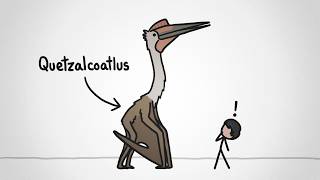
Could This Thing *Really* Fly?

When Does It Make Sense To Kill Your Sibling?

40 Years Without A New Antibiotic. Why?

Why Hives Turn Against Their Queens

Why Eagles are Overdubbed In Movies

Why Haven't We Domesticated Monkeys?

There’s no such thing as a fake feather