

The Antarctic Ocean is WEIRD
 MinuteEarth
  Open in Clue
About this video
We made this video in partnership with the Bik Lab at University of Georgia and the National Science Foundation. Life in Antarctica's ocean has followed a completely different evolutionary path from other ocean life because of how cold and isolated the ocean is. LEARN MORE ************** To learn more about this topic, start your googling with these keywords: - Antarctic Circumpolar Current: an ocean current that flows clockwise from west to east around Antarctica. - Polar Gigantism: The phenomenon that animals near the poles are larger than their temperate counterparts. SUPPORT MINUTEEARTH ************************** If you like what we do, you can help us!: - Become our patron: https://patreon.com/MinuteEarth - Our merch: http://dftba.com/minuteearth - Our book: https://minuteearth.com/books - Share this video with your friends and family - Leave us a comment (we read them!) CREDITS ********* Virginia Schutte | Script Writer Cameron Duke | Narrator and Director Sarah Berman | Illustration, Video Editing and Animation Nathaniel Schroeder | Music Antarctica Footage | Virginia Schutte and Holly Bik, funded by the National Science Foundation MinuteEarth is produced by Neptune Studios LLC https://neptunestudios.info OUR STAFF ************ Lizah van der Aart • Sarah Berman • Cameron Duke Arcadi Garcia i Rius • David Goldenberg • Melissa Hayes Alex Reich • Henry Reich • Peter Reich Ever Salazar • Leonardo Souza • Kate Yoshida OUR LINKS ************ Youtube | https://youtube.com/MinuteEarth TikTok | https://tiktok.com/@minuteearth Twitter | https://twitter.com/MinuteEarth Instagram | https://instagram.com/minute_earth Facebook | https://facebook.com/Minuteearth Website | https://minuteearth.com Apple Podcasts| https://podcasts.apple.com/us/podcast/minuteearth/id649211176 REFERENCES ************** Gatti, Susanne. “The Role of Sponges in High-Antarctic Carbon and Silicon Cycling -a Modelling Approach” Ber. Polarforsch. Meeresforsch, vol. 434, 2002, https://epic.awi.de/id/eprint/26613/1/BerPolarforsch2002434.pdf “Giant Volcano Sponge Articles - Encyclopedia of Life.” https://eol.org/pages/1162798/articles Hunt, Katie. “An Icefish Colony Discovered in Antarctica Is World’s Largest Fish Breeding Ground.” CNN, 13 Jan. 2022, https://www.cnn.com/2022/01/13/world/icefish-colony-discovery-scn/index.html Moran, Amy L., and H. Arthur Woods. “Why Might They Be Giants? Towards an Understanding of Polar Gigantism” The Journal of Experimental Biology, vol. 215, no. 12, 23 May 2012, pp. 1995–2002. https://doi.org/10.1242/jeb.067066 Rankin, J. C, and H Tuurala. “Gills of Antarctic Fish.” Comparative Biochemistry and Physiology Part A: Molecular & Integrative Physiology, vol. 119, no. 1, 1 Jan. 1998, pp. 149–163. https://doi.org/10.1016/S1095-6433(97)00396-6 Rennie, John. “Icefish Study Adds Another Color to the Story of Blood.” Quanta Magazine, 22 Apr. 2019, https://www.quantamagazine.org/icefish-study-adds-another-color-to-the-story-of-blood-20190422/ Rosa, Rui, et al. “Biology and Ecology of the World’s Largest Invertebrate, the Colossal Squid (Mesonychoteuthis Hamiltoni): A Short Review.” Polar Biology, vol. 40, no. 9, 1 Sept. 2017, pp. 1871–1883. https://doi.org/10.1007/s00300-017-2104-5 Shishido, Caitlin M., et al. “Polar Gigantism and the Oxygen–Temperature Hypothesis: A Test of Upper Thermal Limits to Body Size in Antarctic Pycnogonids.” Proceedings of the Royal Society B: Biological Sciences, vol. 286, no. 1900, 10 Apr. 2019, p. 20190124, https://doi.org/10.1098/rspb.2019.0124 Sidell, B. D. “When Bad Things Happen to Good Fish: The Loss of Hemoglobin and Myoglobin Expression in Antarctic Icefishes.” Journal of Experimental Biology, vol. 209, no. 10, 15 May 2006, pp. 1791–1802, https://doi.org/10.1242/jeb.02091 Thomisch, K, et al. “Spatio-Temporal Patterns in Acoustic Presence and Distribution of Antarctic Blue Whales Balaenoptera Musculus Intermedia in the Weddell Sea.” Endangered Species Research, vol. 30, 18 July 2016, pp. 239–253, https://doi.org/10.3354/esr00739 Zummo, G., et al. “The Heart of the Icefish: Bioconstruction and Adaptation.” Brazilian Journal of Medical and Biological Research = Revista Brasileira de Pesquisas Medicas E Biologicas, vol. 28, no. 11-12, 1995, pp. 1265–1276, https://pubmed.ncbi.nlm.nih.gov/8728857/
Watch this video in English to learn English
Watching real YouTube videos in English with subtitles is one of the highest-density ways to absorb the language. The Antarctic Ocean is WEIRD from MinuteEarth gives you native pace, natural intonation, and vocabulary you'll actually meet in real conversations.
In the Clue app, every subtitle is tap-to-translate. No app-switching, no pausing the video, no dictionary. Just watch.
Videos to Learn English

How To Kill A Volcano

The Weird Reason Rabies Is So Deadly

Why Don't Blue Whales Eat Fish?

Why Bees Mostly Ignore The Waggle Dance

There’s Really Only One Way To Die
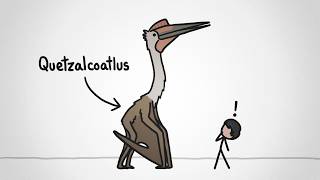
Could This Thing *Really* Fly?

When Does It Make Sense To Kill Your Sibling?

40 Years Without A New Antibiotic. Why?

Why Hives Turn Against Their Queens

Why Eagles are Overdubbed In Movies

Why Haven't We Domesticated Monkeys?

There’s no such thing as a fake feather