

How Caffeine Accidentally Took Over The World
 MinuteEarth
  Open in Clue
About this video
Hey MinuteEarthlings! If you join us on Patreon this month (April 2023) at https://patreon.com/minuteearth, we will draw you a custom MinuteEarth stick figure (that we could feature in an upcoming video) AND send you a custom coffee mug with your beautiful stick figure on it! Plants don't make caffeine just for us, so what DO they make it for? LEARN MORE ************** To learn more about this topic, start your googling with these keywords: - Alkaloid: any of a class of nitrogenous organic compounds of plant origin which have pronounced physiological actions on humans. - Allelopathy: the chemical inhibition of one plant (or other organism) by another, due to the release into the environment of substances acting as germination or growth inhibitors. - Caffeine: a crystalline compound that is found especially in tea and coffee plants and is a stimulant of the central nervous system. - Pesticide: a substance used for destroying insects or other organisms harmful to plants or to animals. SUPPORT MINUTEEARTH ************************** If you like what we do, you can help us!: - Become our patron: https://patreon.com/MinuteEarth - Our merch: http://dftba.com/minuteearth - Our book: https://minuteearth.com/books - Share this video with your friends and family - Leave us a comment (we read them!) CREDITS ********* Cameron Duke | Script Writer, Narrator and Director Kate Yoshida | Narrator David Goldenberg | Narrator Henry Reich | Narrator Sarah Berman | Illustration, Video Editing and Animation Nathaniel Schroeder | Music MinuteEarth is produced by Neptune Studios LLC https://neptunestudios.info OUR STAFF ************ Lizah van der Aart • Sarah Berman • Cameron Duke Arcadi Garcia i Rius • David Goldenberg • Melissa Hayes Alex Reich • Henry Reich • Peter Reich Ever Salazar • Leonardo Souza • Kate Yoshida OUR LINKS ************ Youtube | https://youtube.com/MinuteEarth TikTok | https://tiktok.com/@minuteearth Twitter | https://twitter.com/MinuteEarth Instagram | https://instagram.com/minute_earth Facebook | https://facebook.com/Minuteearth Website | https://minuteearth.com Apple Podcasts| https://podcasts.apple.com/us/podcast/minuteearth/id649211176 REFERENCES ************** Tanti, A., et al. (2016). Allelopathic potential of caffeine as growth and germination inhibitor to popular tea weed, Borreria hispida L.. Current Life Sciences. 2. 114-117. https://doi.org/10.5281/zenodo.163671 Brazier, Yvette (2016). “Adolescents drink too much caffeine”, https://www.medicalnewstoday.com/articles/307526 Brychkova, G., et al. (2018). “Formation of xanthine and the use of purine metabolites as a nitrogen source in Arabidopsis plants”, https://doi.org/10.4161/psb.6304 Ceja-Navarro, J., et al. (2015). “Gut microbiota mediate caffeine detoxification in the primary insect pest of coffee”, https://doi.org/10.1038/ncomms8618 Earth and Environmental Sciences (2015). “Coffee berry borer’s gut microbes detoxify caffeine”, https://eesa.lbl.gov/coffee-berry-borers-gut-microbes-detoxify-caffeine/ Diel, P. (2020). “Caffeine and Doping—What Have We Learned since 2004”, https://doi.org/10.3390/nu12082167 Jayson, C. (2015). “Caffeine vs. Chocolate: A Mighty Methyl Group”, www.discovermagazine.com/health/caffeine-vs-chocolate-a-mighty-methyl-group Lee, Y., et al. (2009) “Multiple gustatory receptors required for the caffeine response in Drosophila”, https://doi.org/10.1073/pnas.0811744106 Lu, H., et al. (2016). “Earliest tea as evidence for one branch of the Silk Road across the Tibetan Plateau”, https://doi.org/10.1038/srep18955 Mustard, J. (2013). “The buzz on caffeine in invertebrates: effects on behavior and molecular mechanisms”, https://doi.org/10.1007/s00018-013-1497-8 Nall, A., et al. (2016).“Caffeine promotes wakefulness via dopamine signaling in Drosophila”, https://doi.org/10.1038/srep20938 Nathanson, J. (1984). “Caffeine and Related Methylxanthines: Possible Naturally Occurring Pesticides.”, https://doi.org/10.1126/science.6207592 Poole, R., & Tordoff, M. (2017). “The Taste of Caffeine”, https://doi.org/10.1089/jcr.2016.0030 National Center for Biotechnology Information (2023). “Caffeine”, https://pubchem.ncbi.nlm.nih.gov/compound/Caffeine Sledz, W., et al. (2017). Influence of Exogenously Supplemented Caffeine on Cell Division, Germination, and Growth of Economically Important Plants. https://www.intechopen.com/chapters/54463 Smyth, D. (1992). “Effect of Methylxanthine Treatment on Rice Seedling Growth”, https://doi.org/10.1007/bf00198025 Sugiyama, A., et al. (2015). “Caffeine Fostering of Mycoparasitic Fungi against Phytopathogens”, https://doi.org/10.1080/15592324.2015.1113362 Wright, G. A., et al. (2013). “Caffeine in Floral Nectar Enhances a Pollinator’s Memory of Reward”, https://doi.org/10.1126/science.1228806
Watch this video in English to learn English
Watching real YouTube videos in English with subtitles is one of the highest-density ways to absorb the language. How Caffeine Accidentally Took Over The World from MinuteEarth gives you native pace, natural intonation, and vocabulary you'll actually meet in real conversations.
In the Clue app, every subtitle is tap-to-translate. No app-switching, no pausing the video, no dictionary. Just watch.
Videos to Learn English

How To Kill A Volcano

The Weird Reason Rabies Is So Deadly

Why Don't Blue Whales Eat Fish?

Why Bees Mostly Ignore The Waggle Dance

There’s Really Only One Way To Die
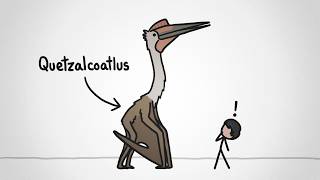
Could This Thing *Really* Fly?

When Does It Make Sense To Kill Your Sibling?

40 Years Without A New Antibiotic. Why?

Why Hives Turn Against Their Queens

Why Eagles are Overdubbed In Movies

Why Haven't We Domesticated Monkeys?

There’s no such thing as a fake feather