

Eclipses Used To Be Terrifying
 MinuteEarth
  Open in Clue
About this video
This Product is supported by the NASA Heliophysics Education Activation Team (NASA HEAT), part of NASA’s Science Activation portfolio. The material contained in this document is based upon work supported by a National Aeronautics And Space Administration (NASA) grant or cooperative agreement. Any questions, findings, conclusions or recommendations expressed in this materials are those of the author and do not necessarily reflect the views of NASA. Because eclipses are powerful and frightening events, ancient cultures went to great lengths to understand eclipses, leading to remarkably accurate predictions and helping invent the science of astronomy. LEARN MORE ************** To learn more about this topic, start your googling with these keywords: - Saros: a period of about 18 years between repetitions of solar and lunar eclipses. If you liked this week’s video, you might also like: The Five Millenium Canon of Solar Eclipses - https://eclipse.gsfc.nasa.gov/SEpubs/5MCSE.html CREDITS ********* Cameron Duke | Script Writer, Narrator and Director Sarah Berman | Illustration, Video Editing and Animation Nathaniel Schroeder | Music MinuteEarth is produced by Neptune Studios LLC https://neptunestudios.info OTHER CREDITS ***************** Stonehenge Midsummer Sunrise 2013 Photo by: Flickr user Stonehenge Stone Circle https://www.flickr.com/photos/stonehenge-stone-circle/8980676956/ Bamboo Annals: double dawn Liu, Liu, and Ma, 2003, Journal of Astronomical History and Heritage (ISSN 1440-2807), Vol. 6, No. 1, p. 53 - 63, Figure 2. Bamboo Annals: double dawn. https://articles.adsabs.harvard.edu//full/2003JAHH....6...53L/0000060.000.html Cuneiform tablet: ephemeris of eclipses https://www.metmuseum.org/art/collection/search/321969 Seleucid ca. 4th–2nd century BCE / Met Museum Eclipse Predictions by Fred Espenak and Jean Meeus (NASA's GSFC) Five Millennium Canon of Lunar Eclipses Saros series (via NASA) Adapted from a Map illustration by Michael Zeiler Paths of totality from eclipse calculator by Xavier Jubier Eclipse predictions by Fred Espenak, NASA Goddard Space Flight Center Many Saros Series Adapted from: https://eclipse.gsfc.nasa.gov/SEatlas/SEatlas3/SEatlas2041.GIF Credit: Eclipse Predictions by Fred Espenak, NASA GSFC Emeritus. OUR STAFF ************ Lizah van der Aart • Sarah Berman • Cameron Duke Arcadi Garcia i Rius • David Goldenberg • Melissa Hayes Alex Reich • Henry Reich • Peter Reich Ever Salazar • Leonardo Souza • Kate Yoshida OUR LINKS ************ Youtube | https://youtube.com/MinuteEarth TikTok | https://tiktok.com/@minuteearth Twitter | https://twitter.com/MinuteEarth Instagram | https://instagram.com/minute_earth Facebook | https://facebook.com/Minuteearth Website | https://minuteearth.com Apple Podcasts| https://podcasts.apple.com/us/podcast/minuteearth/id649211176 REFERENCES ************** Brown, Daniel. “Blood Moon: Lunar Eclipse Myths from around the World.” The Conversation, theconversation.com/blood-moon-lunar-eclipse-myths-from-around-the-world-100548 Carman, Christián C., and James Evans. “On the Epoch of the Antikythera Mechanism and Its Eclipse Predictor.” Archive for History of Exact Sciences, vol. 68, no. 6, Nov. 2014, pp. 693–774, https://doi.org/10.1007/s00407-014-0145-5 COLTON, R., and R. L. MARTIN. “Eclipse Cycles and Eclipses at Stonehenge.” Nature, vol. 213, no. 5075, Feb. 1967, pp. 476–478, https://doi.org/10.1038/213476a0 de Jong, T., and W. H. van Soldt. “The Earliest Known Solar Eclipse Record Redated.” Nature, vol. 338, no. 6212, Mar. 1989, pp. 238–240, https://doi.org/10.1038/338238a0 Espenak, Fred. “NASA - Eclipses and the Saros.” Eclipse.gsfc.nasa.gov, eclipse.gsfc.nasa.gov/SEsaros/SEsaros.html Espenak, Fred, and Jean Meeus. Five Millennium Canon of Lunar Eclipses. 7 Aug. 2021. Five Millennium Canon of Solar Eclipses. 30 July 2021. HAWKINS, GERALD S. “Stonehenge: A Neolithic Computer.” Nature, vol. 202, no. 4939, June 1964, pp. 1258–1261, https://doi.org/10.1038/2021258a0 Hermann Hunger, and David Pingree. Astral Sciences in Mesopotamia. Leiden ; Boston, Brill, 1999. HOYLE, FRED. “Stonehenge–an Eclipse Predictor.” Nature, vol. 211, no. 5048, July 1966, pp. 454–456, www.nature.com/articles/211454a0.pdf, https://doi.org/10.1038/211454a0 Liu, C., et al. “Examination of Early Chinese Records of Solar Eclipses.” Journal of Astronomical History and Heritage, vol. 6, no. 1, 2003, pp. 53–63, adsabs.harvard.edu/full/2003JAHH....6...53L “NASA - Sun-Earth Day - Technology through Time - Babylon”. sunearthday.nasa.gov/2006/locations/babylon.php. Rubio, Gonzalo. “How Eclipses Were Regarded as Omens in the Ancient World.” The Conversation, theconversation.com/how-eclipses-were-regarded-as-omens-in-the-ancient-world-81248 Tsu, Wen Shion. “A Statistical Survey of Solar Eclipses in Chinese History.” Popular Astronomy, vol. 42, no. 136, 1934, adsabs.harvard.edu/full/1934PA.....42..136T
Watch this video in English to learn English
Watching real YouTube videos in English with subtitles is one of the highest-density ways to absorb the language. Eclipses Used To Be Terrifying from MinuteEarth gives you native pace, natural intonation, and vocabulary you'll actually meet in real conversations.
In the Clue app, every subtitle is tap-to-translate. No app-switching, no pausing the video, no dictionary. Just watch.
Videos to Learn English

How To Kill A Volcano

The Weird Reason Rabies Is So Deadly

Why Don't Blue Whales Eat Fish?

Why Bees Mostly Ignore The Waggle Dance

There’s Really Only One Way To Die
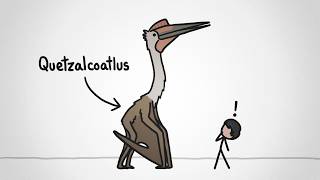
Could This Thing *Really* Fly?

When Does It Make Sense To Kill Your Sibling?

40 Years Without A New Antibiotic. Why?

Why Hives Turn Against Their Queens

Why Eagles are Overdubbed In Movies

Why Haven't We Domesticated Monkeys?

There’s no such thing as a fake feather