

ALL Plants Have Color Vision?!
 MinuteEarth
  Open in Clue
About this video
Thanks to the ASCEND project for partnering with us on this video! Plants can tell when competitors are nearby because they can *see* them. LEARN MORE ************** To learn more about this topic, start your googling with these keywords: - Shade avoidance: changes in plant body form and function that occur in response to the light signals provided by neighboring vegetation - Photoreceptors: light-sensitive proteins involved in the sensing and response to light in a variety of organisms - Far-red light: light at the extreme red end of the visible spectrum, just before infrared light (wavelength of ~700 to 750 nm) SUPPORT MINUTEEARTH ************************** If you like what we do, you can help us!: - Become our patron: https://patreon.com/MinuteEarth - Our merch: http://dftba.com/minuteearth - Our book: https://minuteearth.com/books - Share this video with your friends and family - Leave us a comment (we read them!) CREDITS ********* Kate Yoshida | Script Writer, Narrator and Director Arcadi Garcia i Rius | Illustration, Video Editing and Animation Nathaniel Schroeder | Music MinuteEarth is produced by Neptune Studios LLC https://neptunestudios.info OUR STAFF ************ Lizah van der Aart • Sarah Berman • Cameron Duke Arcadi Garcia i Rius • David Goldenberg • Melissa Hayes Alex Reich • Henry Reich • Peter Reich Ever Salazar • Leonardo Souza • Kate Yoshida OUR LINKS ************ Youtube | https://youtube.com/MinuteEarth TikTok | https://tiktok.com/@minuteearth Twitter | https://twitter.com/MinuteEarth Instagram | https://instagram.com/minute_earth Facebook | https://facebook.com/Minuteearth Website | https://minuteearth.com Apple Podcasts| https://podcasts.apple.com/us/podcast/minuteearth/id649211176 REFERENCES ************** Ballaré CL, and Pierik R. (2017) The shade-avoidance syndrome: multiple signals and ecological consequences. Plant, Cell & Environment, 40: 2530–2543. https://doi.org/10.1111/pce.12914 Casal JJ. (2013) Photoreceptor signaling networks in plant responses to shade. Annu Rev Plant Biol. 64:403-27. https://doi.org/10.1146/annurev-arplant-050312-120221 Kothari S, Montgomery RA, Cavender-Bares J. (2021) Physiological responses to light explain competition and facilitation in a tree diversity experiment. Journal of Ecology 109: 2000–2018. https://doi.org/10.1111/1365-2745.13637 Palayam M, Ganapathy J, Guercio AM et al. (2021) Structural insights into photoactivation of plant Cryptochrome-2. Commun Biol 4, 28. https://doi.org/10.1038/s42003-020-01531-x Roig-Villanova I, Paulišić S, Martinez-Garcia JF. (2019) Shade Avoidance and Neighbor Detection. In: Hiltbrunner, A. (eds) Phytochromes. Methods in Molecular Biology, vol 2026. Humana, New York, NY. https://doi.org/10.1007/978-1-4939-9612-4_13 Smith, H. (2000) Phytochromes and light signal perception by plants—an emerging synthesis. Nature 407, 585–591. https://doi.org/10.1038/35036500
Watch this video in English to learn English
Watching real YouTube videos in English with subtitles is one of the highest-density ways to absorb the language. ALL Plants Have Color Vision?! from MinuteEarth gives you native pace, natural intonation, and vocabulary you'll actually meet in real conversations.
In the Clue app, every subtitle is tap-to-translate. No app-switching, no pausing the video, no dictionary. Just watch.
Videos to Learn English

How To Kill A Volcano

The Weird Reason Rabies Is So Deadly

Why Don't Blue Whales Eat Fish?

Why Bees Mostly Ignore The Waggle Dance

There’s Really Only One Way To Die
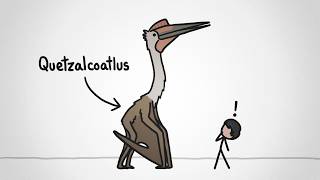
Could This Thing *Really* Fly?

When Does It Make Sense To Kill Your Sibling?

40 Years Without A New Antibiotic. Why?

Why Hives Turn Against Their Queens

Why Eagles are Overdubbed In Movies

Why Haven't We Domesticated Monkeys?

There’s no such thing as a fake feather