
Lifestyle (sociology)
Deep Look
A science video series exploring big science by going very small.
 Open in Clue
 Videos to Learn English 100
-

How Hoverflies Spawn Maggots that Sweeten Your Oranges | Deep Look
Nov 22, 2022
Oblique streaktail hoverflies zip from bloom to bloom wearing a wasp costume to avoid getting eaten. But it’s all for show – they don’t even have stingers! Their fierce maggots, on the other hand, devour hundreds of insect pests. As they gorge, they help keep orange trees safe from disease. Take the 2023 PBS Survey: https://to.pbs.org/pbssurvey2023g DEEP LOOK is an ultra-HD (4K) short video series created by KQED San Francisco and presented by PBS Digital Studios. See the unseen at the very edge of our visible world. Explore big scientific mysteries by going incredibly small. --- Entomologist Nic Irvin, at the University of California, Riverside, has found that the maggots of oblique streaktail hoverflies eat more than 400 Asian citrus psyllids in the week before they transform into pupae. Orange growers despise Asian citrus psyllids, which spread a destructive bacterium when they feed on the sap of citrus trees. The bacterium, Candidatus Liberibacter asiaticus, causes a disease known as citrus greening or huanglongbing. Infected citrus trees make green, bitter fruit and eventually die. Irvin has planted alyssum, a plant with fragrant white flowers, in orange groves near Riverside. The alyssum attracts adult oblique streaktail hoverflies that feed on its pollen and then lay their eggs on orange trees under attack by Asian citrus psyllids. When hoverfly maggots hatch out of the eggs, they devour the psyllids. In one experiment, Irvin found that having alyssum near orange trees reduced by 10% the number of Asian citrus psyllids on them. --- Are hoverflies good for the garden? Yes, hoverflies help backyard gardeners too. They pollinate flowering plants. And their maggots feed on aphids, a common pest of vegetables. --- How do hoverflies fly? Hoverflies fly like tiny helicopters – they can hover, fly straight up and down and backward and turn in almost every direction, said Karin Nordström, who studies hoverflies at Flinders University in Australia. “Seeing them come in and land on a flower, it’s really beautiful,” she said, “because it’s such a controlled landing.” ---+ Find additional resources and a transcript on KQED Science: https://www.kqed.org/science/1980847/how-hoverflies-spawn-maggots-that-sweeten-your-oranges ---+ More great Deep Look episodes: This Bee Gets Punched by Flowers For Your Ice Cream https://youtu.be/rsUNxvXofgo Born Pregnant: Aphids Invade with an Onslaught of Clones https://youtu.be/vrzalLssomg This Freaky Fruit Fly Lays Eggs in Your Strawberries https://youtu.be/MJsI50wQELU ---+ Shoutout! 🏆Congratulations🏆 to these fans on our Deep Look Community Tab to correctly answer our GIF challenge! TheWhiteScatterbug Cesalia Floof DizzyDragon ---+ Thank you to our Top Patreon Supporters ($10+ per month)! Burt Humburg Karen Reynolds Daisuke Goto Allison & Maka Masuda David Deshpande Chris B Emrick Tianxing Wang Wade Tregaskis Companion Cube Mark Jobes Blanca Vides Laurel Przybylski Kevin Judge Aurora monoirre Anastasia Grinkevic Titania Juang Syniurge Supernovabetty Roberta K Wright El Samuels KW Jessica Hiraoka Carrie Mukaida Jellyman Mehdi Nicky Orino Cristen Rasmussen Cindy McGill Noreen Herrington SueEllen McCann Laurel Przybylski Shelley Pearson Cranshaw Caitlin McDonough Kelly Hong Nicolette Ray Louis O'Neill Jeremiah Sullivan Elizabeth Ann Ditz TierZoo Levi Cai Silvan Delphine Tseng Kenneth Fyrsterling ---+ Follow Deep Look and KQED Science on social: https://www.tiktok.com/@deeplookofficial https://www.patreon.com/deeplook Instagram: https://www.instagram.com/kqedscience/ Twitter: https://www.twitter.com/kqedscience ---+ About KQED KQED, an NPR and PBS affiliate in San Francisco, Calif., serves Northern California and beyond with a public-supported alternative to commercial TV, radio and web media. Funding for Deep Look is provided in part by PBS Digital Studios. Deep Look is a project of KQED Science, the largest science and environment reporting unit in California. KQED Science is supported by the Dirk and Charlene Kabcenell Foundation, Campaign 21 and the members of KQED. #hoverflies #asiancitruspsyllids #deeplook
-

Meet the Meat Bee... the Western Yellowjacket! | Deep Look
Nov 1, 2022
Why is that yellowjacket crashing your BBQ? Well, she wants what you're having: burgers, hot dogs, fish and turkey. But she doesn't eat them herself. Her nest's larvae need that protein to develop. So she carves up your dinner and makes teeny-tiny meatballs for them. SUBSCRIBE to Deep Look! https://www.youtube.com/user/kqeddeeplook?sub_confirmation=1 Please join our community on Patreon! https://www.patreon.com/deeplook DEEP LOOK is a ultra-HD (4K) short video series created by KQED San Francisco and presented by PBS Digital Studios. See the unseen at the very edge of our visible world. Explore big scientific mysteries by going incredibly small. -- Yellowjackets bring back all kinds of interesting fare to their nests. The scavenging species might make meatballs out of moth wings, cockroaches or pieces of carrion. And all that food gathering and flying around gives adult yellowjackets an appetite. After delivering scavenged foods to the larvae, adult yellowjackets prod the youngsters and they offer their thanks in the form of a sugary throw up, or exudate. The adults slurp that up and jet off on more meatball missions. ---+ Are yellowjackets pollinators? Yellowjackets are pollinators! They visit flowers to gather sugary nectar that helps fuel their flight. They’re not as good at pollinating plants as bees are because their bodies are less hairy so they don’t pick up as much pollen. ---+ Do yellowjackets die after they sting? Yellowjackets do not die after they sting. They can sting multiple times, but it’s a last resort when they are threatened. ---+ Find additional resources and a transcript on KQED Science: https://www.kqed.org/science/1980663/yellowjackets-roll-tiny-meatballs-for-the-babies ---+ Busy Bees and Other Pollinators Playlist: https://www.youtube.com/watch?v=XjOfbEWVBpE&list=PLdKlciEDdCQCfoI8E24mbuk259unmiwG9 GIF CHALLENGE WINNERS: Wow! We were looking for a term - exudate - but you all really delivered here! We're calling: Sheldfreeze18 RodrigoBorges BovineTerror I Jane TheWhiteScatterbug ... our winners. Thanks all for playing and we'll be more clear in our language for the next quiz! ---+ Thank you to our Top Patreon Supporters ($10+ per month)! Jessica Burt Humburg Karen Reynolds Daisuke Goto Allison & Maka Masuda David Deshpande Chris B Emrick Tianxing Wang Companion Cube Wade Tregaskis Mark Jobes Kevin Judge Blanca Vides Laurel Przybylski Jana Brenning Anastasia Grinkevic Titania Juang Supernovabetty monoirre Aurora Roberta K Wright KW El Samuels Carrie Mukaida Syniurge Kimberly Hall Jessica Hiraoka Jellyman Cristen Rasmussen Mehdi Nicky Orino SueEllen McCann Kelly Hong Cindy McGill Noreen Herrington Laurel Przybylski Shelley Pearson Cranshaw Louis O'Neill Jeremiah Sullivan Nicolette Ray Levi Cai Elizabeth Ann Ditz Caitlin McDonough Silvan Delphine Tseng TierZoo Kenneth Fyrsterling ---+ Follow Deep Look and KQED Science on social: https://www.tiktok.com/@deeplookofficial https://www.patreon.com/deeplook Instagram: https://www.instagram.com/kqedscience Twitter: https://www.twitter.com/kqedscience ---+ About KQED KQED, an NPR and PBS affiliate in San Francisco, CA, serves Northern California and beyond with a public-supported alternative to commercial TV, radio and web media. Funding for Deep Look is provided in part by PBS Digital Studios. Deep Look is a project of KQED Science, the largest science and environment reporting unit in California. KQED Science is supported by the Dirk and Charlene Kabcenell Foundation, Campaign 21 and the members of KQED. #yellowjackets #vespulapensylvanica #deeplook
-

This Parasite is Cramping The Monarch Butterfly’s Style | Deep Look
Oct 11, 2022
Monarchs are locked in a battle with Ophryocystis elektroscirrha (OE), a parasite that can trap a butterfly in its own chrysalis and deform its beautiful wings. Turns out there is a wrong way, and a *right way,* for you to help these butterflies in your backyard. SUBSCRIBE to Deep Look! https://www.youtube.com/user/kqeddeeplook?sub_confirmation=1 Please join our community on Patreon! https://www.patreon.com/deeplook DEEP LOOK is a ultra-HD (4K) short video series created by KQED San Francisco and presented by PBS Digital Studios. Explore big scientific mysteries by going incredibly small. --- Monarch butterflies are one of the most recognizable animals in the world, but these beloved insects face have lost much of their historic milkweed habitat to agriculture and development. As a result, monarchs are more concentrated on the milkweed plants they have left. Monarch caterpillars are completely reliant on milkweed for food and many people plant milkweed in their yards to help them. But not all milkweed is the same. Tropical milkweed, with its pretty orange and red flowers, doesn’t die back in the fall and that means that the protozoan parasite Ophryocystis elektroscirrha (OE) has more time to build up on its leaves. Monarch caterpillars inadvertently ingest the spores, which release the microscopic parasites into the caterpillar’s flesh. When a heavily infected monarch goes through metamorphosis, the butterfly will have lesions on its abdomen, making it stick to the inside of its chrysalis. “It gets stuck and you really see the butterfly struggle at that point which is a sad sight,” says Jacobus de Roode, a researcher at Emory University in Atlanta who studies the relationship between monarchs and OE. “Normally the butterfly comes out very smoothly, it pops out and starts pumping up those wings. But when they get stuck you can see them for minutes or even hours struggling and they just can’t get out. It’s kind of traumatic.” -- --- How do monarch butterflies help humans? Monarch butterflies are important pollinators that are hugely beneficial to the ecosystems in which they are found. --- Where do monarch butterflies migrate each year? In the fall, monarch butterflies travel to their overwintering locations. The majority of monarchs live east of the Rock Mountains and they travel to central Mexico. The monarchs that spend their summers west of the Rockies travel to the central California coast. There is some overlap between the populations of monarchs. --- How do monarch butterflies protect themselves? Monarch caterpillars feed on milkweed plants, which contain toxic substances called cardiac glycosides that accumulate in the caterpillar’s flesh and stay with it even after it metamorphoses into a butterfly. Both monarch caterpillars and butterflies have vibrant warning colors that tell predators that they don’t taste good. ---+ Find additional resources and a transcript on KQED Science: https://www.kqed.org/science/1980427/this-nasty-parasite-is-ruining-monarch-butterfly-wings ---+ For more information: The de Roode Lab at Emory University in Atlanta: https://deroodelab.org/ ---+ More Great Deep Look episodes: Glasswing Butterflies Want To Make Something Perfectly Clear | Deep Look https://youtu.be/LYxTyMF9k_4 The Pipevine Caterpillar Thrives in a Toxic Love Triangle | Deep Look https://youtu.be/TQQv7h11g_c ---+ Shoutout! 🏆Congratulations🏆 to these fans on our Deep Look Community Tab to correctly answer our GIF challenge! Jodie B Amy B.C. kingLorshi Lauren Petro ---+ Thank you to our Top Patreon Supporters ($10+ per month)! Jessica Burt Humburg Karen Reynolds Daisuke Goto Allison & Maka Masuda David Deshpande Chris B Emrick Tianxing Wang Companion Cube Wade Tregaskis Mark Jobes Kevin Judge Blanca Vides Laurel Przybylski Jana Brenning Anastasia Grinkevic Titania Juang Supernovabetty monoirre Aurora Roberta K Wright KW El Samuels Carrie Mukaida Syniurge Kimberly Hall Jessica Hiraoka Jellyman Cristen Rasmussen Mehdi Nicky Orino SueEllen McCann Kelly Hong Cindy McGill Noreen Herrington Laurel Przybylski Shelley Pearson Cranshaw Louis O'Neill Jeremiah Sullivan Nicolette Ray Levi Cai Elizabeth Ann Ditz Caitlin McDonough Silvan Delphine Tseng TierZoo Kenneth Fyrsterling ---+ Follow Deep Look and KQED Science on social: https://www.tiktok.com/@deeplookofficial https://www.patreon.com/deeplook Instagram: https://www.instagram.com/kqedscience/ Twitter: https://www.twitter.com/kqedscience ---+ About KQED KQED, an NPR and PBS affiliate in San Francisco, CA, serves Northern California and beyond with a public-supported alternative to commercial TV, Radio and web media. Funding for Deep Look is provided in part by PBS Digital Studios. Deep Look is a project of KQED Science, the largest science and environment reporting unit in California. KQED Science is supported by the Dirk and Charlene Kabcenell Foundation, Campaign 21 and the members of KQED. #deeplook
-

Fire Ants Turn Into a Stinging Life Raft to Survive Floods | Deep Look
Sep 27, 2022
During hurricane season, as floodwater flows into their nest, red fire ants build a terrifying raft – out of their own interlocking bodies. If you wade into this ant raft nightmare, you’ll likely get a vicious bite and sting. SUBSCRIBE to Deep Look! https://www.youtube.com/user/kqeddeeplook?sub_confirmation=1 Please join our community on Patreon! https://www.patreon.com/deeplook DEEP LOOK is a ultra-HD (4K) short video series created by KQED San Francisco and presented by PBS Digital Studios. See the unseen at the very edge of our visible world. Explore big scientific mysteries by going incredibly small. -- During hurricane season, as residents of states like Florida, Texas, Louisiana and South Carolina escape rising waters, they sometimes have the added misfortune of wading into large groups of floating red fire ants that have assembled into a raft. These ants, whose scientific name is Solenopsis invicta, are also known as red imported fire ants or RIFA because they arrived in the United States from South America. There, they evolved on the margins of rivers that flood regularly, in an area that encompasses western Brazil, northern Argentina, Paraguay and Bolivia. ---+ What happens if a red fire ant bites you? It’s more accurate to say that red fire ants bite *and* sting. They use their large mandibles to grab onto the skin and anchor themselves. Then, they dig their stinger in – sometimes multiple times – and inject venom. An itchy welt pops up at the site of the sting and later turns into a pus-filled blister called a pustule. A small number of people are allergic to red fire ant venom and can go into anaphylactic shock and die if they don’t receive prompt medical care. ---+ Why are red imported fire ants a problem? In addition to their stings, red imported fire ants damage crops, hurt livestock and displace native ants. ---+ Find additional resources and a transcript on KQED Science: https://www.kqed.org/science/1980343/fire-ants-turn-their-babies-into-a-stinging-life-raft ---+ More Great Deep Look episodes: Kidnapper Ants Steal Other Ants’ Babies - And Brainwash Them https://youtu.be/sC4MjPKf3jY Honeypot Ants Turn Their Biggest Sisters into Jugs of Nectar https://youtu.be/Rid_YW3P8CA Where Are the Ants Carrying All Those Leaves? https://youtu.be/-6oKJ5FGk24 🏆Congratulations🏆 to these fans on our Deep Look Community Tab to correctly answer our GIF challenge! Mayur Agrawal Death is our worst Enemy Preet Budhwani Gaz L ---+ Thank you to our Top Patreon Supporters ($10+ per month)! Jessica Burt Humburg Karen Reynolds Daisuke Goto Allison & Maka Masuda David Deshpande Chris B Emrick Companion Cube Tianxing Wang Mark Jobes Kevin Judge Blanca Vides Jana Brenning Laurel Przybylski Aurora Jason Jia monoirre Titania Juang Roberta K Wright KW Supernovabetty Anastasia Grinkevic El Samuels Kimberly Hall Carrie Mukaida Jellyman Jessica Hiraoka Nicky Orino Cristen Rasmussen Cindy McGill Mehdi Noreen Herrington Shonara Rivas Kelly Hong SueEllen McCann Misia Clive Laurel Przybylski Nicolette Ray Caitlin McDonough Shonara Rivas Louis O'Neill 吳怡彰 Shelley Pearson Cranshaw Elizabeth Ann Ditz Jeremiah Sullivan Delphine Tseng Wade Tregaskis Levi Cai TierZoo Silvan Syniurge Kenneth Fyrsterling ---+ Follow Deep Look and KQED Science on social: https://www.tiktok.com/@deeplookofficial https://www.patreon.com/deeplook Instagram: https://www.instagram.com/kqedscience Twitter: https://www.twitter.com/kqedscience ---+ About KQED KQED, an NPR and PBS affiliate in San Francisco, CA, serves Northern California and beyond with a public-supported alternative to commercial TV, radio and web media. Funding for Deep Look is provided in part by PBS Digital Studios. Deep Look is a project of KQED Science, the largest science and environment reporting unit in California. KQED Science is supported by the Dirk and Charlene Kabcenell Foundation, Campaign 21 and the members of KQED. #solenopsisinvicta #antraft #fireants
-

Backswimmer Insects Drag Prey Into the Upside Down | Deep Look
Aug 30, 2022
They look like little rowboats, cruising belly up below the surface of a pond or gentle stream. But don't be fooled. Backswimmers are voracious predators, and when it's time to find a new home they know how to make a dramatic exit. WATCH 'America Outdoors: Understory:' https://youtu.be/s-R1p89zHnk PLAY Deep Look's 'Panic at the Pond' Playlist! https://youtube.com/playlist?list=PLdKlciEDdCQDWGnwP5WLFSYLTRZmk3Ssr DEEP LOOK is an ultra-HD (4K) short video series created by KQED San Francisco and presented by PBS Digital Studios. See the unseen at the very edge of our visible world. Explore big scientific mysteries by going incredibly small. --- Ever feel like your world’s been flipped upside down? That’s life for these bugs. Backswimmers are predatory insects that get their name because they spend their lives flipped with their backs facing down and their bellies facing up. They do a kind of backstroke using their oversized back legs like oars. Spending their time flipped over is convenient because it helps them know if any unlucky prey has accidentally fallen into the water. “They are vicious predators,” says Kate Boersma, a biologist at University of San Diego, “and they're very fast in the water. They do hunt underwater, but they also eat stuff that falls in. Mostly terrestrial insects.” Backswimmers also like to munch on mosquito larvae that tend to share the same ponds and streams. That makes backswimmers a surprisingly valuable ally when it comes to keeping mosquito levels low. --- What do backswimmers eat? Backswimmers are predatory insects that hunt other aquatic invertebrates or terrestrial insects that have accidentally fallen into the water and are often struggling to get out. The biggest backswimmers can take down prey as large as a tadpole or small fish. --- Do backswimmers bite or sting? Backswimmers will bite people to defend themselves, but they typically aren’t looking for a fight. The bite may feel similar to a bee sting. --- How do backswimmers get in your pool? Can backswimmers fly? Backswimmers are able to fly to find new bodies of water to make their home. They do occasionally land in swimming pools by accident and can sometimes survive for a while if the pool isn’t heavily chlorinated. Since there typically isn’t any prey for them in a swimming pool, they will often try to escape to find a more suitable home. ---+ Find additional resources and a transcript on KQED Science: https://www.kqed.org/science/1980101/backswimmer-insects-drag-prey-into-the-upside-down ---+ More great Deep Look episodes: You Can’t Unsee the Assassin Bug’s Dirty Work | Deep Look https://youtu.be/bdzK-pTadQs Tadpole Shrimp Are Coming For Your Rice | Deep Look https://youtu.be/T2xnXaX7r3g Born Pregnant: Aphids Invade with an Onslaught of Clones | Deep Look https://youtu.be/vrzalLssomg ---+ Shoutout! 🏆Congratulations🏆 to the first 5 fans on our Deep Look Community Tab to correctly answer our GIF challenge! https://www.youtube.com/post/Ugkx_--VGcPgKPUuQ5ofHZA2-65smIvmryT9 Will Edwards Marijn Slingerland Doddy Rachmad Subagyo Márton Varga Lichen8404 ---+ Thank you to our Top Patreon Supporters ($10+ per month)! Jessica Burt Humburg Karen Reynolds Allison & Maka Masuda Daisuke Goto David Deshpande Wild Turkey J8Zenith Chris B Emrick Tianxing Wang Companion Cube Mark Jobes Blanca Vides Kevin Judge Laurel Przybylski Jana Brenning Jason Jia monoirre Anastasia Grinkevic Titania Juang Roberta K Wright Aurora Supernovabetty Carrie Mukaida Kimberly Hall Jellyman El Samuels KW Syniurge Cristen Rasmussen Nicky Orino Mehdi Shonara Rivas Cindy McGill SueEllen McCann Noreen Herrington Laurel Przybylski Misia Clive Kelly Hong Shelley Pearson Cranshaw Jeremiah Sullivan Caitlin McDonough 吳怡彰 Louis O'Neill Nicolette Ray Elizabeth Ann Ditz Shonara Rivas Delphine Tseng Wade Tregaskis Silvan Levi Cai TierZoo Kenneth Fyrsterling ---+ Follow Deep Look and KQED Science on social: https://www.tiktok.com/@deeplookofficial https://www.patreon.com/deeplook Instagram: https://www.instagram.com/kqedscience/ Twitter: https://www.twitter.com/kqedscience ---+ About KQED KQED, an NPR and PBS affiliate in San Francisco, CA, serves Northern California and beyond with a public-supported alternative to commercial TV, Radio and web media. Funding for Deep Look is provided in part by PBS Digital Studios. Deep Look is a project of KQED Science, the largest science and environment reporting unit in California. KQED Science is supported by the Dirk and Charlene Kabcenell Foundation, Campaign 21 and the members of KQED.
-

Watch Barn Owls Swallow Rodents Whole | Deep Look
Aug 9, 2022
Barn owls swoop down on rodents and swallow them whole – gophers, voles and mice, gone in a few gulps. But how do they keep down all that food? Well, they don’t. In a few stomach-turning steps, they transform the varmints into compact balls of fur and bones known as pellets. Watch Far Out on PBS Terra! https://youtube.com/playlist?list=PLnNZYWyBGJ1EzMbF4T-PPNmqhXFY87Kfp DEEP LOOK is a ultra-HD (4K) short video series created by KQED San Francisco and presented by PBS Digital Studios. See the unseen at the very edge of our visible world. Explore big scientific mysteries by going incredibly small. -- The secret to turning a whole rodent into an owl pellet is in a barn owl’s stomach. It has two chambers. The first chamber oozes digestive juices, like our stomach. The second one – the gizzard – squeezes the rodent remains with powerful muscles. The fats and proteins get absorbed. After about eight hours in the gizzard, the fur and bones become tightly compacted into an oval that the owl regurgitates. ---+ What can scientists learn by studying what's inside owl pellets? “I think it’s really fascinating you can study their diet so easily by dissecting these pellets,” said Matt Johnson, who oversees the Barn Owl Research Team at Cal Poly Humboldt, in Arcata, California. He and his students monitor 300 nest boxes set up by winegrowers in the state’s Napa Valley. Winegrowers invite barn owls (Tyto furcata) to raise their young in nest boxes. By hunting gophers and voles, which can damage grapevines, barn owls help with pest control. Dissecting owl pellets and pulling out the bones hidden inside helps researchers identify what animals a barn owl ate and how many. In Napa, “voles, mice and gophers make up 90% of what they eat,” said Johnson. “Mice are almost always the third place in that list.” “Their diet varies from place to place and year to year,” he added. “We’ve collected some pellets that are majority voles, or majority gophers.” ---+ How many rodents can a barn owl kill? While a graduate student at Cal Poly Humboldt, Dane St. George estimated in 2020 that a family of barn owls living in and around a vineyard in Napa can eat 3,500 rodents a year. By tracking the barn owls’ movements, he found that almost 45% of the rodents they killed came from within vineyards. ---+ Find additional resources and a transcript on KQED Science: https://www.kqed.org/science/1979934/barn-owl-table-manners-are-just-different ---+ The young barn owl coughing up a *gigantic* pellet in our episode was filmed by a camera in a nest box in Israel. Watch the whole video here: https://youtu.be/sCTvWDd7bjc And livestream barn owls, kestrels and other birds here: https://www.youtube.com/c/CharterGroupBirdcams ---+ More Great Deep Look episodes: What Makes Owls So Quiet and So Deadly? https://youtu.be/a68fIQzaDBY You’ve Heard of a Murder of Crows. How About a Crow Funeral? https://youtu.be/ixYVFZnNl6s Watch These Peregrine Falcons Become Fierce Parents https://youtu.be/RTNZmnD27is 🏆Congratulations🏆 to the first 5 fans on our Deep Look Community Tab to correctly answer our GIF challenge! The owlet pictured was 63 days old. Blunderbuss13 (63) im a comment J (63) Imani Perlie (63) Justa Bone (64) Moses Aubrey (61) ---+ Thank you to our Top Patreon Supporters ($10+ per month)! Jessica Burt Humburg Karen Reynolds Allison & Maka Masuda Daisuke Goto David Deshpande Wild Turkey J8Zenith Chris B Emrick Tianxing Wang Companion Cube Mark Jobes Blanca Vides Kevin Judge Laurel Przybylski Jana Brenning Jason Jia monoirre Anastasia Grinkevic Titania Juang Roberta K Wright Aurora Supernovabetty Carrie Mukaida Kimberly Hall Jellyman El Samuels KW Syniurge Cristen Rasmussen Nicky Orino Mehdi Shonara Rivas Cindy McGill SueEllen McCann Noreen Herrington Laurel Przybylski Misia Clive Kelly Hong Shelley Pearson Cranshaw Jeremiah Sullivan Caitlin McDonough 吳怡彰 Louis O'Neill Nicolette Ray Elizabeth Ann Ditz Shonara Rivas Delphine Tseng Wade Tregaskis Silvan Levi Cai TierZoo Kenneth Fyrsterling ---+ Follow Deep Look and KQED Science on social: https://www.tiktok.com/@deeplookofficial https://www.patreon.com/deeplook Instagram: https://www.instagram.com/kqedscience Twitter: https://www.twitter.com/kqedscience ---+ About KQED KQED, an NPR and PBS affiliate in San Francisco, CA, serves Northern California and beyond with a public-supported alternative to commercial TV, radio and web media. Funding for Deep Look is provided in part by PBS Digital Studios. Deep Look is a project of KQED Science, the largest science and environment reporting unit in California. KQED Science is supported by the Dirk and Charlene Kabcenell Foundation, Campaign 21 and the members of KQED. #barnowls #owlpellet #deeplook
-
Stop! Thief! Carpenter Bees are Notorious Nectar Robbers | Deep Look
Jul 19, 2022
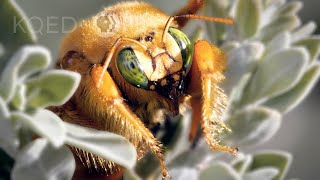
With their short tongues, Valley carpenter bees can't easily drink the nectar from tubular flowers. So they use powerful mandibles to slice into the blooms and steal it. It's called nectar robbing, since the plants don't get the benefit of being pollinated by these enormous, fuzzy bees. SUBSCRIBE to Deep Look! https://www.youtube.com/user/kqeddeeplook?sub_confirmation=1 DEEP LOOK is a ultra-HD (4K) short video series created by KQED San Francisco and presented by PBS Digital Studios. See the unseen at the very edge of our visible world. Explore big scientific mysteries by going incredibly small. -- On a warm spring day in California’s Central Valley, a super fuzzy golden bee almost the size of your thumb flies in tight circles over red and white Hot lips salvia flowers. You’re witnessing the fitness display of the largest bee in the Western United States – the Valley carpenter bee (Xylocopa sonorina). The bright golden males of this species release a pheromone as they circle around a focal point, mimicking floral odors. Researchers think that they are using the perfume-y scent to attract foraging female bees. They hope that the all-black, shiny female bees will be impressed by their dizzying acrobatic displays, and decide to choose them as a mate. These striking males are colloquially referred to as "Teddy bear bees." Many flowering plants in California’s Central Valley produce tubular flowers which are hard to access with the bees' short tongue. Valley carpenter bees, like other types of carpenter bees, don’t have the long tongues that other local pollinators may have (like some moths, butterflies, or hummingbirds). So instead of extending their tongues down a flower to reach nectar (and in the process pick up pollen at the front of the flower), these bees steal the nectar through a backdoor. They use their powerful mandibles to bite a hole at the base of the flower and sip nectar from the side of the puncture, thus bypassing pollination. Researchers call this “nectar robbing.” ---+ Why do carpenter bees eat wood? Carpenter bees are named for their ability to construct nests in wood – typically logs or human-made wooden structures. The bee nests are made of tunnels about ½ inch in diameter and 6 to 10 inches deep. The tunnels in a bee nest lead to several chambers, where the bees raise their young, as well as hibernate during colder months. In parts of the US, especially the Eastern US, carpenter bees are considered pests. ---+ How do carpenter bees drill holes? The female bees use their powerful mandibles to tunnel into dead wood… like logs, or tree trunks. Mama bees then lay their eggs and provide food for the developing offspring in these chambers. The bees may return to the same nest for generations, expanding and renovating year after year. Carpenter bees don’t have a queen, and they aren’t as social as honeybees, but several bees may room together in a nest. ---+ Find additional resources and a transcript on KQED Science: https://www.kqed.org/science/1979834/carpenter-bees-stab-flowers-to-steal-their-nectar ---+ More Great Deep Look episodes: Watch This Bee Build Her Bee-jeweled Nest https://www.youtube.com/watch?v=oPbH1YhsdP8 This Bee Builds Sandcastles at the Beach https://www.youtube.com/watch?v=UfMCZYkG5Xo 🏆Congratulations🏆 to the first 5 fans on our Deep Look Community Tab to correctly answer our GIF challenge! Antskerala Sian Lazuli NC Strange codeBread Mohammed Yaser ---+ Thank you to our Top Patreon Supporters ($10+ per month)! Jessica Burt Humburg Karen Reynolds Daisuke Goto Allison & Maka Masuda David Deshpande Hyper Music Wild Turkey Chris B Emrick Tianxing Wang J8Zenith Companion Cube Mark Jobes Blanca Vides monoirre Kevin Judge Titania Juang Aurora Roberta K Wright Syniurge Supernovabetty Anastasia Grinkevic El Samuels KW Kimberly Hall Carrie Mukaida Mehdi Jellyman Nicky Orino Cristen Rasmussen Shonara Rivas Cindy McGill Sonia Tanlimco SueEllen McCann Misia Clive Noreen Herrington Kelly Hong Caitlin McDonough Louis O'Neill Laurel Przybylski Shelley Pearson Cranshaw Joshua Murallon Robertson Nicolette Ray Jeremiah Sullivan 吳怡彰 Wade Tregaskis Elizabeth Ann Ditz Silvan Delphine Tseng Shonara Rivas TierZoo Levi Cai Jana Brenning Kenneth Fyrsterling ---+ Follow Deep Look and KQED Science on social: https://www.tiktok.com/@deeplookofficial https://www.patreon.com/deeplook Instagram: https://www.instagram.com/kqedscience/ Twitter: https://www.twitter.com/kqedscience ---+ About KQED KQED, an NPR and PBS affiliate in San Francisco, CA, serves Northern California and beyond with a public-supported alternative to commercial TV, Radio and web media. Funding for Deep Look is provided in part by PBS Digital Studios. Deep Look is a project of KQED Science, the largest science and environment reporting unit in California. KQED Science is supported by the Dirk and Charlene Kabcenell Foundation, Campaign 21 and the members of KQED.
-
Don't Go Chasing Water Bugs | Deep Look
Jun 28, 2022
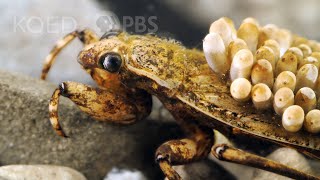
Giant water bugs — aka "toe-biters" — pack one of the most painful bites of any insect. But they make the best dads ever. Rather than leaving the survival of his eggs to chance, dad will haul them around piggyback style for weeks, until they hatch right off his back. SUBSCRIBE to Deep Look! https://www.youtube.com/user/kqeddeeplook?sub_confirmation=1 Please join our community on Patreon! https://www.patreon.com/deeplook DEEP LOOK is an ultra-HD (4K) short video series created by KQED San Francisco and presented by PBS Digital Studios. See the unseen at the very edge of our visible world. Explore big scientific mysteries by going incredibly small. --- This summer, as you cool your bare feet in a stream somewhere in California – or almost anywhere in the world, really – you might feel a painful nip. The menacing culprit: a giant water bug. Lurking just below the surface of that flowing creek or refreshing pond, these bugs resemble enormous aquatic ticks, with googly eyes and praying mantis arms. And although they won’t seek you out for an attack, they also won’t hesitate to take a defensive bite if you get too close, earning them the nickname “toe-biters.” They puncture the skin with dagger-like mouth parts and have a bite known as one of the most painful of any insect – sharp and stinging like a wasp’s. You may not even get a chance to spot the offending insect before it dashes off, but you’ll undoubtedly be left with an indelible impression. And a swollen, throbbing toe. --- What do giant water bugs eat? Giant water bugs are voracious predators that will take down any small animals they can subdue. They have a long needle-like mouth and their bite contains a cocktail of chemicals that paralyzes their prey and digests their tissues. Then the giant water bugs slurp up its meal. Giant water bugs hunt other insects, tadpoles and frogs, small fish, and even the occasional duckling. --- How do giant water bugs breathe? Giant water bugs spend their lives in freshwater, but they must return to the surface to breathe. Giant water bugs have two little air straps that protrude from their backside. The air straps work like a snorkel to pull air into a bubble trapped under their wings. --- What do giant water bugs taste like? In Southeast Asia giant water bugs are sometimes eaten as a regional delicacy. Like other arthropods, giant water bugs are said to taste a bit like shrimp with a slightly sweet flavor. ---+ Read the entire article on KQED Science: https://www.kqed.org/science/1979474/dont-go-chasing-water-bugs ---+ More great Deep Look episodes: You Can’t Unsee the Assassin Bug’s Dirty Work | Deep Look https://youtu.be/bdzK-pTadQs Tadpole Shrimp Are Coming For Your Rice | Deep Look https://youtu.be/T2xnXaX7r3g Born Pregnant: Aphids Invade with an Onslaught of Clones | Deep Look https://youtu.be/vrzalLssomg ---+ Shoutout! 🏆Congratulations🏆 to the following fans on our Deep Look Community Tab for correctly answering our GIF Challenge! AA-Ron ---+ Thank you to our Top Patreon Supporters ($10+ per month)! Jessica Burt Humburg Karen Reynolds Daisuke Goto Allison & Maka Masuda David Deshpande Wild Turkey Chris B Emrick J8Zenith Tianxing Wang Companion Cube Mark Jobes Blanca Vides Kevin Judge Jana Brenning monoirre Aurora Anastasia Grinkevic Supernovabetty Titania Juang Roberta K Wright KW Kimberly Hall Syniurge El Samuels Carrie Mukaida Jellyman Nicky Orino Cristen Rasmussen Kristy Freeman Mehdi Laurel Przybylski SueEllen McCann Cindy McGill Shonara Rivas Kelly Hong Louis O'Neill Sonia Tanlimco Nicolette Ray Misia Clive Jeremiah Sullivan Joshua Murallon Robertson Caitlin McDonough Shelley Pearson Cranshaw Noreen Herrington Wade Tregaskis 吳怡彰 Shonara Rivas Elizabeth Ann Ditz Silvan Delphine Tseng TierZoo Levi Cai Kenneth Fyrsterling ---+ Follow Deep Look and KQED Science on social: https://www.tiktok.com/@deeplookofficial https://www.patreon.com/deeplook Instagram: https://www.instagram.com/kqedscience/ Twitter: https://www.twitter.com/kqedscience ---+ About KQED KQED, an NPR and PBS affiliate in San Francisco, CA, serves Northern California and beyond with a public-supported alternative to commercial TV, Radio and web media. Funding for Deep Look is provided in part by PBS Digital Studios. Deep Look is a project of KQED Science, the largest science and environment reporting unit in California. KQED Science is supported by the Dirk and Charlene Kabcenell Foundation, Campaign 21 and the members of KQED.
-
This Freaky Fruit Fly Lays Eggs in Your Strawberries | Deep Look
Jun 7, 2022
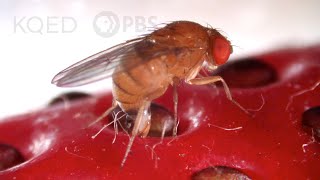
The spotted wing drosophila may look like a common fruit fly, but it’s so much worse. Just as strawberries, blueberries, raspberries and blackberries are ripening in the field, this fly saws into them and lays her eggs inside. The growing maggots turn the fruit into a mushy mess. Could a wasp and its own hungry maggots save the day? SUBSCRIBE to Deep Look! https://www.youtube.com/user/kqeddeeplook?sub_confirmation=1 Please join our community on Patreon! https://www.patreon.com/deeplook DEEP LOOK is a ultra-HD (4K) short video series created by KQED San Francisco and presented by PBS Digital Studios. See the unseen at the very edge of our visible world. Explore big scientific mysteries by going incredibly small. --- To cut into fruit and lay their eggs, female spotted wing drosophila flies use a long tool at the back of their bodies. This ovipositor has two rows of teeth that they dig into firm fruit while it’s still on the bush. The maggots that grow from the eggs ruin the fruit so that it never makes it to market. In comparison, the common fruit fly milling about in your kitchen has a smoother, shorter ovipositor with which it can only dig into rotting fruit, like the bananas you didn’t get to. Spotted wing drosophila are originally from East Asia and have spread around the world, helped in part by their ability to survive through a cold winter. To protect their crops, growers have to spray insecticides to kill them. That’s why scientists are introducing a less toxic option, a parasitic wasp called Ganaspis brasiliensis, which is also from Asia. Females of this wasp lay their eggs inside the maggots of a spotted wing drosophila. The U.S. Department of Agriculture recently approved the release of the wasp in the United States. Scientists are now planning large releases in California and other affected areas around the country this summer, said University of California, Berkeley, entomologist Kent Daane, who studies the insect. --- What do spotted wing drosophila look like? They get their name from the black spot near the tip of each of the male’s wings. Otherwise, they look fairly similar to the common fruit fly. --- What crops do spotted wing drosophila impact? In addition to strawberries, raspberries, blueberries and blackberries, they also infest cherries and stone fruits. They’re a pest of wine grapes in places like Switzerland, though not in California. --- How do organic berry farmers control spotted wing drosophila? They apply pesticides approved for use in organic farming, such as spinosad, a natural substance produced by a soil bacterium. They also try to keep the flies away from their crops in the first place. For example, they cut down vegetation growing near their fields, such as invasive Himalayan blackberry plants where the flies like to live when they’re not feeding on ripening crops. ---+ Find a transcript and additional resources on KQED Science: https://www.kqed.org/science/1979380/this-freaky-fruit-fly-lays-eggs-in-your-strawberries ---+ More Great Deep Look episodes: This Killer Fungus Turns Flies into Zombies https://youtu.be/C2Jw5ib-s_I Here’s How That Annoying Fly Dodges Your Swatter https://youtu.be/jBPFCvEhv9Y ---+ Shoutout! 🏆Congratulations🏆 to the first 5 fans on our Deep Look Community Tab to correctly answer our GIF challenge! Ahmed Hadwan oluwatobiloba oluwafemi Ozborne Moxxie :D abloobloo ---+ Thank you to our Top Patreon Supporters ($10+ per month)! Jessica Chris B Emrick Burt Humburg Karen Reynolds Daisuke Goto Adam Kurtz Allison & Maka Masuda David Deshpande Wild Turkey Tianxing Wang Companion Cube Mark Jobes Blanca Vides Kevin Judge Jana Brenning Aurora monoirre Roberta K Wright Anastasia Grinkevic Titania Juang Supernovabetty Syniurge Carrie Mukaida KW El Samuels Jellyman Cristen Rasmussen Scott Faunce Mehdi Nicky Orino Kristy Freeman Noreen Herrington Cindy McGill Sonia Tanlimco Kelly Hong SueEllen McCann Nicolette Ray Caitlin McDonough Laurel Przybylski Louis O'Neill Shelley Pearson Cranshaw Robert Amling Misia Clive 吳怡彰 Jeremiah Sullivan Delphine Tseng Levi Cai Silvan Joshua Murallon Robertson TierZoo Shonara Rivas Wade Tregaskis Elizabeth Ann Ditz Kenneth Fyrsterling ---+ Follow Deep Look and KQED Science on social: TikTok: https://www.tiktok.com/@deeplookofficial Patreon: https://www.patreon.com/deeplook Instagram: https://www.instagram.com/kqedscience/ Twitter: https://www.twitter.com/kqedscience ---+ About KQED KQED, an NPR and PBS affiliate in San Francisco, CA, serves Northern California and beyond with a public-supported alternative to commercial TV, Radio and web media. Funding for Deep Look is provided in part by PBS Digital Studios. Deep Look is a project of KQED Science, the largest science and environment reporting unit in California. KQED Science is supported by the Dirk and Charlene Kabcenell Foundation, Campaign 21 and the members of KQED. #spottedwingdrosophila #drosophilasuzukii #deeplook
-

Silkworms Spin Cocoons That Spell Their Own Doom | Deep Look
May 17, 2022
Those precious silk garments in your closet were made by the caterpillar of a fuzzy white moth – thousands of them. Silkworms spin a cocoon with a single strand of silk up to ten city blocks long. Humans have bred these insects into weaving machines that can no longer survive in the wild. SUBSCRIBE to Deep Look! https://www.youtube.com/user/kqeddeeplook?sub_confirmation=1 Please join our community on Patreon! https://www.patreon.com/deeplook DEEP LOOK is an ultra-HD (4K) short video series created by KQED San Francisco and presented by PBS Digital Studios. See the unseen at the very edge of our visible world. Explore big scientific mysteries by going incredibly small. — The sumptuous silk in your satiny sheets and glamorous gowns comes from humble beginnings – a caterpillar of the domesticated silk moth. For almost five thousand years, people have raised silkworms for their unique, shimmering material. In just a few days, these caterpillars produce one fine thread of silk one kilometer long, and intricately weave it into their cocoons. For most silkworms in captivity, this is where their journey ends. To preserve the integrity of the continuous silk thread in each cocoon, silk farmers kill the pupa inside the chrysalis by boiling, steam, or sun. Then the strands are loosened in hot water and unwound by hand using specialized spinners and silk harvesting tools. This raw silk is then gathered onto large spools and refined into commercially valuable threads. It can take up to 2000 silkworms to make one silk dress. Today, the silk industry is valued at more than $10 billion globally, but it is more than just a luxury item. Silk is pound-for-pound stronger than steel, and it is now used in medicine to heal bones and tendons. Our five thousand year love affair with this extraordinary material continues to hold silkworms captive -- until we learn to spin silk better than they can. __ – What other insects produce silk? Animal-produced silk is actually quite common in the natural world. Spiders (of course), fleas, webspinners, caddisflies and even some ants and bees make silk. But only the silk made by the caterpillar of the domestic silk moth is widely cultivated by humans. – Are silkworms edible? Yes! Silkworms are enjoyed as a nutritious snack in many countries, including Thailand, Vietnam, China and Madagascar. – Where do wild silk moths live? Domestic silk moths (Bombyx mori) can’t survive in the wild without help from humans, but their cousins – the wild silk moth (Bombyx mandarina) can be found in Asia, in countries like China, Korea and Japan. ---+ More great Deep Look episodes: The Curious Webspinner Insect Knits a Cozy Home https://www.youtube.com/watch?v=l_JP3RbJ8zk Is a Spider's Web a Part of Its Mind? https://www.youtube.com/watch?v=rpwkgMX4IlQ ---+ Shoutout! 🏆Congratulations🏆 to the first 5 (well, 6, we missed R Alan!) fans on our Deep Look Community Tab to correctly answer our GIF challenge! TheMicroGuy TheWhiteScatterbug Manish Ravi BobBob Juhi Shah R Alan ---+ Thank you to our Top Patreon Supporters ($10+ per month)! Chris B Emrick Burt Humburg Karen Reynolds Daisuke Goto Adam Kurtz Allison & Maka Masuda David Deshpande Wild Turkey Tianxing Wang Companion Cube Mark Jobes Blanca Vides Kevin Judge Jana Brenning Aurora monoirre Roberta K Wright Anastasia Grinkevic Titania Juang Supernovabetty Syniurge Carrie Mukaida KW El Samuels Jellyman Cristen Rasmussen Scott Faunce Mehdi Nicky Orino Kristy Freeman Noreen Herrington Cindy McGill Sonia Tanlimco Kelly Hong SueEllen McCann Nicolette Ray Caitlin McDonough Laurel Przybylski Louis O'Neill Shelley Pearson Cranshaw Robert Amling Misia Clive 吳怡彰 Jeremiah Sullivan Delphine Tseng Levi Cai Silvan Joshua Murallon Robertson TierZoo Shonara Rivas Wade Tregaskis Elizabeth Ann Ditz Kenneth Fyrsterling ---+ Follow Deep Look and KQED Science on social: https://www.tiktok.com/@deeplookofficial https://www.patreon.com/deeplook Instagram: https://www.instagram.com/kqedscience/ Twitter: https://www.twitter.com/kqedscience ---+ About KQED KQED, an NPR and PBS affiliate in San Francisco, CA, serves Northern California and beyond with a public-supported alternative to commercial TV, Radio and web media. Funding for Deep Look is provided in part by PBS Digital Studios. Deep Look is a project of KQED Science, the largest science and environment reporting unit in California. KQED Science is supported by the Dirk and Charlene Kabcenell Foundation, Campaign 21 and the members of KQED. #silkworm #silkmoth #deeplook
-

Barnacles Go To Unbelievable Lengths To Hook Up | Deep Look
Apr 26, 2022
Acorn barnacles might look like jagged little rocks at low tide, but they have a surprisingly wild sex life. These crusty little animals — related to crabs and shrimp — have the longest penis of any animal relative to their body size. It's up to eight times the length of the barnacle itself! SUBSCRIBE to Deep Look and hit that bell 🔔 🔔 🔔 to receive our notifications ! DEEP LOOK is an ultra-HD (4K) short video series created by KQED San Francisco and presented by PBS Digital Studios. See the unseen at the very edge of our visible world. Explore big scientific mysteries by going incredibly small. --- When it comes to mating, acorn barnacles have a challenge. How do you find a date when you’re permanently stuck to a rock, pier or boat hull? Fortunately for them, barnacles are packing the right equipment to get the job done. They have the longest penis of any animal relative to their body size. But the barnacle’s male organ isn’t just impressive because of its length. It can smell and taste and the tip can feel around to find neighbors that have ripe ovaries inside. “It is very clear that the barnacle’s penis is really much more of a sensory organ that also delivers sperm,” says Peter Raimondi, professor of ecology and evolutionary biology at the University of California, Santa Cruz. --- What do barnacles eat? Barnacles use their long feathery legs called cirri to strain plankton and debris right out of the water. Barnacles are often found in the intertidal zone where the waves churn up seaweed and carrion into small pieces that barnacles can eat. --- How do barnacles attach to rocks? Free-swimming mature barnacle larvae called cyprids attach themselves to rocks, piers, boat hulls and other underwater surfaces with a special cement that they excrete from glands between their antennae. The young barnacle then builds a ring of protective shell around itself. --- What are barnacles related to? From the outside, barnacles may look more like clams or mussels. But barnacles are actually crustaceans that are more closely related to shrimp and crabs. ---+ Find additional resources and a transcript on KQED Science: https://www.kqed.org/science/1979151/barnacles-go-to-unbelievable-lengths-to-hook-up ---+ More great Deep Look episodes: These Feisty Hermit Crabs Brawl Over Snail Shells | Deep Look https://youtu.be/zCsbTcmtsoA Skeleton Shrimp Use 18 Appendages to Feed, Fight and ... Frolic | Deep Look https://youtu.be/lQtU5Cu7GDw Once a Spawn a Time: Horseshoe Crabs Mob the Beach | Deep Look https://youtu.be/iYvWssvg1YU ---+ Shoutout! 🏆Congratulations🏆 to Kamea Webster on our Deep Look Community Tab for correctly answering our GIF challenge! The entire structure of the barnacle legs is called the cirral fan! ---+ Thank you to our Top Patreon Supporters ($10+ per month)! Jessica Chris B Emrick Burt Humburg David Deshpande Karen Reynolds Daisuke Goto Adam Kurtz Allison & Maka Masuda Wild Turkey Tianxing Wang Companion Cube Mark Jobes Blanca Vides Jana Brenning Kevin Judge Syniurge Aurora Titania Juang monoirre Roberta K Wright Supernovabetty Anastasia Grinkevic KW El Samuels Jellyman Scott Faunce Mehdi Nicky Orino Cristen Rasmussen Kristy Freeman Cindy McGill Laurel Przybylski 吳怡彰 SueEllen McCann Misia Clive Shelley Pearson Cranshaw Joshua Murallon Robertson Kelly Hong Caitlin McDonough Sonia Tanlimco Nicolette Ray Noreen Herrington Silvan Elizabeth Ann Ditz Louis O'Neill Levi Cai kenneth nguyen ! Shonara Rivas TierZoo Jeremiah Sullivan Wade Tregaskis Delphine Tseng Carrie Mukaida rafael pirondi ---+ Follow Deep Look and KQED Science on social: https://www.tiktok.com/@deeplookofficial https://www.patreon.com/deeplook Instagram: https://www.instagram.com/kqedscience/ Twitter: https://www.twitter.com/kqedscience ---+ About KQED KQED, an NPR and PBS affiliate in San Francisco, California, serves Northern California and beyond with a public-supported alternative to commercial TV, radio and web media. Funding for Deep Look is provided in part by PBS Digital Studios. Deep Look is a project of KQED Science, the largest science and environment reporting unit in California. KQED Science is supported by The National Science Foundation, the Dirk and Charlene Kabcenell Foundation, the Vadasz Family Foundation, the Gordon and Betty Moore Foundation, Campaign 21 and the members of KQED.
-

Honeypot Ants Turn Their Biggest Sisters into Jugs of Nectar | Deep Look
Apr 5, 2022
Deep in their underground nests, honeypot ants stuff members of their own colony until they look like golden water balloons. Drop by drop, worker ants deliver nectar and other liquid food into their largest sisters’ mouths. When food is scarce in the desert, the colony will feed from these living storage tanks, known as repletes. Hey Deep Peeps! If you love Ants, here is our I LOVE ANTS PLAYLIST: https://www.youtube.com/watch?v=fguo3HvWjb0&list=PLdKlciEDdCQD2UprWUYAiN3AzJ-RtEqv1 DEEP LOOK is a ultra-HD (4K) short video series created by KQED San Francisco and presented by PBS Digital Studios. See the unseen at the very edge of our visible world. Explore big scientific mysteries by going incredibly small. --- How do honeypot ant workers turn their sisters into repletes? First, they choose the biggest newborns. Then they need food to fill them up. The species of honeypot ant featured in our video, Myrmecocystus mexicanus, forages at night in the Southwest and Mexico. Workers venture out of their nest at dusk and collect nectar from plants, as well as other sweet liquids they slurp from the backsides of tiny animals like aphids. And they gather dead insects, such as other ants. Some of the fat and protein they extract from the insects will end up inside the repletes. Workers carry the nectar and other liquids back to the nest inside their own abdomens. Then they transfer it, mouth to mouth, to the ants they’re turning into repletes. The liquid flows into a pouch in the replete’s abdomen called the crop. This is the part of the ant that swells into a storage tank. The nutritious liquid stays inside the crop because four valves prevent most of it from flowing into the ant’s stomach, where it would be digested. --- Where are honeypot ants found? Honeypot ants – also known as honey ants – are found in arid regions of North America, Australia and Africa. --- Are honey ants edible? Yes. People eat them in Mexico, where they’re called hormigas mieleras, and in Australia. --- What do honey ants taste like when you eat them? One way to eat a replete is to hold it by the torso and bite off its abdomen so that it pops open inside your mouth. “In my opinion, they taste like molasses,” says entomologist John Conway, who has studied Myrmecocystus mexicanus honeypot ants in Colorado. When they’re about to be eaten, the ants squirt out a bit of formic acid as a defense mechanism. The acid can cause a very light burning sensation, says Deep Look producer Gabriela Quirós, who was filmed eating a replete for this episode. --- Why do honeypot ants hang from the ceiling? Conway says the air circulating around repletes as they hang from the top of the nest might help them avoid fungal infections. That said, repletes can move around and they sometimes crawl on the floor of the nest. ---+ Find a transcript on KQED Science: https://www.kqed.org/science/1978892/honeypot-ants-turn-their-biggest-sisters-into-jugs-of-nectar ---+ More Great Deep Look episodes: Kidnapper Ants Steal Other Ants’ Babies – and Brainwash Them https://youtu.be/sC4MjPKf3jY Where Are the Ants Carrying All Those Leaves? https://youtu.be/-6oKJ5FGk24 The Double-Crossing Ants to Whom Friendship Means Nothing https://youtu.be/fguo3HvWjb0 ---+ Shoutout! 🏆Congratulations🏆 to Kamea Webster on our Deep Look Community Tab for correctly answering our GIF challenge! https://www.youtube.com/post/UgkxCcPd-_Lye-iHU31-fkTCrA1a7nUUnZSL ---+ Thank you to our Top Patreon Supporters ($10+ per month)! Jessica Chris B Emrick Burt Humburg David Deshpande Karen Reynolds Allison & Maka Masuda Daisuke Goto Adam Kurtz Wild Turkey Tianxing Wang Companion Cube Josh Kuroda Mark Jobes Blanca Vides Supernovabetty Kevin Judge Jana Brenning Anastasia Grinkevic Roberta K Wright monoirre Titania Juang Aurora KW Syniurge El Samuels Carrie Mukaida Jellyman Scott Faunce Cristen Rasmussen Kristy Freeman Nicky O. rafael pirondi Mehdi Cindy McGill Kelly Hong SueEllen McCann Noreen Herrington Sonia Tanlimco Laurel Przybylski Caitlin McDonough Misia Clive Nicolette Ray Louis O'Neill 吳怡彰 Shelley Pearson Cranshaw Levi Cai Jeremiah Sullivan Delphine Tseng kenneth nguyen ! Shonara Rivas Joshua Murallon Robertson Silvan TierZoo Elizabeth Ann Ditz Wade Tregaskis ---+ Follow KQED Science and Deep Look: Instagram: https://www.instagram.com/kqedscience/ Twitter: https://www.twitter.com/kqedscience ---+ About KQED KQED, an NPR and PBS affiliate in San Francisco, CA, serves Northern California and beyond with a public-supported alternative to commercial TV, radio and web media. Funding for Deep Look is provided in part by PBS Digital Studios. Deep Look is a project of KQED Science, the largest science and environment reporting unit in California. KQED Science is supported by the Dirk and Charlene Kabcenell Foundation, Campaign 21 and the members of KQED. #honeypotants #honeyants #deeplook
-

The Vinegaroon Sprays Acid to Foil Its Foes | Deep Look
Mar 15, 2022
The vinegaroon – also known as a whip scorpion – looks like a Frankenstein creation of monster body parts. But unlike true scorpions, it doesn’t use venom to defend itself from predators. Instead, it aims its tail at their face and sprays a blast of acid that reeks of – you guessed it – vinegar. Only this weaponized vinegar is 16 times stronger than what’s in your salad. SUBSCRIBE to Deep Look! http://goo.gl/8NwXqt Please join our community on Patreon! https://www.patreon.com/deeplook DEEP LOOK is an ultra-HD (4K) short video series created by KQED San Francisco and presented by PBS Digital Studios. See the unseen at the very edge of our visible world. Explore big scientific mysteries by going incredibly small. — Distant relatives of scorpions and spiders – vinegaroons have evolved a unique form of defense. If you bother them, the worst you might experience as a large mammal with eyes, would be an irritating blast of strong vinegar-smelling acid in your face. When under threat from predators – mostly foraging night hunters like coyotes, skunks and lizards – it will spray a solution of acetic acid from two glands just above the base of its tail. This spray is made up of about 85% acetic acid (the primary component of vinegar) and about 15% caprylic acid (another slightly unpleasant-smelling acid). It is able to aim the spray in any direction with its tail, and can shoot up to 5 times before it needs to replenish the fluids. The tail also bristles with tiny hairs that serve to help the animal sense vibrations in the air, and pick up chemical traces of other members of the species, as well as prey. __ – What’s the difference between a vinegaroon (aka whip scorpion) and a scorpion? Although they are both arachnids, a vinegaroon is not a scorpion. Vinegaroons are sometimes referred to as whip scorpions, with a skinny whiplike tail instead of scorpions’ typical segmented tail with a stinger. Unlike true scorpions, vinegaroons don’t sting or produce venom. – What do vinegaroons eat? Their diets consist of a variety of small invertebrates – including millipedes, crickets, roaches, scorpions and mealworms. Vinegaroons lead solitary lives, and may even cannibalize other smaller vinegaroons. – Where do vinegaroons live? There are over 100 species of vinegaroons worldwide, found in tropical and subtropical areas in North America, South America, Asia and Africa. The species we feature in our episode is the Giant vinegaroon (Mastigoproctus giganteus), which lives in the southern US and Mexico. The Giant vinegaroon has recently been reclassified and subdivided further into seven separate species. ---+ Find additional resources and a transcript on KQED Science: https://www.kqed.org/science/1978748/the-vinegaroon-sprays-acid-to-foil-its-foes ---+ More great Deep Look episodes: Scorpions Are Predators With a Sensitive Side | Deep Look https://www.youtube.com/watch?v=3jtm9BdnE1U Stinging Scorpion vs. Pain-Defying Mouse | Deep Look https://www.youtube.com/watch?v=w-K_YtWqMro ---+ Shoutout! 🏆Congratulations🏆 to the following fans on our Deep Look Community Tab for correctly answering our Community Tab GIF challenge! Feline Vegan Guido Visioni RiverTrash The Pied Piper Jiji ---+ Thank you to our Top Patreon Supporters ($10+ per month)! Jessica Chris B Emrick Burt Humburg David Deshpande Karen Reynolds Allison & Maka Masuda Daisuke Goto Adam Kurtz Wild Turkey Tianxing Wang Companion Cube Josh Kuroda Mark Jobes Blanca Vides Supernovabetty Kevin Judge Jana Brenning Anastasia Grinkevic Roberta K Wright monoirre Titania Juang Aurora KW Syniurge El Samuels Carrie Mukaida Jellyman Scott Faunce Cristen Rasmussen Kristy Freeman Nicky O. rafael pirondi Mehdi Cindy McGill Kelly Hong SueEllen McCann Noreen Herrington Sonia Tanlimco Laurel Przybylski Caitlin McDonough Misia Clive Nicolette Ray Louis O'Neill 吳怡彰 Shelley Pearson Cranshaw Levi Cai Jeremiah Sullivan Delphine Tseng kenneth nguyen ! Shonara Rivas Joshua Murallon Robertson Silvan TierZoo Elizabeth Ann Ditz Wade Tregaskis ---+ Follow KQED Science and Deep Look: Instagram: https://www.instagram.com/kqedscience/ Twitter: https://www.twitter.com/kqedscience —+ Photo of vinegaroon by Uno_Mas_Bajo_El_Sol/Shutterstock.com ---+ About KQED KQED, an NPR and PBS affiliate in San Francisco, California, serves Northern California and beyond with a public-supported alternative to commercial TV, radio and web media. Funding for Deep Look is provided in part by PBS Digital Studios. Deep Look is a project of KQED Science, the largest science and environment reporting unit in California. KQED Science is supported by the Dirk and Charlene Kabcenell Foundation, Campaign 21 and the members of KQED. #vinegaroon #whipscorpion #deeplook
-
This Mushroom Fakes Its Own Death To Trick Flies | Deep Look
Feb 22, 2022
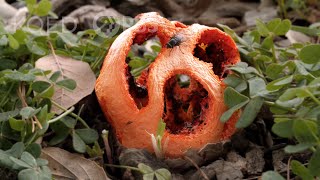
The cage fungus looks and smells like decaying meat — on purpose. Its goopy lattice gives off a rotten odor that attracts flies, which help spread its spores far and wide. It's like a bee to a flower, but way more macabre and putrid. SUBSCRIBE to Deep Look! http://goo.gl/8NwXqt Please join our community on Patreon! https://www.patreon.com/deeplook DEEP LOOK is an ultra-HD (4K) short video series created by KQED San Francisco and presented by PBS Digital Studios. See the unseen at the very edge of our visible world. Explore big scientific mysteries by going incredibly small. --- Cage fungus gets its name from the shape of its spongy lattice-shaped mushroom. “It's this kind of red-orange geodesic dome,” says naturalist Damon Tighe. “They can get up to the size of a softball and they're open on the inside where they've got this sticky, gooey substance called gleba.” The gleba contains the fungus’ reproductive spores and it’s the gleba that gives the mushroom its fetid aroma. “It reeks of death,” says Tighe. “If you get up close to it, there are these sharp notes that hit your nose that just make you recoil immediately.” Flies that normally feed on stinky things like carrion and feces are drawn to the smell. They lap up the gleba, inadvertently downing millions of the spores and spreading them far and wide. --- What is red cage fungus? Clathrus ruber is a type of stinkhorn mushroom. Like most mushrooms, what you see above ground is only a small percent of the entire organism. Most of it is made up of a network of thin threads called the mycelium. When the conditions are right, the mycelium produces an “egg” that pops up above ground. When it's mature, the lattice structure called a receptacle bursts out from the “egg.” --- Why do cage fungus smell so bad? The gleba found on the inside surfaces of the cage fungus fruiting body contains compounds like dimethyl sulfide, which smells like rotten eggs. The foul smell attracts flies that spread the fungus’ spores. --- What do cage fungus eat? Cage fungus is saprobic, feeding on dead and dying wood. The fungus’ mycelium digest the cellulose in the wood, returning nutrients to the soil. ---+ Find additional resources and a transcript on KQED Science: https://www.kqed.org/science/1978560/this-mushroom-tricks-flies-by-faking-its-own-death ---+ More great Deep Look episodes: This Killer Fungus Turns Flies into Zombies | Deep Look https://youtu.be/C2Jw5ib-s_I This Mushroom Starts Killing You Before You Even Realize It | Deep Look https://youtu.be/bl9aCH2QaQY Here’s How That Annoying Fly Dodges Your Swatter | Deep Look https://youtu.be/jBPFCvEhv9Y ---+ Shoutout! 🏆Congratulations🏆 to the following 5 fans on our Deep Look Community Tab for identifying why the female oak moth is fanning her wings ― to spread her pheromones to attract males! Norwyn Kenzo Hofmeister Hèctor Bonnin Obach Tu fon Kin MeEeDo ---+ Thank you to our Top Patreon Supporters ($10+ per month)! Jessica Chris B Emrick Burt Humburg Karen Reynolds David Deshpande Daisuke Goto Allison & Maka Masuda Adam Kurtz Tianxing Wang Companion Cube Josh Kuroda Wild Turkey Germán Botón García Mark Jobes Blanca Vides Kevin Judge Jana Brenning Aurora monoirre Titania Juang Roberta K Wright Anastasia Grinkevic Syniurge Supernovabetty Carrie Mukaida KW El Samuels Jellyman Nicky O. Cristen Rasmussen Mehdi Kristy Freeman Scott Faunce SueEllen McCann Kelly Hong Sonia Tanlimco Noreen Herrington Cindy McGill Louis O'Neill Misia Clive Laurel Przybylski Shelley Pearson Cranshaw Jeremiah Sullivan Joshua Murallon Robertson Nicolette Ray Caitlin McDonough Wade Tregaskis 吳怡彰 Levi Cai Shonara Rivas kenneth nguyen ! Silvan Delphine Tseng TierZoo Elizabeth Ann Ditz Corvus Crudus rafael pirondi ---+ Follow KQED Science and Deep Look: Instagram: https://www.instagram.com/kqedscience/ Twitter: https://www.twitter.com/kqedscience ---+ About KQED KQED, an NPR and PBS affiliate in San Francisco, California, serves Northern California and beyond with a public-supported alternative to commercial TV, radio and web media. Funding for Deep Look is provided in part by PBS Digital Studios. Deep Look is a project of KQED Science, the largest science and environment reporting unit in California. KQED Science is supported by The National Science Foundation, the Dirk and Charlene Kabcenell Foundation, the Vadasz Family Foundation, the Gordon and Betty Moore Foundation, Campaign 21 and the members of KQED.
-
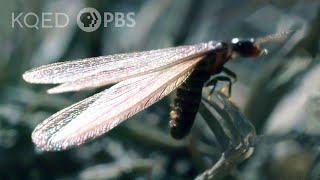
Flying Termites Take a Dangerous Journey to a New Life | Deep Look
Feb 1, 2022
After the first big rain, western subterranean termites swarm by the thousands. Hungry ants, spiders and birds pick them off as they emerge from the soil. The survivors fly off to find mates, and quickly drop their delicate wings to start new underground colonies. If you’re really unlucky, they’ll build tubes of mud and saliva from their nest to yours. DEEP LOOK is an ultra-HD (4K) short video series created by KQED San Francisco and presented by PBS Digital Studios. See the unseen at the very edge of our visible world. Explore big scientific mysteries by going incredibly small. --- These massive swarms of western subterranean termites happen once a year in California on a warm, windless day shortly after the first big rain that ended the dry summer. Winged termites called alates push through the softened soil. They crawl out of cracks in the road and holes in tree stumps. Big-headed soldier termites stand guard to defend them. Underground colonies send these alates up to reproduce with alates from nearby colonies. Once a male and female alate find each other, their wings break off. The male runs after the female very quickly, before they both dig themselves into the earth and start their own colony. --- --- Do all termites fly? Only some members of any termite colony can fly. But all types of termites (subterranean, drywood and dampwood) produce alates, whose job it is to fly out and start new colonies. --- Do flying termites eat wood? No. Once a pair of flying termites have hooked up, they lose their wings, dig underground, mate and lay thousands of eggs. They will be the king and queen of their colony. The worker termites they make will then leave the nest to forage for sources of cellulose, like a dead tree, or wood in a house. When they return to the nest, these workers will feed the colony’s king and queen, as well as the young termites. --- Should I worry about flying termites? If you see termites flying out inside your house, they could be a sign of infestation. But the more common signs of a subterranean termite infestation are tubes made from earth that worker termites build at the bottom of your house connecting wooden structures to the soil. Termites build these so-called shelter tubes from mud, saliva and even bits of wood or drywall. The insects desiccate easily and need these covered shelter tubes to stay moist. ---+ Find additional resources and a transcript on KQED Science: https://www.kqed.org/science/1978298/flying-termites-take-a-dangerous-journey-to-a-new-life ---+ More great Deep Look episodes: These Termites Turn Your House into a Palace of Poop https://youtu.be/DYPQ1Tjp0ew Watch Bed Bugs Get Stopped in Their Tracks https://youtu.be/ToeWrGTGOOI A Flea’s Fantastic Jump Takes More Than Muscle https://youtu.be/A5KvNcNz9aQ ---+ Shoutout! 🏆Congratulations🏆 to the first 5 fans on our Deep Look Community Tab to correctly answer our GIF challenge! NeExtraOleas Amber Cooper Grace Chen Violet A. Salticidae Duncan ---+ Thank you to our Top Patreon Supporters ($10+ per month)! Jessica Chris B Emrick Burt Humburg Karen Reynolds David Deshpande Daisuke Goto Allison & Maka Masuda Adam Kurtz Tianxing Wang Companion Cube Josh Kuroda Wild Turkey Germán Botón García Mark Jobes Blanca Vides Kevin Judge Jana Brenning Aurora monoirre Titania Juang Roberta K Wright Anastasia Grinkevic Syniurge Supernovabetty Carrie Mukaida KW El Samuels Jellyman Nicky O. Cristen Rasmussen Mehdi Kristy Freeman Scott Faunce SueEllen McCann Kelly Hong Sonia Tanlimco Noreen Herrington Cindy McGill Louis O'Neill Misia Clive Laurel Przybylski Shelley Pearson Cranshaw Jeremiah Sullivan Joshua Murallon Robertson Nicolette Ray Caitlin McDonough Wade Tregaskis 吳怡彰 Levi Cai Shonara Rivas kenneth nguyen ! Silvan Delphine Tseng TierZoo Elizabeth Ann Ditz Corvus Crudus rafael pirondi ---+ Follow KQED Science and Deep Look: Instagram: https://www.instagram.com/kqedscience/ Twitter: https://www.twitter.com/kqedscience ---+ About KQED KQED, an NPR and PBS affiliate in San Francisco, California, serves Northern California and beyond with a public-supported alternative to commercial TV, radio and web media. Funding for Deep Look is provided in part by PBS Digital Studios. Deep Look is a project of KQED Science, the largest science and environment reporting unit in California. KQED Science is supported by the Dirk and Charlene Kabcenell Foundation, Campaign 21 and the members of KQED. #subterraneantermites #termites #deeplook
-

Australian Walking Stick Insects Are Three Times Weirder Than You Think | Deep Look
Jan 11, 2022
The Australian walking stick is a master of deception, but a twig is just one of its many disguises. Before it’s even born, it mimics a seed. In its youth it looks and acts like an ant. Only when it has grown up does it settle into its final, leafy form. Along the way, it fools predators at every turn. Take the 2023 PBS Survey: https://to.pbs.org/pbssurvey2023g DEEP LOOK is an ultra-HD (4K) short video series created by KQED San Francisco and presented by PBS Digital Studios. See the unseen at the very edge of our visible world. Explore big scientific mysteries by going incredibly small. — The Australian walking stick (Extatosoma tiaratum) does an amazingly convincing job of looking like a dead leafy branch. Also known as the spiny leaf insect, giant prickly stick insect, or Macleay’s spectre, it has a few extra tricks up its “leaves.” Even before it is born, it begins a lifetime of deception. The egg looks like a seed that has fallen to the forest floor, with a fatty knob on one end that is irresistible to some foraging ants. These ants take the egg to their underground nest, where they snack on the nutritious cap, leaving the rest of the egg intact. Over the next few months to a year, the egg is protected underground from predators and develops in the humid, climate-controlled ant burrow. The young insect emerges from the ant nest wearing its next disguise – a red-headed spider ant. This species of ant (Leptomyrmex erythrocephalus) forages for food alone, and are about the same size as the stick insect nymph. Also the newborn nymph moves quickly, just like the ants do. The nymph quickly makes its way into the safety of the trees, and begins to molt. Then, as it matures into adulthood, the Australian stick insect activates its plant costume, using passive camouflage. During these phases, it sways back-and-forth as it walks. Researchers call this imitation of leaves blowing in the wind “active camouflage." — — Do Australian walking stick insects need to mate to have offspring? Amazingly, they do not! Like many walking sticks, if no males are around, a female Australian walking stick insect may reproduce, and lay fertile eggs alone. This process is called parthenogenesis, and the offspring are genetic clones of their mothers. — Can Australian walking sticks fly? Adult males do have functional wings they can use to glide away from threatening situations. — How long do Australian walking sticks live? Australian walking sticks live an average of 12 months, but may live longer in captivity. Between hatching and adulthood, they undergo six moults. The wings on adult males only appear after the final moult. — ---+ Find additional resources and a transcript on KQED Science: https://www.kqed.org/science/1978180/australian-walking-stick-insects-are-three-times-weirder-than-you-think/ ---+ More great Deep Look episodes: These Giant Leaf Insects Will Sway Your Heart | Deep Look https://youtu.be/QjPInsEYDLs Walking Sticks Stop, Drop and Clone to Survive | Deep Look https://youtu.be/Nxs0Q7ktaKU Kidnapper Ants Steal Other Ants' Babies - And Brainwash Them | Deep Look https://youtu.be/sC4MjPKf3jY ---+ Shoutout! 🏆Congratulations🏆 to the following fans on our Deep Look Community Tab for correctly answering our Community Tab GIF challenge! Theresa Calovini Ahmet Kerem Duncan Gavin Rushing Aragon ---+ Thank you to our Top Patreon Supporters ($10+ per month)! Jessica Chris B Emrick Burt Humburg David Deshpande Karen Reynolds Daisuke Goto Adam Kurtz Allison & Maka Masuda Wild Turkey Tianxing Wang Companion Cube Nathan Jewsbury Josh Kuroda Mark Jobes Kevin Judge Blanca Vides monoirre Anastasia Grinkevic Supernovabetty Roberta K Wright Titania Juang Aurora Syniurge AdmiralShadow KW El Samuels Carrie Mukaida Jellyman Mehdi Rick Wong Kristy Freeman Cristen Rasmussen Ed Gandia Mary Truland Nicky O. Kelly Hong Scott Faunce Cindy McGill SueEllen McCann Nicolette Ray Laurel Przybylski Louis O'Neill Noreen Herrington Shelley Pearson Cranshaw Sonia Tanlimco Misia Clive Caitlin McDonough Wade Tregaskis Silvan Shonara Rivas Elizabeth Ann Ditz Joshua Murallon Robertson Levi Cai TierZoo Delphine Tseng rafael pirondi ---+ Follow KQED Science and Deep Look: Instagram: https://www.instagram.com/kqedscience/ Twitter: https://www.twitter.com/kqedscience ---+ About KQED KQED, an NPR and PBS affiliate in San Francisco, California, serves Northern California and beyond with a public-supported alternative to commercial TV, radio and web media. Funding for Deep Look is provided in part by PBS Digital Studios. Deep Look is a project of KQED Science, the largest science and environment reporting unit in California. KQED Science is supported by the Dirk and Charlene Kabcenell Foundation, Campaign 21 and the members of KQED. #australianwalkingstick #stickinsects #deeplook
-
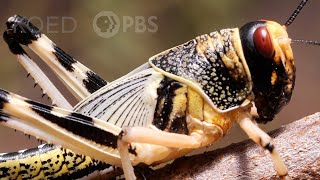
These Swarming Locusts Are Grasshoppers Gone Wrong | Deep Look
Nov 23, 2021
They might look like harmless grasshoppers, but locusts have an appetite for destruction. When the conditions are right, they transform from mild-mannered loners into gregarious partiers. They swarm, causing chaos and suffering at the level of a biblical plague. So what sets them off? WATCH the companion episode from our pal Dr. Emily Zarka of PBS Monstrum, on the origins of 'Big Bug' science fiction: https://youtu.be/8wws89pdCDY DEEP LOOK is an ultra-HD (4K) short video series created by KQED San Francisco and presented by PBS Digital Studios. See the unseen at the very edge of our visible world. Explore big scientific mysteries by going incredibly small. --- “Locusts are certainly immensely fascinating creatures,” says Rick Overson, a research scientist for Arizona State University’s Global Locust Initiative. “Growing up in the Phoenix Valley, my parents called noisy cicadas locusts. But to a biologist, the locust is a special type of grasshopper. They have this really fantastic ability to respond in a way that we call phenotypic plasticity. If the conditions are one way, they can become what we consider a normal, solitary grasshopper that's camouflaged green, goes relatively unnoticed and avoids other members of its species. But then when conditions are right, which a lot of times is rain falling in the desert and producing a lot of food, those locusts then can do this switch and move down a different developmental pathway and their coloration changes, their neurochemistry changes, their behavior changes and they become attracted to one another. They begin to march in these coordinated formations.” --- Why do locusts swarm? Locusts swarm as a reaction to being crowded together. That can happen in different ways, but one common way is when drought reduces the amount of surrounding vegetation and the locusts get concentrated on the remaining plants. --- How long do locusts live? There is variation between species and between individuals within a species, but many species like desert locusts live about three to five months. --- Do locusts bite? Locusts generally don’t bite people, though they may be able to give a little nibble in defense. Like other grasshoppers, locusts will typically try to leap away from danger. If that doesn’t work they can kick with their powerful hind legs. They also have the ability to regurgitate partially digested food and enzymes at their attacker. The dark unpleasant substance is referred to as “tobacco juice.” ---+ Find additional resources and a transcript on KQED Science: https://www.kqed.org/science/1977743/these-swarming-locusts-are-grasshoppers-gone-wrong The Global Locust Initiative (GLI): https://sustainability-innovation.asu.edu/global-locust-initiative/ ---+ More great Deep Look episodes: Why Crickets Just Won't Shut Up | Deep Look https://youtu.be/fh3uNUrAnss Skeleton Shrimp Use 18 Appendages to Feed, Fight and ... Frolic | Deep Look https://youtu.be/lQtU5Cu7GDw Can A Thousand Tiny Swarming Robots Outsmart Nature? | Deep Look https://youtu.be/dDsmbwOrHJs ---+ Shoutout! 🏆Congratulations🏆 to the following fans on our Deep Look Community Tab for correctly answering our GIF challenge! Apple Rosmontis TomasLinz Just a random person Will Smith ---+ Thank you to our Top Patreon Supporters ($10+ per month)! Shonara Rivas Jessica mark tighe Ed Gandia Mehdi Mark Jobes Delphine Tseng Nicky O. Jana Brenning Anastasia Grinkevic Allison & Maka Masuda Nathan Jewsbury Wild Turkey Carrie Mukaida Scott Faunce Tianxing Wang Kelly Hong Misia Clive Kevin Judge Cristen Rasmussen Teresa Lavell Wade Tregaskis Josh Kuroda Burt Humburg Caitlin McDonough Blanca Vides Carlos Carrasco Noreen Herrington Kristy Freeman Mary Truland Roberta K Wright Syniurge Aurora Silvan monoirre Leonhardt Wille Louis O'Neill Jellyman Titania Juang Rick Wong Sonia Tanlimco Cindy McGill Nicolette Ray Joshua Murallon Robertson Adam Kurtz El Samuels Laurel Przybylski Supernovabetty Companion Cube Chris B Emrick KW chckncurry Karen Reynolds TierZoo SueEllen McCann David Deshpande Shelley Pearson Cranshaw Daisuke Goto Elizabeth Ann Ditz Levi Cai ---+ Follow KQED Science and Deep Look: Instagram: https://www.instagram.com/kqedscience/ Twitter: https://www.twitter.com/kqedscience ---+ About KQED KQED, an NPR and PBS affiliate in San Francisco, California, serves Northern California and beyond with a public-supported alternative to commercial TV, radio and web media. Funding for Deep Look is provided in part by PBS Digital Studios. Deep Look is a project of KQED Science, the largest science and environment reporting unit in California. KQED Science is supported by The National Science Foundation, the Dirk and Charlene Kabcenell Foundation, the Vadasz Family Foundation, the Gordon and Betty Moore Foundation, Campaign 21 and the members of KQED. #locusts #plague #deeplook
-

How a Kissing Bug Becomes a Balloon Full of Your Blood | Deep Look
Nov 9, 2021
A kissing bug gorges on your blood. Then it poops on you. And that poop might contain the parasite that causes Chagas disease, which can be deadly. Without knowing it, millions of people have gotten the parasite in Latin America, where these insects live in many rural homes. As if that wasn’t bad enough, the saliva of some kissing bugs in the U.S. can give you a dangerous allergic reaction. SUBSCRIBE to Deep Look! https://www.youtube.com/user/kqeddeeplook?sub_confirmation=1 WATCH PBS Vitals! https://www.youtube.com/c/pbsvitals DEEP LOOK is an ultra-HD (4K) short video series created by KQED San Francisco and presented by PBS Digital Studios. See the unseen at the very edge of our visible world. Explore big scientific mysteries by going incredibly small. Kissing bugs live in the Americas, where around 130 species feed on humans, wild animals like wood rats, and on dogs, chickens and pigs. In Latin America, five species of kissing bugs are largely responsible for infecting around 6 million people with the parasite Trypanosoma cruzi that causes Chagas disease. The parasite enters people’s bodies when they rub the poop of an infected kissing bug into the bite wound or their eyes. Most never get sick, but up to one-third develop heart disease that can kill them. Pregnant women can pass the parasite onto their babies. --- What are signs you’ve been bitten by a kissing bug? The bite is painless and frequently invisible, though it might swell up. Kissing bugs often bite near the eyes or mouth, but they’ll dig in anywhere. If the bite victim rubs infected bug poop into their eye, it might puff up into the sign of Romaña. Infection might cause fever, headache, cough, or abdominal pain, according to the Pan American Health Organization. --- What are other names for kissing bugs? They’re referred to as triatomines and also known as chinche besucona, vinchuca, pito and barbeiro. --- In what countries do people contract Chagas? Chagas is regularly transmitted in 21 countries in Latin America. In the U.S., where kissing bugs very rarely transmit Chagas, researchers estimate that some 350,000 Latin American immigrants contracted the parasite in their home countries, where the bugs live inside houses and in animal coops. --- What is the treatment for Chagas? Two medications can kill the parasite. “The earlier you treat people, and the younger the person is, the better the chance of preventing development of heart disease,” said Dr. Caryn Bern, at the University of California, San Francisco. --- In what states in the U.S. do kissing bugs live? Texas, New Mexico and Arizona are the states with the most findings of kissing bugs, according to Texas A&M University. ---+ Find additional resources and a transcript on KQED Science: https://www.kqed.org/science/1977520/how-a-kissing-bug-becomes-a-balloon-full-of-your-blood ---+ More great Deep Look episodes: Watch Bed Bugs Get Stopped in Their Tracks https://youtu.be/ToeWrGTGOOI How Ticks Dig in With a Mouth Full of Hooks https://youtu.be/_IoOJu2_FKE How Mosquitoes Use Six Needles to Suck Your Blood https://youtu.be/rD8SmacBUcU ---+ Shoutout! 🏆Congratulations🏆 to the following fans on our Deep Look Community Tab for correctly answering our GIF challenge! bless up thank u Emmett Matthew Nardin Gavin Rushing Will Smith ---+ Thank you to our Top Patreon Supporters ($10+ per month)! Shonara Rivas Jessica mark tighe Ed Gandia Mehdi Mark Jobes Delphine Tseng Nicky O. Jana Brenning Anastasia Grinkevic Allison & Maka Masuda Nathan Jewsbury Wild Turkey Carrie Mukaida Scott Faunce Tianxing Wang Kelly Hong Misia Clive Kevin Judge Cristen Rasmussen Teresa Lavell Wade Tregaskis Josh Kuroda Burt Humburg Caitlin McDonough Blanca Vides Carlos Carrasco Noreen Herrington Kristy Freeman Mary Truland Roberta K Wright Syniurge Aurora Silvan monoirre Leonhardt Wille Louis O'Neill Jellyman Titania Juang Rick Wong Sonia Tanlimco Cindy McGill Nicolette Ray Joshua Murallon Robertson Adam Kurtz El Samuels Laurel Przybylski Supernovabetty Companion Cube Chris B Emrick KW chckncurry Karen Reynolds TierZoo SueEllen McCann David Deshpande Shelley Pearson Cranshaw Daisuke Goto Elizabeth Ann Ditz Levi Cai ---+ Follow KQED Science and Deep Look: Instagram: https://www.instagram.com/kqedscience/ Twitter: https://www.twitter.com/kqedscience ---+ About KQED KQED, an NPR and PBS affiliate in San Francisco, California, serves Northern California and beyond with a public-supported alternative to commercial TV, radio and web media. Funding for Deep Look is provided in part by PBS Digital Studios. Deep Look is a project of KQED Science, the largest science and environment reporting unit in California. KQED Science is supported by The National Science Foundation, the Dirk and Charlene Kabcenell Foundation, the Vadasz Family Foundation, the Gordon and Betty Moore Foundation, Campaign 21 and the members of KQED. #kissingbugs #Chagas #deeplook
-

Skeleton Shrimp Use 18 Appendages to Feed, Fight and ... Frolic | Deep Look
Oct 26, 2021
On first impression, skeleton shrimp anatomy is confusing. These crustaceans use a funky assortment of body parts to move around like inchworms, feed on bits of sea garbage, stage boxing matches, and make lots of clingy babies. SUBSCRIBE to Deep Look! https://www.youtube.com/user/kqeddeeplook?sub_confirmation=1 Please join our community on Patreon! https://www.patreon.com/deeplook DEEP LOOK is a ultra-HD (4K) short video series created by KQED San Francisco and presented by PBS Digital Studios. See the unseen at the very edge of our visible world. Explore big scientific mysteries by going incredibly small. --- The striking bodies of skeleton shrimp are gangly and ridiculously elongated. These omnivores constantly sieve food particles or small organisms from the water by waving their bodies back and forth, using comb-like filters on their shorter antennae. Most of the time, they are detritivores, helping break down dead organic matter further into nutrients for smaller animals. They also play another important ecological role in the food chain as tasty morsels for fish and crabs. Males are much larger than females and frequently fight other males for access to mates. Each male has two pairs of claws called gnathopods, the larger of which are used to box each other. Gnathopods can be lethal, and can be used to split an opponent in half. Researchers are investigating whether or not some skeleton shrimp species deliver venom in these fights through tiny pores in the tips of the claws. Females sometimes kill the males after mating, using their gnathopods. Females will then aggressively guard their brood pouches, which can contain hundreds of fertilized eggs. Hatchlings resemble miniature adults, and often cling to their parents after hatching. They mature rapidly, molting as often as once every week. Maturity can take a few weeks to months, depending on environmental conditions. --- --- Where do skeleton shrimp live? Skeleton shrimp live only in saltwater, and are found in oceans worldwide, usually near coastlines. --- Are skeleton shrimp invasive species? Some species of skeleton shrimp, like the Japanese skeleton shrimp (Caprella mutica), are considered invasive species in non-native waters, but so far, researchers have not discovered any significant negative (or positive) effect from their presence in the ecosystems they invade. One possible effect could be that an invasive species of skeleton shrimp (if it is larger like the Japanese skeleton shrimp) may displace a smaller native species of skeleton shrimp. --- Do skeleton shrimp camouflage themselves? The tiny, slender, elongated bodies of skeleton shrimp help them blend in with whatever they are grabbing on to – things like algae, seagrass, or hydroids. --- ---+ Find additional resources and a transcript on KQED Science: https://www.kqed.org/science/1977175/skeleton-shrimp-use-18-appendages-to-feed-fight-and-frolic --- ---+ More great Deep Look episodes: Once a Spawn a Time: Horseshoe Crabs Mob the Beach | Deep Look https://youtu.be/iYvWssvg1YU For Pacific Mole Crabs It's Dig or Die | Deep Look https://youtu.be/tfoYD8pAsMw The Snail-Smashing, Fish-Spearing, Eye-Popping Mantis Shrimp | Deep Look https://youtu.be/Lm1ChtK9QDU ---+ Shoutout! 🏆Congratulations🏆 to the following fans on our Deep Look Community Tab for correctly answering our GIF challenge! Mohamad yazeed ---+ Thank you to our Top Patreon Supporters ($10+ per month)! Jessica mark tighe Vivek Singh Neil Jeyasingam Kaleb Kuan Ed Gandia Mehdi Mark Jobes Delphine Tseng Nicky O. Jana Brenning Anastasia Grinkevic Allison & Maka Masuda Nathan Jewsbury Wild Turkey Carrie Mukaida Scott Faunce Tianxing Wang Kelly Hong Misia Clive Kevin Judge Cristen Rasmussen Teresa Lavell dane rosseter Josh Kuroda Burt Humburg Caitlin McDonough Blanca Vides Carlos Carrasco Noreen Herrington Kristy Freeman Mary Truland Roberta K Wright Syniurge Aurora Silvan monoirre Leonhardt Wille Louis O'Neill Gerardo Alfaro Titania Juang Kallie Moore Rick Wong Sonia Tanlimco Cindy McGill Nicolette Ray Joshua Murallon Robertson Adam Kurtz El Samuels Laurel Przybylski Supernovabetty Companion Cube Chris B Emrick KW chckncurry Karen Reynolds TierZoo SueEllen McCann David Deshpande Shelley Pearson Cranshaw Daisuke Goto Elizabeth Ann Ditz Levi Cai ---+ About KQED KQED, an NPR and PBS affiliate in San Francisco, CA, serves Northern California and beyond with a public-supported alternative to commercial TV, Radio and web media. Funding for Deep Look is provided in part by PBS Digital Studios. Deep Look is a project of KQED Science, the largest science and environment reporting unit in California. KQED Science is supported by The National Science Foundation, the Dirk and Charlene Kabcenell Foundation, the Vadasz Family Foundation, the Gordon and Betty Moore Foundation, Campaign 21 and the members of KQED. #skeletonshrimp #iamgroot #deeplook
-

Tadpole Shrimp Are Coming For Your Rice | Deep Look
Oct 12, 2021
Tadpole shrimp are neither tadpoles nor shrimp. They're time-traveling crustaceans called triops. Their eggs can spend years – even decades – frozen in time, waiting to hatch. When California rice growers flood their fields, they create the perfect conditions for hordes of these ravenous creatures to awaken. SUBSCRIBE to Deep Look! http://goo.gl/8NwXqt Please join our community on Patreon! https://www.patreon.com/deeplook DEEP LOOK is an ultra-HD (4K) short video series created by KQED San Francisco and presented by PBS Digital Studios. See the unseen at the very edge of our visible world. Explore big scientific mysteries by going incredibly small. --- Each spring, hungry hordes of tadpole shrimp find their way into the rice fields of California’s Central Valley and go to town munching on the young seedlings. Tadpole shrimp aren’t really tadpoles or shrimp, but they are crustaceans whose ancestors once lived in the sea. “They look like tiny horseshoe crabs,” says Ian Grettenberger, an integrative pest management researcher at UC Davis. “It’s obvious when rice fields have lots of tadpole shrimp in them, because they stir up the mud making the water look a bit like chocolate milk. There will also be shrimp zooming around, many upside down at the surface, popping up for a few seconds before disappearing back into the murkiness." So how did crustaceans, whose ancestors lived in the sea, end up in these freshwater rice paddies? Turns out, they’ve been waiting in the dry soil. Tadpole shrimp eggs can survive being dried out for months, years, even decades. When the water returns, they’re ready to hatch. --- What do tadpole shrimp eat? Tadpole shrimp aren’t picky eaters. They eat algae, floating debris, and whatever plants and insects they are big enough to eat. In California, tadpole shrimp are especially fond of young rice seedlings, which makes them an agricultural pest. --- How do tadpole shrimp eggs survive getting dried out? Tadpole shrimp evolved to live in temporary freshwater ponds, created by seasonal rains. Many of those pools dry up completely each year. Adult tadpole shrimp can’t survive drying out, but their eggs have a rugged outer layer called a chorion that protects the eggs from desiccation. --- Can you raise tadpole shrimp at home? Much like brine shrimp, also called sea monkeys, you can buy tadpole shrimp eggs, which will hatch when put in water. ---+ Find additional resources and a transcript on KQED Science: https://www.kqed.org/science/1977074/tadpole-shrimp-are-coming-for-your-rice ---+ More great Deep Look episodes: Once a Spawn a Time: Horseshoe Crabs Mob the Beach | Deep Look https://youtu.be/iYvWssvg1YU For Pacific Mole Crabs It's Dig or Die | Deep Look https://youtu.be/tfoYD8pAsMw From Drifter to Dynamo: The Story of Plankton | Deep Look https://youtu.be/jUvJ5ANH86I ---+ Shoutout! 🏆Congratulations🏆 to the following 5 fans on our Deep Look Community Tab for identifying why the female oak moth is fanning her wings ― to spread her pheromones to attract males! TheWilcz demonic mayonnaise No League No Life Vanhua870 dennis mccormick ---+ Thank you to our Top Patreon Supporters ($10+ per month)! Jessica mark tighe Vivek Singh Neil Jeyasingam Kaleb Kuan Ed Gandia Mehdi Mark Jobes Delphine Tseng Nicky O. Jana Brenning Anastasia Grinkevic Allison & Maka Masuda Nathan Jewsbury Wild Turkey Carrie Mukaida Scott Faunce Tianxing Wang Kelly Hong Misia Clive Kevin Judge Cristen Rasmussen Teresa Lavell dane rosseter Josh Kuroda Burt Humburg Caitlin McDonough Blanca Vides Carlos Carrasco Noreen Herrington Kristy Freeman Mary Truland Roberta K Wright Syniurge Aurora Silvan monoirre Leonhardt Wille Louis O'Neill Gerardo Alfaro Titania Juang Kallie Moore Rick Wong Sonia Tanlimco Cindy McGill Nicolette Ray Joshua Murallon Robertson Adam Kurtz El Samuels Laurel Przybylski Supernovabetty Companion Cube Chris B Emrick KW chckncurry Karen Reynolds TierZoo SueEllen McCann David Deshpande Shelley Pearson Cranshaw Daisuke Goto Elizabeth Ann Ditz Levi Cai ---+ Follow KQED Science and Deep Look: Instagram: https://www.instagram.com/kqedscience/ Twitter: https://www.twitter.com/kqedscience ---+ About KQED KQED, an NPR and PBS affiliate in San Francisco, California, serves Northern California and beyond with a public-supported alternative to commercial TV, radio and web media. Funding for Deep Look is provided in part by PBS Digital Studios. Deep Look is a project of KQED Science, the largest science and environment reporting unit in California. KQED Science is supported by The National Science Foundation, the Dirk and Charlene Kabcenell Foundation, the Vadasz Family Foundation, the Gordon and Betty Moore Foundation, Campaign 21 and the members of KQED. #triops #tadpoleshrimp #deeplook
-

You Can’t Unsee the Assassin Bug’s Dirty Work | Deep Look
Sep 28, 2021
Under the bright yellow petals of a tarweed plant, an insect known as the assassin bug kills its caterpillar victim by stabbing it over and over. But does this perpetrator have an accomplice? Sticky droplets all over the plant could be a clue. SUBSCRIBE to Deep Look! http://goo.gl/8NwXqt Please join our community on Patreon! https://www.patreon.com/deeplook ---+ Why is an assassin bug called an assassin bug? Likely because it impales its insect and arachnid victims with its pointy mouthparts. ---+ Is an assassin bug the same thing as a kissing bug? No. Assassin bugs and kissing bugs are relatives, but they’re different from each other. They’re both part of a large family of insects called reduviids, known as the “assassin bug” family, hence part of the confusion. Kissing bugs and assassin bugs look similar to each other in that they have long mouthparts that they keep folded under their head when they’re not using them. But they’re different from each other in their feeding habits. Assassin bugs, which are found around the world, live on plants and feed mainly on insects, for example, moth caterpillars and beetles and beetle larvae. Kissing bugs make up a group of 150 species known as triatomines and found mainly in the Americas. Kissing bugs feed on the blood of humans, as well as that of many other domestic and wild mammals and birds. These insects can transmit a parasite through their feces that causes Chagas disease. The parasite, Trypanosoma cruzi, may live inside the body for many years without causing health problems, but it damages the heart and digestive systems of 20% to 30% of infected people and can be deadly. Even though its feces can make you sick, the bite of a kissing bug is usually painless, since the parasite injects chemicals so that it can feed undisturbed for several minutes. But a kissing bug’s bite can sometimes cause anaphylaxis, a severe allergic reaction that leads to shortness of breath, shock and death, if left unattended. An assassin bug’s stab, if you’re unlucky enough to step on one or you pick one up by mistake, *will* hurt. And both assassin bug and kissing bug bites can be itchy. ---+ What are an assassin bug’s mouthparts called? Assassin bugs’ mouthparts are often referred to as the rostrum or beak. ---+ Is there anything good about the assassin bug? Yes! Assassin bugs can help control agricultural and garden pests. ---+ Find a transcript on KQED Science: https://www.kqed.org/science/1976834/you-cant-unsee-the-assassin-bugs-dirty-work ---+ More great Deep Look episodes: These Hairworms Eat a Cricket Alive and Control Its Mind https://youtu.be/YB6O7jS_VBM This Killer Fungus Turns Flies into Zombies https://youtu.be/C2Jw5ib-s_I Born Pregnant: Aphids Invade with an Onslaught of Clones https://youtu.be/vrzalLssomg Leaf Miner Fly Babies Scribble All Over Your Salad https://youtu.be/QtbjUB4AnLI ---+ Shoutout! 🏆Congratulations🏆 to the following 5 fans on our Deep Look Community Tab for correctly answering our GIF challenge! Dansu18 Kaiser Yuan Malcom Clarance Feelsbad Bill Nabila ---+ Thank you to our Top Patreon Supporters ($10+ per month)! Chris B Emrick Burt Humburg David Deshpande Karen Reynolds Daisuke Goto Adam Kurtz Allison & Maka Masuda dane rosseter Kaleb Kuan Nathan Jewsbury Companion Cube Tianxing Wang Josh Kuroda Wild Turkey Neil Jeyasingam Mark Jobes Blanca Vides Cindy McGill Kevin Judge Titania Juang Anastasia Grinkevic Aurora Roberta K Wright Supernovabetty KW Syniurge monoirre Leonhardt Wille Carrie Mukaida El Samuels Gerardo Alfaro Nicky O. Mehdi Ed Gandia Scott Faunce Kristy Freeman Cristen Rasmussen Vivek Singh Rick Wong Sonia Tanlimco Misia Clive Kallie Moore Mary Truland Kelly Hong Carlos Carrasco SueEllen McCann Nicolette Ray Caitlin McDonough Noreen Herrington Louis O'Neill Shelley Pearson Cranshaw Teresa Lavell Laurel Przybylski Levi Cai Silvan Joshua Murallon Robertson TierZoo Elizabeth Ann Ditz Delphine Tseng Jana Brenning chckncurry ---+ Follow KQED Science and Deep Look: Instagram: https://www.instagram.com/kqedscience/ Twitter: https://www.twitter.com/kqedscience ---+ About KQED KQED, an NPR and PBS affiliate in San Francisco, California, serves Northern California and beyond with a public-supported alternative to commercial TV, radio and web media. Funding for Deep Look is provided in part by PBS Digital Studios. Deep Look is a project of KQED Science, the largest science and environment reporting unit in California. KQED Science is supported by The National Science Foundation, the Dirk and Charlene Kabcenell Foundation, the Vadasz Family Foundation, the Gordon and Betty Moore Foundation, Campaign 21 and the members of KQED. #assassinbug #tarweed #deeplook
-

These Rare Damselflies Find Love With a Twist in Fog City | Deep Look
Sep 14, 2021
Most damselflies prefer sunny spots, but the quirky San Francisco forktail damselfly digs the fogginess of its hometown. When they hook up, they do it in style – linking their delicate bodies in a heart shape, then flying tandem for an hour or more after. SUBSCRIBE to Deep Look! http://goo.gl/8NwXqt Please join our community on Patreon! https://www.patreon.com/deeplook DEEP LOOK is an ultra-HD (4K) short video series created by KQED San Francisco and presented by PBS Digital Studios. See the unseen at the very edge of our visible world. Explore big scientific mysteries by going incredibly small. --- The San Francisco forktail damselfly fits right in, in its hometown – a city that has long-attracted dreamers, misfits and lovers. Unlike most other damselfly species, the San Francisco forktail has uniquely adapted to the cooler, foggy conditions here, evolving a darker, more robust body, and a tolerance for colder weather. There are thousands of species of damselflies and their dragonfly cousins - a family of flying insects called odonates – but the San Francisco forktail is currently considered one the rarest in North America. Living in the city comes with obvious challenges for any wild animal trying to maintain its wild habitat. This rare and beautiful insect faces the perils of climate change and habitat loss, as well as hybridization with other local species. As the years go by, a warming climate means less of their beloved cool fog. Scientists at the San Francisco Zoo are working with ecologists from the Presidio Trust to re-establish the San Francisco forktail. --- --- What’s the difference between a damselfly and a dragonfly? Damselflies and dragonflies are both odonates, a group of flying insects, but there are ways to tell them apart. Damselflies are typically more slender-bodied than their thicker, more robust dragonfly cousins. When they are at rest, damselflies usually fold their wings neatly behind themselves, and dragonflies keep their wings outstretched. Also, the two compound damselfly eyes are spaced apart, while dragonfly compound eyes are larger and connected in the middle. --- What is a baby damselfly called? Just like their dragonfly cousins, young damselfly nymphs are called naiads, and they spend the first phase of their lives living underwater. Naiads breathe through caudal gills that look like leafy appendages on their backsides. This phase of life can last from two months to more than a year, depending on species, water temperature and food availability. --- What do damselflies eat? Adult damselflies, like all odonates, eat flies, mosquitoes and other small insects, playing an important role in the food web (and keeping those mosquito numbers in check for us humans). They hover among small grasses and low vegetation, ambushing their prey. ---+ More great Deep Look episodes: A Baby Dragonfly's Mouth Will Give You Nightmares | Deep Look https://youtu.be/EHo_9wnnUTE Here’s How That Annoying Fly Dodges Your Swatter | Deep Look https://youtu.be/jBPFCvEhv9Y ---+ Shoutout! 🏆Congratulations🏆 to the following 5 fans on our Deep Look Community Tab 🏆Congratulations🏆 to the following 5 fans on our Deep Look Community Tab for correctly answering our GIF challenge! Zoo Emperor Wouter van der Voort Thomas Rivers Anonymous Jed Laroya ---+ Thank you to our Top Patreon Supporters ($10+ per month)! Chris B Emrick Burt Humburg David Deshpande Karen Reynolds Daisuke Goto Adam Kurtz Allison & Maka Masuda dane rosseter Kaleb Kuan Nathan Jewsbury Companion Cube Tianxing Wang Josh Kuroda Wild Turkey Neil Jeyasingam Mark Jobes Blanca Vides Cindy McGill Kevin Judge Titania Juang Anastasia Grinkevic Aurora Roberta K Wright Supernovabetty KW Syniurge monoirre Leonhardt Wille Carrie Mukaida El Samuels Gerardo Alfaro Nicky O. Mehdi Ed Gandia Scott Faunce Kristy Freeman Cristen Rasmussen Vivek Singh Rick Wong Sonia Tanlimco Misia Clive Kallie Moore Mary Truland Kelly Hong Carlos Carrasco SueEllen McCann Nicolette Ray Caitlin McDonough Noreen Herrington Louis O'Neill Shelley Pearson Cranshaw Teresa Lavell Laurel Przybylski Levi Cai Silvan Joshua Murallon Robertson TierZoo Elizabeth Ann Ditz Delphine Tseng Jana Brenning chckncurry ---+ Follow KQED Science and Deep Look: Instagram: https://www.instagram.com/kqedscience/ Twitter: https://www.twitter.com/kqedscience ---+ About KQED KQED, an NPR and PBS affiliate in San Francisco, California, serves Northern California and beyond with a public-supported alternative to commercial TV, radio and web media. Funding for Deep Look is provided in part by PBS Digital Studios. Deep Look is a project of KQED Science, the largest science and environment reporting unit in California. KQED Science is supported by The National Science Foundation, the Dirk and Charlene Kabcenell Foundation, the Vadasz Family Foundation, the Gordon and Betty Moore Foundation, Campaign 21 and the members of KQED. #damselfly #damselflies #deeplook
-
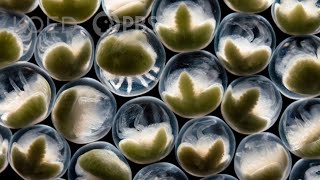
Once a Spawn a Time: Horseshoe Crabs Mob the Beach | Deep Look
Aug 31, 2021
Horseshoe crabs may look scary, but when it's springtime in Delaware Bay, millions of these arthropods show they're lovers, not fighters. They lay masses of blue-green eggs up on the shore. At just the right time, they pop and release the larvae within the sea. WATCH our crab collab episode with OVERVIEW on@pbsterra! https://youtu.be/PSX4NvvgmJM DEEP LOOK is an ultra-HD (4K) short video series created by KQED San Francisco and presented by PBS Digital Studios. See the unseen at the very edge of our visible world. Explore big scientific mysteries by going incredibly small. --- Each spring during May and June, Atlantic horseshoe crabs gather by the millions along the East Coast of North America with only one thing on their mind — a springtime spawning spree! From Maine to the Gulf of Mexico they seek out calm bays and estuaries, waiting for the highest tides to emerge from the waves. They dig down into the wet sand and deposit huge numbers of pea-sized eggs. David R. Smith, a biological statistician who studies horseshoe crabs for the U.S.Geological Survey, has come to Slaughter Beach, Delaware, to witness the spectacle under the glow of a full moon. “It's sort of like looking back in time,” says Smith, “That same scene of these marine creatures coming to the water's edge on a quiet sandy beach to spawn has been repeated for millions and millions of years without much variation.” --- What do horseshoe crabs eat? Horseshoe crabs mostly eat worms and mollusks from the seafloor. But they aren’t picky, they’ll eat other things like small fish and different crustaceans. --- Why do horseshoe crabs lay their eggs on land? By laying their eggs in the damp sand, they protect their eggs from the many predators that live in the sea. It allows their offspring a chance to develop before another high tide carries them into the sea. --- Why do horseshoe crabs have blue blood? Like other mollusks, horseshoe crabs have blood that carries oxygen using a copper-containing protein called hemocyanin. The hemocyanin turns blue when exposed to oxygen. Vertebrates like humans have iron-containing hemoglobin in their blood, causing it to turn red when exposed to oxygen. ---+ Find additional resources and a transcript on KQED Science: https://www.kqed.org/science/1976488/once-a-spawn-a-time-horseshoe-crabs-mob-the-beach ---+ More great Deep Look episodes: These Fish Are All About Sex on the Beach | Deep Look https://youtu.be/j5F3z1iP0Ic For Pacific Mole Crabs It's Dig or Die | Deep Look https://youtu.be/tfoYD8pAsMw Decorator Crabs Make High Fashion at Low Tide | Deep Look https://youtu.be/OwQcv7TyX04 ---+ Shoutout! 🏆Congratulations🏆 to the following 5 fans on our Deep Look Community Tab for correctly answering that the body part a male horseshoe crabs use to grab onto their mates is a clasper, a modified pedipalp! Sinister Omen SARA FATIMA Anirudh Anilkumar Uwis Qurni Abdullah hudson urruttia ---+ Thank you to our Top Patreon Supporters ($10+ per month)! Chris B Emrick Burt Humburg David Deshpande Karen Reynolds Daisuke Goto Adam Kurtz Allison & Maka Masuda dane rosseter Wild Turkey Berian James Nathan Jewsbury Companion Cube Tianxing Wang Josh Kuroda Mark Jobes Cindy McGill Blanca Vides Kevin Judge Jana Brenning Supernovabetty Titania Juang Aurora Anastasia Grinkevic monoirre Roberta K Wright Leonhardt Wille Syniurge Rick Wong KW Carrie Mukaida El Samuels Mehdi Kristy Freeman Gerardo Alfaro Nicky O. Mary Truland Cristen Rasmussen Scott Faunce Ed Gandia SueEllen McCann Jeremiah Sullivan Noreen Herrington Kelly Hong Misia Clive Shelley Pearson Cranshaw Sonia Tanlimco Kallie Moore Teresa Lavell Nicolette Ray Laurel Przybylski Louis O'Neill Carlos Carrasco Caitlin McDonough Delphine Tseng Elizabeth Ann Ditz Joshua Murallon Robertson Levi Cai TierZoo Silvan chckncurry ---+ Follow KQED Science and Deep Look: Instagram: https://www.instagram.com/kqedscience/ Twitter: https://www.twitter.com/kqedscience ---+ About KQED KQED, an NPR and PBS affiliate in San Francisco, California, serves Northern California and beyond with a public-supported alternative to commercial TV, radio and web media. Funding for Deep Look is provided in part by PBS Digital Studios. Deep Look is a project of KQED Science, the largest science and environment reporting unit in California. KQED Science is supported by The National Science Foundation, the Dirk and Charlene Kabcenell Foundation, the Vadasz Family Foundation, the Gordon and Betty Moore Foundation, Campaign 21 and the members of KQED.
-

This Bee Builds Sandcastles at the Beach | Deep Look
Aug 10, 2021
It might seem peculiar to see bees at the beach. But the bumblebee-mimic digger bee (Anthophora bomboides stanfordiana) makes its home at beaches in Northern California and Oregon. Once they’ve mated, the females spend the spring digging their nests into sandy cliffs overlooking the Pacific Ocean. SUBSCRIBE to Deep Look! http://goo.gl/8NwXqt Please join our community on Patreon! https://www.patreon.com/deeplook They find a nearby source of water like a stream and slurp water into a pouch in their abdomen called a crop. They can make 80 daily trips back and forth from the stream to a cliff onto which they spray the water to soften it up. This allows them to dig a series of holes into which they lay their eggs. --- Do many bees nest in the ground? Yes. About 70% of the world’s bee species nest underground. --- Where else do bees make their nests? Mason bees, such as blue orchard bees, make their nests inside narrow cavities – for example, hollow twigs. And carpenter bees dig their nests in wood. --- Why do bees mimic other bees? The bumblebee-mimic digger bees featured in this episode don’t sting. But they resemble bumblebees like the yellow-faced bumblebee (Bombus vosnesenskii), which does sting. This resemblance helps the bumblebee-mimic scare away predators. ---+ Find a transcript on KQED Science: https://www.kqed.org/science/1976046/this-bee-builds-sand-castles-at-the-beach ---+ More great Deep Look episodes: Honey Bees Make Honey ... and Bread? https://youtu.be/sAKkjD3nEv0 This Bee Gets Punched by Flowers For Your Ice Cream https://youtu.be/rsUNxvXofgo Watch This Bee Build Her Bee-jeweled Nest https://youtu.be/oPbH1YhsdP8 This Vibrating Bumblebee Unlocks a Flower’s Hidden Treasure https://youtu.be/SZrTndD1H10 ---+ Shoutout! 🏆Congratulations🏆 to the following 5 fans on our Deep Look Community Tab for correctly answering that when ground-nesting bees build all their burrows next to each other, it is called "gregarious nesting" or an "aggregation." TheWhiteScatterbug hzzx07 Koda Vulpedrius Lee Zheng Hong Violet A. Salticidae ---+ Thank you to our Top Patreon Supporters ($10+ per month)! Chris B Emrick Burt Humburg David Deshpande Karen Reynolds Daisuke Goto Adam Kurtz Allison & Maka Masuda dane rosseter Wild Turkey Berian James Nathan Jewsbury Companion Cube Tianxing Wang Josh Kuroda Mark Jobes Cindy McGill Blanca Vides Kevin Judge Jana Brenning Supernovabetty Titania Juang Aurora Anastasia Grinkevic monoirre Roberta K Wright Leonhardt Wille Syniurge Rick Wong KW Carrie Mukaida El Samuels Mehdi Kristy Freeman Gerardo Alfaro Nicky O. Mary Truland Cristen Rasmussen Scott Faunce Ed Gandia SueEllen McCann Jeremiah Sullivan Noreen Herrington Kelly Hong Misia Clive Shelley Pearson Cranshaw Sonia Tanlimco Kallie Moore Teresa Lavell Nicolette Ray Laurel Przybylski Louis O'Neill Carlos Carrasco Caitlin McDonough Delphine Tseng Elizabeth Ann Ditz Joshua Murallon Robertson Levi Cai TierZoo Silvan chckncurry ---+ Follow KQED Science and Deep Look: Instagram: https://www.instagram.com/kqedscience/ Twitter: https://www.twitter.com/kqedscience ---+ About KQED KQED, an NPR and PBS affiliate in San Francisco, California, serves Northern California and beyond with a public-supported alternative to commercial TV, radio and web media. Funding for Deep Look is provided in part by PBS Digital Studios. Deep Look is a project of KQED Science, the largest science and environment reporting unit in California. KQED Science is supported by The National Science Foundation, the Dirk and Charlene Kabcenell Foundation, the Vadasz Family Foundation, the Gordon and Betty Moore Foundation, Campaign 21 and the members of KQED.
-

The Axolotl Salamander Doesn’t Wanna Grow Up | Deep Look
Jul 13, 2021
Native to the lakes of Mexico City, the axolotl stays in the water its whole life, swimming with a tail fin and breathing through frilly external gills. It’s nearly extinct in the wild, but survives in research labs the world over, studied for its amazing regenerative abilities. With our help, can these beloved creatures thrive once again in their ancestral home? SUBSCRIBE to Deep Look! http://goo.gl/8NwXqt Go watch Animal IQ, on PBS Terra! : https://www.youtube.com/watch?v=HDrBsr_KdVw&list=PLnNZYWyBGJ1EwEssKD7m6YN5gjYHxVNQN --- The axolotl (Ambystoma mexicanum) is an aquatic salamander that basically never wants to grow up. It grows in size as it matures, but unlike most of its close cousins in the mole salamander family, it does not change into a land-dwelling adult. For its entire life, it lives in the water, retaining its larval characteristics – like external gills and a tailfin, used for swimming. Now, the few remaining wild axolotls left in the world live in the middle of Mexico City, in the canals that are the remnants of their native Lake Xochimilco. Here, for over 800 years, the animal has represented a bridge between humans and the natural world. The name “axolotl” comes from the Nahuatl Aztec language meaning “water dog.” For the Aztecs, this swimming salamander is one of the spirit animal forms of the Aztec god Xolotl, who is associated with lighting and death, and imbued with powers of physical transformation. Mexico City was built around, and on top of, a large network of spring-fed lakes over the hundreds of years of its existence. The lakes were drained and filled in over time, as the millions of people made the city their home. --- How do axolotls breathe? The signature frills behind the axolotl’s head are its external gills. The fine, branched structure of these exposed gills allows more surface area to be exposed to absorb oxygen from the water. To breathe, an axolotl just needs to flap those external gills! That’s not all - these animals have even more ways they can breathe. Like all other salamanders, axolotls are able to absorb oxygen through their skin. Plus, they have fully functional lungs they can use if there is not enough oxygen in the water. NOTE to axolotl pet owners: Despite having working lungs, the animals will not survive for more than a few hours out of water. --- Is the axolotl immortal? No, axolotls are not immortal, but they do possess extraordinary powers of limb and organ regeneration. If these aquatic amphibians lose a leg, tail or even parts of their spinal cord or brain, they can regrow the missing piece. There are other animals that can regenerate organs and limbs, but the axolotl is one of very few vertebrates (animals with backbones - like us) that is able to do this. ---+ Find additional resources and a transcript on KQED Science: https://www.kqed.org/science/1975648/the-axolotl-salamander-doesnt-wanna-grow-up ---+ Shoutout! 🏆Congratulations🏆 to the following fans on our Deep Look Community Tab for correctly answering our GIF challenge, that nerve cells are needed to begin any regenerative process for axolotls. Bigode ---+ Thank you to our Top Patreon Supporters ($10+ per month)! Chris B Emrick Alex Burt Humburg Karen Reynolds Wild Turkey Berian James Josh Kuroda dane rosseter David Deshpande Daisuke Goto Companion Cube Allison & Maka Masuda Adam Kurtz Nathan Jewsbury Tianxing Wang Mark Jobes Kelly Hong Leonhardt Wille Laurel Przybylski Elizabeth Ann Ditz Joshua Murallon Robertson Kevin Judge Mary Truland Gerardo Alfaro El Samuels Sonia Tanlimco Carrie Mukaida Supernovabetty Shelley Pearson Cranshaw Roberta K Wright monoirre Silvan Aurora Levi Cai Misia Clive Ed Gandia Kristy Freeman Rick Wong Titania Juang Carlos Carrasco Caitlin McDonough Nicky O. Blanca Vides Cristen Rasmussen Syniurge Nicolette Ray Delphine Tseng Teresa Lavell SueEllen McCann Scott Faunce Kallie Moore Jana Brenning Cindy McGill Noreen Herrington Louis O'Neill Mehdi Anastasia Grinkevic KW TierZoo ---+ Follow KQED Science and Deep Look: Instagram: https://www.instagram.com/kqedscience/ Twitter: https://www.twitter.com/kqedscience ---+ About KQED KQED, an NPR and PBS affiliate in San Francisco, California, serves Northern California and beyond with a public-supported alternative to commercial TV, radio and web media. Funding for Deep Look is provided in part by PBS Digital Studios. Deep Look is a project of KQED Science, the largest science and environment reporting unit in California. KQED Science is supported by The National Science Foundation, the Dirk and Charlene Kabcenell Foundation, the Vadasz Family Foundation, the Gordon and Betty Moore Foundation, Campaign 21 and the members of KQED. #axolotl #salamanders #deeplook
-

These Feisty Hermit Crabs Brawl Over Snail Shells | Deep Look
Jun 15, 2021
Hermit crabs are *obsessed* with snail shells. These crafty little crabs, found in California's rocky intertidal zone, are more than happy to let the snails build them a perfect home. When the crabs find a snail shell they like, they hop right into their new abode. SUBSCRIBE to Deep Look! http://goo.gl/8NwXqt Please join our community on Patreon! https://www.patreon.com/deeplook DEEP LOOK is an ultra-HD (4K) short video series created by KQED San Francisco and presented by PBS Digital Studios. See the unseen at the very edge of our visible world. Explore big scientific mysteries by going incredibly small. --- Hermit crabs are one of the most recognizable and adored inhabitants of tide pools. But they aren’t just cute (for a crab). “They’re one of the most important creatures in the intertidal zone because of their role as scavengers,” said Stephen Dunbar, a professor of biology at Loma Linda University. “They begin the process of cleaning up dead materials, like dead seaweed, fish, crabs, snails or whatever else.” While hermit crabs scavenge for food, they also keep an eye out for new shells to call home. Grainyhand hermit crabs seem to prefer turban snail shells. That’s good because turban snails are incredibly abundant in the intertidal zone. The snails can spend 20 years growing and building their shells as they graze on the algae that grows all over the rocks. --- What do hermit crabs eat? Hermit crabs are scavengers. They eat decaying plants and algae in addition to dead animals. --- How do hermit crabs mate? When it’s time for hermit crabs to mate they leave their shells briefly, mate, and then return to their shells. They are vulnerable outside of their shells so they do so quickly. --- Why do hermit crabs need shells? Hermit crabs have stiff armored shells to protect their head, claws and walking legs. The back half of the hermit crab’s body, including it’s long curved abdomen, is soft to better fit inside a snail’s spiral-shaped shell. Without a snail shell to protect it, a hermit crab is vulnerable to predators. ---+ Find additional resources and a transcript on KQED Science: https://www.kqed.org/science/1975024/watch-these-hermit-crabs-shop-for-the-perfect-shell ---+ More great Deep Look episodes: For Pacific Mole Crabs It's Dig or Die | Deep Look https://youtu.be/tfoYD8pAsMw Decorator Crabs Make High Fashion at Low Tide | Deep Look https://youtu.be/OwQcv7TyX04 Whack! Jab! Crack! It's a Blackback Land Crab Smackdown | Deep Look https://youtu.be/KBMUhG0aEFg ---+ Shoutout! 🏆Congratulations🏆 to the following 5 fans on our Deep Look Community Tab for identifying the specially modified limbs hermit crabs use to grip their shells - urupods! Lucas Octo Valley Sarmad Nasim Harry To Akash Chaturvedi ---+ Thank you to our Top Patreon Supporters ($10+ per month)! Chris B Emrick Lawrence Harris Burt Humburg Alex Wild Turkey Shebastian Reyes Berian James Josh Kuroda Karen Reynolds David Deshpande Daisuke Goto Companion Cube Allison & Maka Masuda Adam Kurtz Nathan Jewsbury Tianxing Wang dane rosseter Mark Jobes Kevin Judge Joshua Murallon Robertson Elizabeth Ann Ditz Leonhardt Wille Laurel Przybylski Kelly Hong Gerardo Alfaro El Samuels Sonia Tanlimco Mary Truland Supernovabetty Carrie Mukaida Roberta K Wright Shelley Pearson Cranshaw Aurora Silvan monoirre Rick Wong Ed Gandia Delphine Tseng Nicky O. Kristy Freeman Nicolette Ray Misia Clive Titania Juang Caitlin McDonough Levi Cai Carlos Carrasco Kallie Moore Cristen Rasmussen Syniurge Blanca Vides Mehdi Louis O'Neill Teresa Lavell Jana Brenning Noreen Herrington Anastasia Grinkevic Scott Faunce SueEllen McCann Cindy McGill KW TierZoo chckncurry ---+ Follow KQED Science and Deep Look: Instagram: https://www.instagram.com/kqedscience/ Twitter: https://www.twitter.com/kqedscience ---+ About KQED KQED, an NPR and PBS affiliate in San Francisco, California, serves Northern California and beyond with a public-supported alternative to commercial TV, radio and web media. Funding for Deep Look is provided in part by PBS Digital Studios. Deep Look is a project of KQED Science, the largest science and environment reporting unit in California. KQED Science is supported by The National Science Foundation, the Dirk and Charlene Kabcenell Foundation, the Vadasz Family Foundation, the Gordon and Betty Moore Foundation, Campaign 21 and the members of KQED.
-
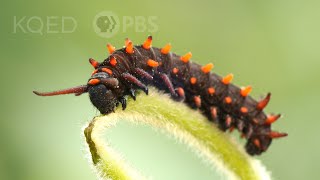
The Pipevine Caterpillar Thrives in a Toxic Love Triangle | Deep Look
May 18, 2021
The devilish caterpillars of the pipevine swallowtail butterfly *devour* the California pipevine, never mind that the plant is trying to poison them. Their butterfly moms don’t pollinate the pipevine in return, though. So, the vine traps unlucky gnats in its labyrinthine flowers to do the job. Please join our community on Patreon! https://www.patreon.com/deeplook SUBSCRIBE to Deep Look! http://goo.gl/8NwXqt DEEP LOOK is an ultra-HD (4K) short video series created by KQED San Francisco and presented by PBS Digital Studios. See the unseen at the very edge of our visible world. Explore big scientific mysteries by going incredibly small. --- This is the story of a love triangle between a plant, a striking butterfly and an intrepid gnat. At the center of this triangle is the California pipevine (Aristolochia californica). The plant produces poisonous compounds called aristolochic acids and it’s also known as the California Dutchman’s pipe because its flowers are shaped like a tobacco pipe. The California pipevine swallowtail butterfly (Battus philenor hirsuta) loves the vine. It flutters around the plant with its bright blue and orange wings and lays clusters of eggs on leaves and stems. When they hatch, the caterpillars feed exclusively on the pipevine. But the butterflies don’t pollinate the plant. Instead, the pipevine lures fungus gnats into its flowers with a mushroomy aroma that reminds the flies of the fungi they feed on in the soil as larvae. The flies get stuck inside the curved flowers long enough for their hairs to get coated in pollen. This strategy in which a plant attracts pollinators under false pretenses is called deceptive pollination. --- Is the California pipevine a native plant? Yes, it’s the only pipevine native to the state. It grows naturally along rivers. --- Are fungus gnats considered pests? Yes, they are. The adult flies lay their eggs in the earth, where their larvae feed on fungi and plant matter. If they get into potted soil, they can chew on the roots of houseplants and damage them. ---+ Find additional resources and a transcript on KQED Science: https://www.kqed.org/science/1974786/the-pipevine-caterpillar-thrives-in-a-toxic-love-triangle ---+ More great Deep Look episodes: Why Is the Very Hungry Caterpillar So Dang Hungry? https://youtu.be/el_lPd2oFV4 This Giant Plant Looks Like Raw Meat and Smells Like Dead Rat https://youtu.be/ycUNj_Hv4_Y ---+ Shoutout! Good try everyone! No-one got our GIF challenge correct for this episode. The caterpillars feeding side by side helps them grow bigger faster. The faster they grow, the better protected they are because they accumulate toxins in their bodies as they feed on the California pipevine. ---+ Thank you to our Top Patreon Supporters ($10+ per month)! Chris B Emrick Burt Humburg Alex Shebastian Reyes Josh Kuroda Wild Turkey Karen Reynolds dane rosseter David Deshpande Daisuke Goto Allison & Maka Masuda Companion Cube Nathan Jewsbury Tianxing Wang Mark Jobes Elizabeth Ann Ditz Leonhardt Wille Kelly Hong Joshua Murallon Robertson Laurel Przybylski Mary Truland Gerardo Alfaro Sonia Tanlimco Sayantan Dasgupta El Samuels Shelley Pearson Cranshaw Supernovabetty Carrie Mukaida monoirre Aurora Silvan Levi Cai Roberta K Wright Rick Wong Kristy Freeman Caitlin McDonough Nicolette Ray Misia Clive Titania Juang Carlos Carrasco Nicky O. Delphine Tseng Syniurge Noreen Herrington Cristen Rasmussen Jana Brenning Blanca Vides Kallie Moore Anastasia Grinkevic Scott Faunce SueEllen McCann Teresa Lavell Louis O'Neill Adam Kurtz Mehdi Cindy McGill Laura Sanborn KW TierZoo Kevin Judge ---+ Follow KQED Science and Deep Look: Instagram: https://www.instagram.com/kqedscience/ Twitter: https://www.twitter.com/kqedscience ---+ About KQED KQED, an NPR and PBS affiliate in San Francisco, California, serves Northern California and beyond with a public-supported alternative to commercial TV, radio and web media. Funding for Deep Look is provided in part by PBS Digital Studios. Deep Look is a project of KQED Science, the largest science and environment reporting unit in California. KQED Science is supported by The National Science Foundation, the Dirk and Charlene Kabcenell Foundation, the Vadasz Family Foundation, the Gordon and Betty Moore Foundation, Campaign 21 and the members of KQED. #californiapipevine #gnats #deeplook
-

Scorpions Are Predators With a Sensitive Side | Deep Look
May 4, 2021
Look past their grasping claws and lightning-fast stingers, and you'll see scorpions have a delicate pair of comb-like organs on their belly called pectines. These sensory body parts help them navigate, and figure out who's a menace, a meal or a mate. Please join our community on Patreon! https://www.patreon.com/deeplook SUBSCRIBE to Deep Look! http://goo.gl/8NwXqt DEEP LOOK is an ultra-HD (4K) short video series created by KQED San Francisco and presented by PBS Digital Studios. See the unseen at the very edge of our visible world. Explore big scientific mysteries by going incredibly small. --- Scorpions are arachnids with a monstrous reputation, but wait until you get to know their sensitive side. On their belly-sides, scorpions sport unique, brush-like organs called pectines, that endow them with extraordinary sensing abilities. These sensors help the animals with a variety of behaviors: finding mates; hunting prey; identifying other scorpions or predators; and they even help them navigate. Each pecten resembles a small comb, and each scorpion has a pair. These brush lightly over the ground as the animal walks. The comb structures contain an overlapping series of flexible teeth that make contact with whatever surface a scorpion walks on. Zooming into a microscopic level, each tooth is covered in special sensory cells called peg sensilla that enable them to be extremely sensitive to chemicals and physical vibrations. There can be over 100,000 peg sensilla on each scorpion. Each peg sensilla is connected to the animal’s brain by about a dozen nerve cells. The animals read their environment by the detailed chemical and physical cues picked up through tiny pores on the tips of the peg sensilla. --- --- How do scorpions reproduce? The female scorpion will release pheromones, which are picked up by a male scorpion, using his pectines. The pair then performs a kind of dance called the “promenade a deux” (French for “walk for two”) where they grasp each other’s claws and mouthparts. During the “dance” the male deposits a spermatophore – a structure that contains a packet of sperm – on the ground. He leads the female over the spermatophore, and she picks up the sperm packet to fertilize her eggs. Gestation can last over a year for some species, and unlike most arachnids, the female scorpion gives birth to live young. She even carries the offspring on her back for some time before their first molt. --- Where do scorpions live? Scorpions do prefer arid or semi-arid habitats like deserts, but they have adapted to live in a wide range of environments, including high mountainous regions, subtropical forests and intertidal zones. They can be found on all continents except for Antarctica. The Western forest scorpions (Uroctonus mordax) featured in this episode of Deep Look were found in a temperate forest in Oakland, California. --- How dangerous are scorpions to humans? A vast majority of the world’s more than 2500 species of scorpions are not a serious threat to humans. Only 25 species are known to have venom capable of killing a human. ---+ Find additional resources and a transcript on KQED Science: https://www.kqed.org/science/1974305/scorpion-are-predators-with-a-sensitive-side/ ---+ More great Deep Look episodes: Stinging Scorpion vs. Pain-Defying Mouse https://www.youtube.com/watch?v=w-K_YtWqMro Kangaroo Rats Are Furry, Spring-Loaded Ninjas https://www.youtube.com/watch?v=-hyKWwiefF8 For These Tiny Spiders, It's Sing or Get Served https://www.youtube.com/watch?v=y7qMqAgCqME ---+ Shoutout! 🏆Congratulations🏆 to the following 5 fans on our Deep Look Community Tab for identifying the pectines - the special organs on their belly behind their legs that respond to chemosensory and mechanosensory stimuli. SSAP Octo Valley Jeremy Loh Felipe Valenzuela Josué Covarrubias ---+ Thank you to our Top Patreon Supporters ($10+ per month)! Chris B Emrick Alex Burt Humburg Egg-Roll Shebastian Reyes Josh Kuroda Wild Turkey Karen Reynolds dane rosseter David Deshpande Daisuke Goto Allison & Maka Masuda Companion Cube Nathan Jewsbury Tianxing Wang ---+ Follow KQED Science and Deep Look: Instagram: https://www.instagram.com/kqedscience/ Twitter: https://www.twitter.com/kqedscience ---+ About KQED KQED, an NPR and PBS affiliate in San Francisco, California, serves Northern California and beyond with a public-supported alternative to commercial TV, radio and web media. Funding for Deep Look is provided in part by PBS Digital Studios. Deep Look is a project of KQED Science, the largest science and environment reporting unit in California. KQED Science is supported by The National Science Foundation, the Dirk and Charlene Kabcenell Foundation, the Vadasz Family Foundation, the Gordon and Betty Moore Foundation, Campaign 21 and the members of KQED. #scorpions #pectines #deeplook
-

The Undying Hydra: A Freshwater Mini-Monster That Defies Aging | Deep Look
Apr 20, 2021
Could this tiny creature, named after a mythical multiheaded monster, hold the secret to eternal youth? Related to jellyfish and anemones, the hydra has an almost otherworldly ability to heal itself and stave off aging. SUBSCRIBE to Deep Look! http://goo.gl/8NwXqt Please join our community on Patreon! https://www.patreon.com/deeplook DEEP LOOK is an ultra-HD (4K) short video series created by KQED San Francisco and presented by PBS Digital Studios. See the unseen at the very edge of our visible world. Explore big scientific mysteries by going incredibly small. --- The hydra gets its name from the Lernaean Hydra, a monster from Greek mythology that guarded an entrance to the underworld. Chop off one of the beast’s many snake-like heads and two would grow in its place. While much less formidable in size, the real hydra does have a remarkable ability to heal from injuries. Cut a hydra in half and within a few days the bottom half will grow a new head. The severed head grows a new body. The secret to the hydra's ability to heal and its seeming ability to not age is the abundance of stem cells that make up the hydra’s tube-shaped body column. “The reason why hydra lives so long is because it has these continually active stem cells populations which don’t seem to slow down at all,” said Celina Juliano, a molecular and cellular biologist at UC Davis. “They’re just constantly remaking all of the cells in the animal so every 20 days all of the cells are replaced with new cells.” --- What does a hydra eat? Hydra use their tentacles to ensnare swimming prey. Stinging cells in the tentacle paralyze the prey, which the tentacles then move toward the hydra’s mouth. Hydra often eat like Daphnia and other aquatic invertebrates referred to informally as water fleas. --- How do hydra reproduce? Hydra can reproduce asexually by cloning themselves. The new clone, called a bud, grows directly from the hydra’s side and eventually detaches. In addition to cloning, different species of hydra have different sexual reproduction strategies. --- How do hydra recover from injury? A large amount of the cells in a hydra’s central column are stem cells. These cells can reproduce themselves and can also differentiate into all of the different specialized cells that make up the hydra's body. ---+ Find additional resources and a transcript on KQED Science: https://www.kqed.org/science/1973744/the-undying-hydra-a-freshwater-mini-monster-that-defies-aging ---+ More great Deep Look episodes: Ever Seen a Starfish Gallop? | Deep Look https://youtu.be/9rxf_2EgwfE This Adorable Sea Slug is a Sneaky Little Thief | Deep Look https://youtu.be/KLVfWKxtfow Why Jellyfish Float Like a Butterfly ― And Sting Like a Bee | Deep Look https://youtu.be/xQNxXUtRjzg ---+ Shoutout! 🏆Congratulations🏆 to the following 5 fans on our Deep Look Community Tab for identifying the process this creature undergoes to regenerate lost body parts - morphallaxis! IncoherentBabbler Code Red Ganesh Kumar Sam Sam Obama Barrack ---+ Thank you to our Top Patreon Supporters ($10+ per month)! Egg-Roll Shebastian Reyes Wild Turkey Josh Kuroda Chris B Emrick Karen Reynolds dane rosseter David Deshpande Daisuke Goto Joshua Murallon Robertson Elizabeth Ann Ditz Kelly Hong Kevin Judge Gerardo Alfaro Robert Amling Laurel Przybylski Leonhardt Wille Sonia Tanlimco El Samuels Mary Truland Shelley Pearson Cranshaw Supernovabetty Carrie Mukaida Sayantan Dasgupta Aurora Roberta K Wright monoirre Rick Wong Kristy Freeman Silvan Caitlin McDonough Misia Clive Carlos Carrasco Nathan Wright Levi Cai Nicolette Ray Blanca Vides Titania Juang Teresa Lavell Scott Faunce Cristen Rasmussen ---+ Follow KQED Science and Deep Look: Instagram: https://www.instagram.com/kqedscience/ Twitter: https://www.twitter.com/kqedscience ---+ About KQED KQED, an NPR and PBS affiliate in San Francisco, California, serves Northern California and beyond with a public-supported alternative to commercial TV, radio and web media. Funding for Deep Look is provided in part by PBS Digital Studios. Deep Look is a project of KQED Science, the largest science and environment reporting unit in California. KQED Science is supported by The National Science Foundation, the Dirk and Charlene Kabcenell Foundation, the Vadasz Family Foundation, the Gordon and Betty Moore Foundation, Campaign 21 and the members of KQED. #hydra #morphollaxis #deeplook
-
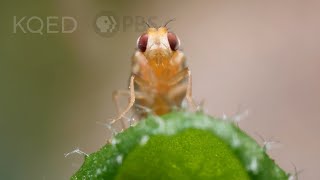
Leaf Miner Fly Babies Scribble All Over Your Salad | Deep Look
Apr 6, 2021
This fly’s larvae tunnel inside bitter-tasting greens like arugula and kale, leaving squiggly marks behind. The plants fight back with toxic chemicals. So before laying her eggs, the fly mom digs into a leaf and slurps its sap – a taste test to find the least toxic spot for her offspring. SUBSCRIBE to Deep Look! http://goo.gl/8NwXqt DEEP LOOK is an ultra-HD (4K) short video series created by KQED San Francisco and presented by PBS Digital Studios. See the unseen at the very edge of our visible world. Explore big scientific mysteries by going incredibly small. --- As they feed inside a leaf’s spongy layer, leaf miners etch intricate patterns that are visible to us on the leaf’s surface. The whitish tan or light gray markings can be neatly serpentine or converge and have a blotch-like appearance, depending on what insect made them. Many different flies, butterflies and moths lay eggs on the leaves of citrus, vegetables and ornamental plants that grow into leaf miner larvae. One leaf miner that gardeners might find in their arugula is the larva of a fly called Scaptomyza. The fly is related to – and looks a lot like – the fruit fly you might find buzzing around your ripe bananas. The chemicals called isothiocyanates that give leafy greens like arugula their bitter taste are precisely the plants’ defense mechanism against pests. Scaptomyza flies have evolved to tolerate low levels of these compounds. One way in which the flies deal with these toxic chemicals is by laying their eggs on the leaves with the lowest concentrations. --- --- Can leaf miners kill plants? Leaf miners rarely do enough damage to even come close to killing a plant, but they make individual leaves inedible. If given enough time, a leaf miner can be particularly damaging to vegetables that are harvested specifically for their leaves. But don’t worry if you mistakenly eat a larva – it won’t make you sick. --- How do you treat leaf miners? Most backyard gardeners only need to remove the damaged leaves by hand. Since leaf miners are tucked inside the leaf, insecticides aren’t very effective and can hurt beneficial pest predators like wasps, spiders and ladybugs. Gardeners with a greenhouse or large numbers of plants can use parasitic wasps to control leaf miners. ---+ Read the entire article on KQED Science: https://www.kqed.org/science/1973500/leaf-miner-fly-babies-scribble-all-over-your-salad ---+ More great Deep Look episodes: Born Pregnant: Aphids Invade with an Onslaught of Clones https://youtu.be/vrzalLssomg Sharpshooter Insects’ Sexy Vibrations Spell Trouble in the Vineyard https://youtu.be/uFA614SEDMQ ---+ Shoutout! 🏆Congratulations🏆 to the following 5 fans on our Deep Look Community Tab for correctly answering that the fly is cutting the leaf with her ovipositor: Wei Lun Fung Kitten Alburn Navid Valente Bladeziken Heavenly Emperor ---+ Thank you to our Top Patreon Supporters ($10+ per month)! Egg-Roll Shebastian Reyes Wild Turkey Josh Kuroda Chris B Emrick Karen Reynolds dane rosseter David Deshpande Daisuke Goto Joshua Murallon Robertson Elizabeth Ann Ditz Kelly Hong Kevin Judge Gerardo Alfaro Robert Amling Laurel Przybylski Leonhardt Wille Sonia Tanlimco El Samuels Mary Truland Shelley Pearson Cranshaw Supernovabetty Carrie Mukaida Sayantan Dasgupta Aurora Roberta K Wright monoirre Rick Wong Kristy Freeman Silvan Caitlin McDonough Misia Clive Carlos Carrasco Nathan Wright Levi Cai Nicolette Ray Blanca Vides Titania Juang Teresa Lavell Scott Faunce Cristen Rasmussen ---+ About KQED KQED, an NPR and PBS affiliate in San Francisco, California, serves Northern California and beyond with a public-supported alternative to commercial TV, radio and web media. Funding for Deep Look is provided in part by PBS Digital Studios. Deep Look is is supported by The National Science Foundation, the Dirk and Charlene Kabcenell Foundation, the Vadasz Family Foundation, the Gordon and Betty Moore Foundation, Campaign 21 and the members of KQED. #leafminers #deeplook