 Abrir en Clue
 Sobre este episodio
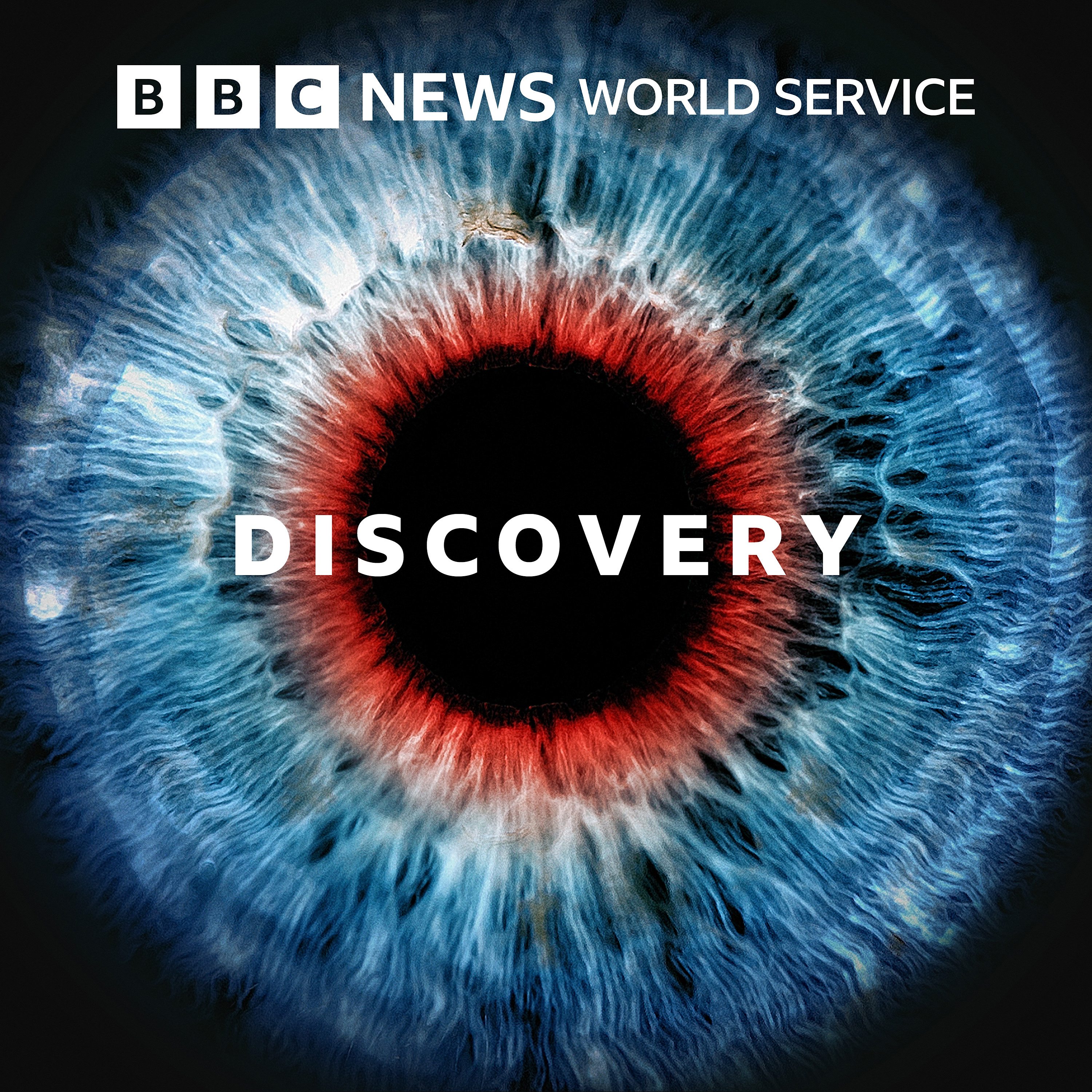
<p>John O'Keefe tells Jim al-Khalili how winning the Nobel Prize was a bit of a double-edged sword, especially as he liked his life in the lab, before being made famous by the award. </p><p>John won the prize for his once radical insight into how we know where we are. When he first described the idea of ‘place cells’ in the brain back in 1971, many scoffed. Today it is accepted scientific wisdom that our spatial ability depends on these highly specialised brain cells. </p><p>A keen basketball player,John says, he has put this principle to the test by trying to shoot hoops with his eyes closed. But this belies the years of painstaking experiments on rats that John performed to prove that a rat’s ability to know where it is depends not only on its sense of smell, but also on a cognitive map, or internal GPS, inside the rat's brain. </p><p>He describes how he listened in on the unique firing patterns of individual rat brain cells using the tiniest electrodes. “You almost imagine they are singing to you”, he says, as he imitates the different sounds made by individual neurons. And, he says, he misses them when they fall silent. </p><p>It is important to John, and for his results, that his rats are happy and John welcomes the strong controls over animal experiments in the UK. Computer models are useful but, he says, they could never replace the need for experiments on animals, in the work that he does. And,while it need not necessarily have been the case, experiments on rats' brains have provided valuable insight into the workings of the human brain. John's research was entirely curiosity-driven but it could provide vital clues to understanding dementia and is already being used to develop a test for the earliest stages of Alzheimer’s.</p><p>(Photo: John O'Keefe, BBC copryight)</p>
Escucha este episodio en inglés para aprender inglés
Los episodios de podcast son una de las formas más densas de absorber inglés al ritmo nativo. John O'Keefe de Discovery te da diálogo natural, habla sin guion y vocabulario que de verdad aparece en conversaciones reales.
En la app Clue, cada palabra de la transcripción es tocable. Toca una palabra desconocida, ve la traducción a tu idioma al instante y sigue escuchando sin romper el ritmo.
Episodios para aprender inglés
- The friendly virus 22 jun 2026
- The Life Scientific: Dean Lomax 15 jun 2026
- The Life Scientific: Helen Hastie 8 jun 2026
- The Life Scientific: Seth Berkley 1 jun 2026
- The Life Scientific: Hiranya Peiris 25 may 2026
- The Life Scientific: Washington Yotto Ochieng 18 may 2026
- The Life Scientific: Lucy Carpenter 11 may 2026
- The Life Scientific: Jens Juul Holst 4 may 2026
- The Life Scientific: Jim Ashworth-Beaumont 27 abr 2026
- Inside Universe 25 20 abr 2026
- Dark Breath 13 abr 2026
- Superbugs: Resistance Rising Part 3 6 abr 2026
- Superbugs: Resistance rising, part 2 30 mar 2026
- Superbugs: Resistance rising, part 1 23 mar 2026
- The Life Scientific: Jehane Ragai 16 mar 2026
- The Life Scientific: Tony Juniper 9 mar 2026
- The Life Scientific: Pierre Friedlingstein 2 mar 2026
- The Life Scientific: Julia Simner 23 feb 2026
- The Life Scientific: Caroline Smith 16 feb 2026
- The Life Scientific: AP De Silva 9 feb 2026
- The Life Scientific: Eleanor Schofield 2 feb 2026
- The Life Scientific: Peter Knight 26 ene 2026
- Frontiers of Earth Science 19 ene 2026
- Frontiers of Space Science 12 ene 2026
- What is Quantum? 5 ene 2026
- The Life Scientific: George Church 29 dic 2025
- The Life Scientific: Gareth Collett 22 dic 2025
- The Life Scientific: Sonia Gandhi 15 dic 2025
- The Life Scientific: Mark O'Shea 8 dic 2025
- Waking up with a different voice 1 dic 2025