
Oksana Kovalenko
Redactora de aprendizaje de idiomas · Publicado 22 de mayo de 2026
Aprender inglés online: Una guía gratuita y sin cursos para adultos
La mayoría de los “cursos de inglés gratuitos para adultos” online están dirigidos a principiantes absolutos que aprenden el alfabeto, o son una prueba gratuita que termina con un muro de pago en la tercera lección. Si eres un adulto que ya puede leer esta página cómodamente, no necesitas un curso, necesitas una configuración funcional de recursos gratuitos que se adapten a un trabajo, una familia y el hecho de que ya probaste Duolingo y lo dejaste.
Esta guía es para ese tipo de estudiante. Es honesta sobre lo que los recursos gratuitos pueden hacer, honesta sobre dónde un curso o tutor de pago realmente justifica su precio, y está diseñada en torno a cómo funcionan realmente los cerebros y los horarios de los adultos.
La realidad del estudiante adulto que nadie menciona

Los cursos de inglés online se basan principalmente en la misma suposición: tienes un espacio fijo en tu semana, seguirás una secuencia de lecciones y te motivarás con insignias de progreso. Eso funcionó para la versión de ti que estaba en la escuela. Ahora, en su mayoría, no funciona.
Algunas cosas son ciertas sobre los estudiantes de inglés adultos que la mayoría de las plataformas ignoran:
No tienes tiempo para una clase nocturna de 90 minutos. Tienes quince minutos antes de una reunión, veinte minutos en el tren, una hora mientras cocinas. El formato de clase es incorrecto incluso antes de que empiece el contenido.
Odias la gamificación. O, más precisamente, la toleraste durante un mes y luego te diste cuenta de que mantenías una streak en lugar de aprender. El pequeño búho azul te puso a la defensiva. Desinstalaste la aplicación.
Ya sabes “intermediate”. Puedes leer noticias en English, puedes seguir la mayoría de los videos de YouTube, puedes escribir un workable email. Lo que no puedes hacer es speak smoothly, catch every word en un show de Netflix, o sound like an adult professional rather than a polite student. Ese no es un problema de beginner course.
Tus objetivos son específicos. Quieres hacer tu job in English, watch the things you want to watch, travel without rehearsing sentences, o finalmente pass a job interview without your accent doing the talking for you.
No necesitas un certificate. A menos que lo necesites específicamente (visa, university, a particular employer), el certificate al final de un free course es principalmente decoration. Recruiters look at how you sound on the call.
Si esto te describe, la sección siguiente es la parte de internet que has estado buscando.
Recursos gratuitos legítimos, clasificados por lo que realmente hacen
Hay cientos de listados de “free English course”. La mayoría de ellos reciclan los mismos cinco sitios. Aquí tienes la lista corta de lo que es gratuito y realmente útil para estudiantes de niveles B1–C1.
Plataformas estructuradas gratuitas
Cambridge English – LearnEnglish. El sitio gratuito de Cambridge. Cientos de audio lessons agrupadas por nivel CEFR, todas con transcripts. Menos flashy que Duolingo, mucho más cercano a cómo se enseña realmente el language en universities.
British Council – LearnEnglish. La misma idea, BBC-funded, muy organizado. Skills sections para grammar, vocabulary, listening, reading. Bueno para rellenar specific holes — por ejemplo, si quieres drill conditionals o finalmente understand the present perfect once and for all.
USA Learns. Un free U.S. government-funded course aimed at adult immigrants. Three courses que van desde beginner hasta intermediate. Es slow but legitimate. Ideal para A2–B1 learners que quieren structure without paying.
ESOL Courses. Plataforma British gratuita, large library of small lessons. Topical (cooking, travel, work), con audio y transcripts. Útil como un buffet, no como un curriculum.
Alison. Free online courses con certificates disponibles por una small fee. Wide range of English topics including business English, IELTS prep, and conversational English. Elige individual modules, no whole courses.
Coursera y edX. Ambos alojan university-made English courses, la mayoría de ellos free to audit (solo pagas si quieres el certificate). La University of Pennsylvania, Tsinghua, y el British Council tienen material aquí. Stronger para academic y business English que para el everyday speaking.
Canales de YouTube gratuitos que valen tu tiempo
YouTube es el “free English course” más subestimado del planeta. Algunos canales que vale la pena mantener en tus suscripciones:
- BBC Learning English. El abuelo del online English. Sus series 6 Minute English y English in a Minute son lo suficientemente cortas como para hacerlas daily.
- English with Lucy. Clear British English, pronunciation breakdowns, vocabulary in real contexts.
- Rachel’s English. El gold standard para American pronunciation. Si tu accent es lo principal que te frena, start here.
- mmmEnglish. Solid grammar y speaking explanations de una Australian teacher, leaning toward B1–B2.
- Real English with Real Teachers. Two American teachers, conversational, lots of expressions you’d actually hear in the wild.
- EngVid. Older library, dozens of teachers, focused on specific points (phrasal verbs, business English, IELTS).
- TED-Ed. Five-minute animated lessons. Subjects beyond language, but clear scripted English con subtitles.
- Let’s Talk – Free English Lessons. Indian English platform, useful for global business English speakers.
Podcasts gratuitos con transcripciones
Las transcripts importan. Un podcast que no puedes verificar es entertainment; un podcast con una transcript es una lesson.
- The English We Speak (BBC). Six minutes per episode, focuses on a single idiom or phrase. B1.
- Luke’s English Podcast. Long-form, often 60+ minutes, free transcripts on the site. B1–B2.
- Espresso English Podcast. Short bursts on specific topics, easy on the ears. B1.
- All Ears English. American hosts, conversational, focus on common expressions. B1–B2.
- The Daily (NYT). News podcast, full transcripts. B2.
- Planet Money (NPR). Economics stories told accessibly. B2.
- This American Life. Storytelling at its best, transcripts available. B2–C1.
- 99% Invisible. Design and culture stories. B2.
Fuentes de lectura gratuitas
- Project Gutenberg para cualquier classic pre-1928.
- Open Library para borrowing modern e-books con una library card.
- The Guardian, BBC, NPR. Todos free, todos clean English.
- The Atlantic (limited monthly free articles), Vox, Aeon Magazine para long-form essays.
- Medium para personal essays y tech writing — varied quality but free.
- Newsela para news rewritten at different difficulty levels — handy si real news still bites.
Herramientas de speaking gratuitas
- Tandem y HelloTalk. Language-exchange apps. Tú enseñas a alguien tu language durante half the call, ellos te ayudan con English.
- Discord servers. Search for “English language exchange” — many free communities con daily voice chats.
- ChatGPT y Claude. Free tiers son suficientes para daily written practice. Pide a uno que roleplay a job interview, a customer support call, a phone reservation. Not a replacement for human speakers, but the friction-to-start ratio es unbeatable.
Cuándo los cursos realmente ayudan
Los recursos gratuitos cubren el 90% del camino hacia el C1 si los usas bien. El 10% por el que vale la pena pagar suele ser uno de estos:
Pronunciation, cuando está realmente atascada. Si los natives te piden que te repitas constantemente, un structured pronunciation course (Rachel’s English Academy, el programa Lady de mmmEnglish, o 10 hours con un one-on-one tutor) recupera su dinero fast.
Exam prep con una hard deadline. IELTS, TOEFL, Cambridge Advanced. Necesitas un course porque el test rewards specific tactics that aren’t intuitive. Free resources están demasiado scattered para get you exam-ready in two months. Magoosh, E2 Test Prep, y los official Cambridge prep books valen la spend.
Business English para un specific job. Si una promotion o un new role hinges on running meetings in English, un focused short course (LinkedIn Learning, Coursera’s specializations, Preply tutors con business focus) es faster than reverse-engineering from podcasts.
Speaking confidence past a wall. Cuando entiendes everything pero te quedas freeze cuando abres la mouth, lo que necesitas isn’t more content — it’s reps con un forgiving human. Two months de weekly tutor sessions on iTalki, total cost $60–$150, almost always cracks it.
Cuándo los cursos no ayudan
La mayoría de los estudiantes adultos que pagan por “English courses” generales no obtienen el valor de su dinero. El curso no ayuda cuando:
Ya superaste el level para el que está diseñado el course. Un “complete English course” almost always starts at A1 y ends mid-B1. Si eres un B2 learner, pasarás las first ten lessons bored y no comprarás las next ten.
El course se basa en grammar drills. Adults past A2 don’t grow from drill-and-kill. They grow from contact with real language y from producing it themselves.
Compraste el course como un commitment device. Pagar por algo para force yourself to use it works for gym memberships y not much else. Most paid courses get half-finished. Si no usarías la free version, you won’t use the paid one either.
Es un Duolingo-style daily-quest format. Streak-based products son entertainment con una vocabulary skin on top. Not bad, not learning either.
Una estructura a tu propio ritmo que realmente se adapta a los adultos
No necesitas un curriculum. Necesitas five inputs distribuidos a lo largo de tu week. Trata esto como un pattern, not a schedule.
Aportes diarios (15–25 minutos en total):
- Un short podcast en el commute, o mientras haces dishes.
- 15 minutes de vocabulary review para words que salvaste earlier in the week.
Aportes semanales (5–7 horas, distribuidas como quieras):
- Dos longer listening sessions (un Netflix episode, un long podcast, un YouTube documentary).
- Dos reading sessions (chapters de una novel, articles de tus usual sites).
- Una speaking session (a tutor, a tandem partner, a Discord call, o shadowing a clip).
- Una writing burst (a journal entry, an email to a tutor, a short essay).
- Un self-check (record yourself, take a free placement test, read aloud for two minutes).
Así es como debería ser un “course for adults”: un system, not a schedule. Each piece es replaceable. Si odias writing, aumenta speaking. Si tu reading ya es strong, aumenta listening. La structure se mantiene, los inputs se intercambian.
Semana de ejemplo, versión real:
- Lunes: 25-minute commute podcast (The Daily). Lunch — 10 minutes de vocab review.
- Martes: 30 minutes reading a chapter at bedtime.
- Miércoles: 25-minute commute podcast (a second listen of Monday’s episode). Evening — 30-minute iTalki call.
- Jueves: 20-minute lunch YouTube video (something you’d watch anyway). 30 minutes reading.
- Viernes: 25-minute commute podcast (something new). 10 minutes de vocab.
- Sábado: 60-minute Netflix episode, English subtitles. 20 minutes de writing about your week.
- Domingo: 30 minutes de shadowing practice. 45-minute iTalki call.
Roughly seven hours, distribuidas en pieces que de otro modo no notarías. No 90-minute evening class.
Certificados versus fluidez real
Si no necesitas un certificate, no lo persigas. La búsqueda de “free English course with certificate” es en su mayoría una trap — you spend forty hours getting a PDF nobody respects instead of forty hours getting actually better.
Si necesitas un certificate, aquí están los que cuentan:
- Cambridge B2 First, C1 Advanced, C2 Proficiency. Recognized by universities y employers worldwide. Paid exams; no free version of the credential itself. Worth it si applying to a UK o European university.
- IELTS. Standard para English-speaking universities y visa applications.
- TOEFL. U.S.-centric university admissions.
- Duolingo English Test. Online proctored, $59, increasingly accepted by U.S. universities. Worth knowing exists.
- Cambridge BEC (Business English Certificates). Useful in some European markets para corporate jobs.
Lo que no cuenta: random PDF certificates de platforms de las que la mayoría de los recruiters nunca han oído hablar. Los certificates de Coursera y Alison están bien para LinkedIn decoration pero won’t move a hiring decision. Si un job necesita proof of English, they’ll either ask for a Cambridge/IELTS score o just put you on a call.
La verdad más dura: la fluency es su propia credential. Si puedes run a thirty-minute interview in clean English, no one asks where your certificate is.
Errores comunes que cometen los estudiantes adultos con los recursos gratuitos
Collecting platforms. Signing up to five free courses, finishing none. The platform is not the problem. Pick one, use it for a month, then decide.
Treating YouTube as endless and therefore equal. Some channels teach; some perform. If a channel is mostly the teacher’s face and personality, you’re entertained, not learning. Channels that work tend to be sparse on graphics y heavy on actual language use.
Skipping the speaking part because it costs money or feels weird. Tandem y HelloTalk son free. Cambly y iTalki son cheap. ChatGPT es free. Si has gone six months without speaking practice, that’s the bottleneck, not the lack of more listening.
Confusing duration with progress. Sixty hours de beginner lessons doesn’t make a B2 if you were already B1 when you started. Choose material at your edge, not below it.
Quitting when there’s no streak holding you accountable. Build the habit around an existing routine — commute, cooking, dishes, gym walk. Routines outlast motivation.
Mistaking video courses for full courses. A 12-hour YouTube playlist titled “Complete English Course” usually covers what a real course would do in lesson one. Use them for specific topics, not as a backbone.
Ignoring writing. Writing es the cheapest free skill to practice y the one most people skip. A 200-word weekly journal in English does more for grammar than a month of drills.
Not saving vocabulary in context. Si you watch a video, hear a word, look it up, and don’t capture it, it’s gone by tomorrow. Capture in context — the sentence the word lived in — or don’t bother capturing.
Dónde encaja Clue en este panorama
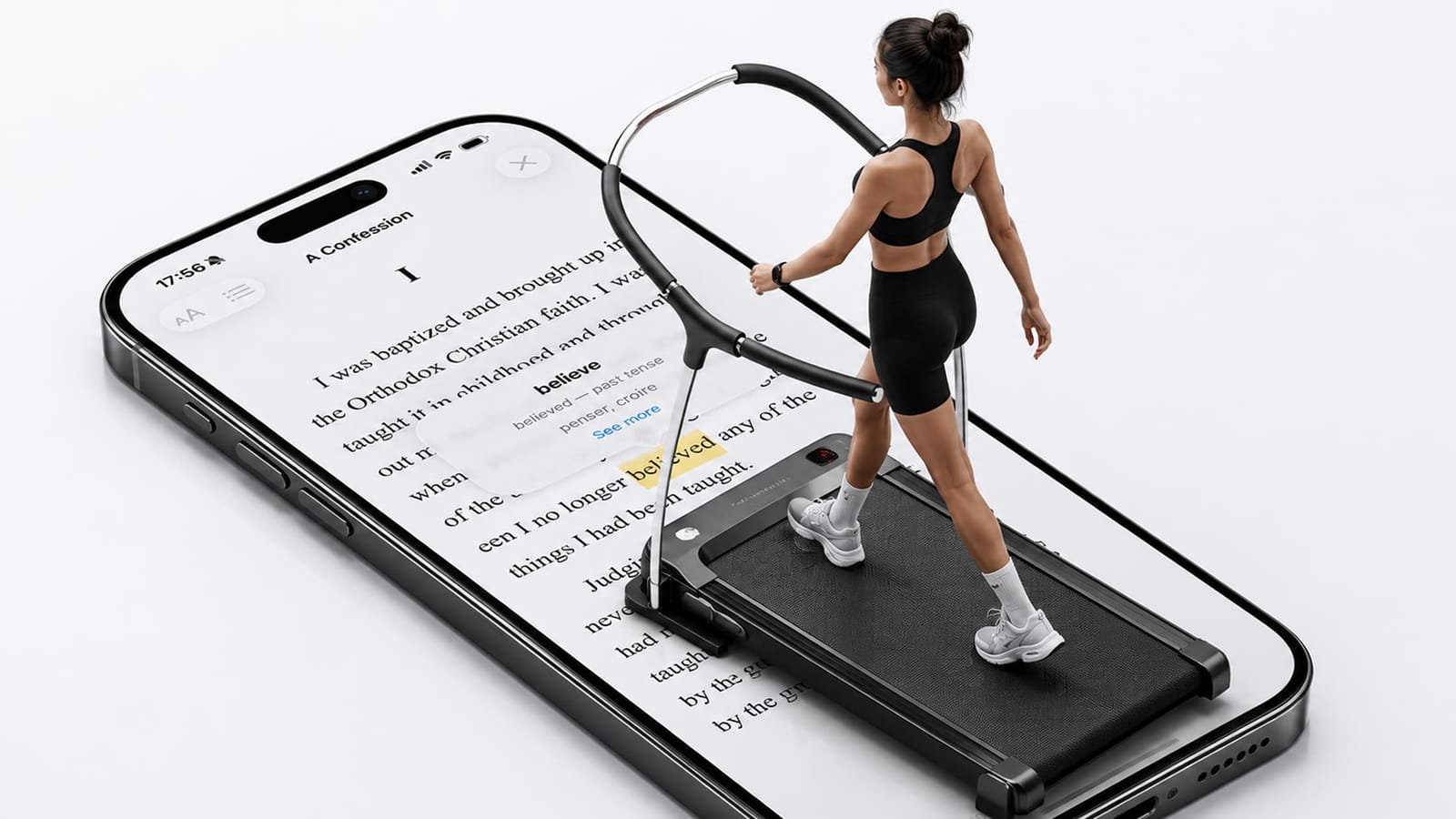
Clue no es un course y no pretende serlo. Es una iOS app gratuita que resuelve el vocabulary problem inside the resources you’re already using.
Estás escuchando The Daily. El host usa belabor. En un normal flow, o lo dejarías go (and lose it) o pausarías, switch apps, type the word into a dictionary, y try to remember which sentence it was in. Con Clue, you tap the word inside the podcast transcript, see the meaning with examples, y the word gets saved with the original sentence attached. Same flow con books, YouTube, y articles.
El punto: un self-paced adult learner doesn’t need another course. They need their existing reading y listening to also be the vocabulary system. Clue está construido exactamente en torno a eso. Es free, B1–C1 oriented, no streaks, no leaderboards, no daily quest.
Si alguna vez empezaste un vocab notebook, lo usaste durante two weeks, y lo dejaste porque the friction era too high, that’s the friction que Clue removes.
Preguntas frecuentes
¿Son buenos los cursos de inglés online gratuitos para adultos?
Las big-name platforms (Cambridge, British Council, USA Learns) son legitimate y well-built. Son best for filling specific gaps, not as a single backbone. Most adults past B1 will get more from a podcast-plus-tutor setup than from a free general course.
¿Cuál es la mejor forma gratuita de aprender a hablar American English?
Listen to American podcasts daily (The Daily, This American Life, Hard Fork), shadow a two-minute clip every day, y book one or two weekly thirty-minute calls con un U.S.-based tutor on iTalki ($8–$20 per session). Free language exchange on Tandem covers the rest.
¿Puedo obtener un certificado de inglés reconocido de forma gratuita?
Not from a major issuer. Cambridge, IELTS, y TOEFL all cost. Some Coursera y edX courses offer financial aid that waives the certificate fee. Duolingo English Test es the cheapest accepted-by-some-universities option at $59.
¿Necesito hacer una prueba de nivel antes de empezar?
Useful but not required. The British Council y Cambridge both offer free online tests that give you a CEFR level (A1–C2) in about 20 minutes. Knowing whether you’re B1 or B2 helps you pick material — but most people guess correctly anyway based on what they can already watch and read.
¿En qué se diferencia esto de Duolingo o Babbel?
Duolingo es gamified vocabulary in isolation. Babbel es structured short lessons. Both work best for absolute beginners. Si you’re already B1+ y don’t enjoy gamification, neither is the right primary tool. A podcast-plus-tutor-plus-vocab-capture setup es closer to how adults actually progress.
¿Es suficiente una hora al día para aprender inglés?
Yes. One hour a day, sustained for a year, takes most B1 learners to comfortable B2 y many to C1. Sustained matters more than the exact amount. Three twenty-minute pieces beat one ninety-minute class you skip half the time.
¿Debo tomar una sesión con un tutor si estoy usando recursos gratuitos?
If you’ve gone more than two months without speaking practice, yes. Even one thirty-minute tutor call a week prevents the worst plateau — where listening is strong but speaking is frozen. Total cost es usually under $50 a month.
Cierre
Lo gratuito es suficiente para casi todo lo que un estudiante adulto de B1–C1 necesita. El truco no es encontrar más cursos gratuitos; es resistir la tentación de seguir buscándolos. Elige un pequeño conjunto: un podcast, un libro, un tutor durante una hora a la semana y una forma de capturar vocabulary en contexto, y mantente en ello durante ninety days. El progreso que nadie te promete en las páginas de aterrizaje de los free course proviene de hacer la versión aburrida de esto de forma consistente, on your own clock.
Leer en otros idiomas
Artículos relacionados
- Clue vs ChatGPT para aprender inglés: ¿cuál usar en 2026? ChatGPT es un tutor brillante a la carta; Clue convierte podcasts, vídeos y libros reales en input comprensible. En qué se diferencian y por qué casi todos usan ambos.
- Las mejores series para aprender inglés en 2026, por nivel Las mejores series para aprender inglés, de principiante a avanzado. Recomendaciones reales con notas sobre acento y dificultad, y cómo aprender de verdad con ellas.
- Clue vs Babbel: ¿cuál es mejor para aprender inglés en 2026? Babbel es un curso estructurado centrado en la conversación; Clue convierte podcasts, vídeos y libros reales en input comprensible. Cómo se comparan y a quién le conviene cada uno.
- Los Mejores Libros para Aprender Inglés en 2026, por Nivel Una lista de lectura seleccionada para estudiantes de inglés, desde lecturas graduadas hasta ficción literaria. Descubre por qué cada libro funciona en cada nivel, con notas de estilo.