
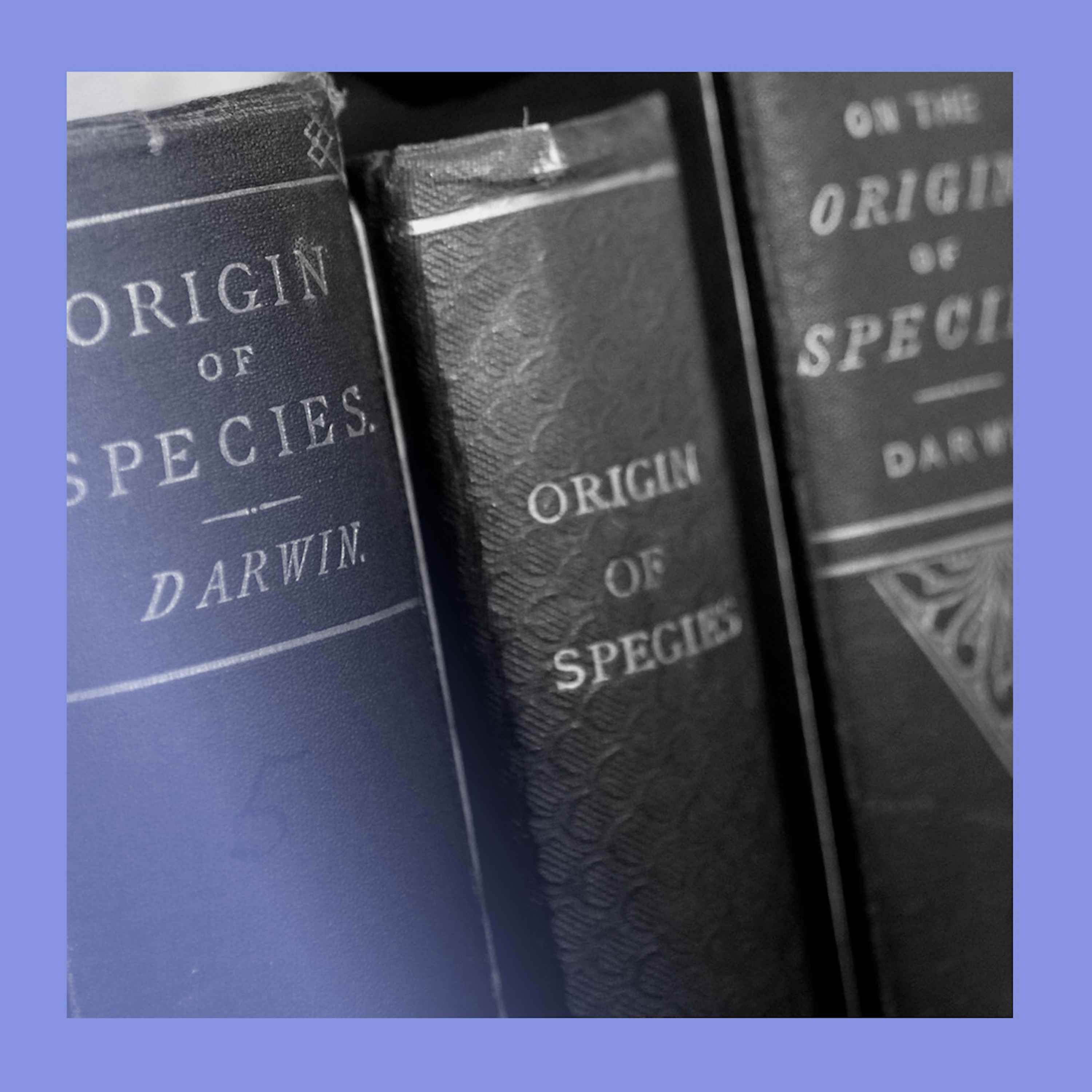
Battle of the texts: which books changed the world?
 The Intelligence from The Economist
  Open in Clue
 About this episode
<p>So many books are published each year; few stand the test of time. Today we devote our whole show to asking which works have shaped the way we behave and how we think. Picks include “Frankenstein” by Mary Shelley, “Pride and Prejudice” by Jane Austen, “A Suitable Boy” by Vikram Seth and “Lord of the Rings” by JRR Tolkien.</p><br><p>Full list of books mentioned in the show:</p><p>The Bible</p><p>The Koran</p><p>“Pride and Prejudice” by Jane Austen&nbsp;</p><p>“The Hunger Games” by Suzanne Collins</p><p>“On the Origin of Species” by Charles Darwin</p><p>“Il Saggiatore” by Galileo Galilei</p><p>“Two New Sciences” by Galileo Galilei</p><p>“Capital in the Twenty-First Century” by Thomas Piketty</p><p>“Amusing Ourselves to Death” by Neil Postman</p><p>The novels of Philip Pullman</p><p>The Harry Potter series by J.K. Rowling</p><p>“The Satanic Verses” by Salman Rushdie</p><p>“Frankenstein” by Mary Shelley</p><p>“A Suitable Boy” by Vikram Seth&nbsp;</p><p>“Lord of the Rings” by J.R.R. Tolkien&nbsp;</p><p>“A Room of One’s Own” by Virginia Woolf</p> <hr><p style='color:grey; font-size:0.75em;'> Hosted on Acast. See <a style='color:grey;' target='_blank' rel='noopener noreferrer' href='https://acast.com/privacy'>acast.com/privacy</a> for more information.</p>
Listen to this episode in English to learn English
Podcast episodes are one of the highest-density ways to absorb English at native pace. Battle of the texts: which books changed the world? from The Intelligence from The Economist gives you natural dialogue, unscripted speech, and vocabulary that actually appears in real conversations.
In the Clue app, every word in the transcript is tappable. Tap an unknown word, see the translation in your language instantly, and keep listening without breaking flow.
Episodes to Learn English
- Peace fire: further US-Iran strikes Jul 9, 2026
- Marine warfare: Le Pen runs for president Jul 8, 2026
- Continental rift: NATO’s tense summit Jul 7, 2026
- The mourning show: the politics of Khamenei’s funeral Jul 6, 2026
- The 250-year experiment: America’s birthday Jul 3, 2026
- Roaring trades: oil majors’ secret success story Jul 2, 2026
- Fault lines: Venezuela’s paltry earthquake response Jul 1, 2026
- Gulf-co-operation counsel: what next for the region Jun 30, 2026
- Latin lessons: the Donroe-doctrine boost Jun 29, 2026
- Far Crimea: war comes to Russia’s door Jun 26, 2026
- Fear-jerker: America’s AI backlash Jun 25, 2026
- Missing peace: will Israel imperil Iran deal? Jun 24, 2026
- Keep qualms and carry on: a decade after Brexit Jun 23, 2026
- Starmergeddon: British PM resigns Jun 22, 2026
- Trailer: Tocqueville Road Trip Jun 19, 2026
- Coming in Andy: Britain's prime minister-in-waiting Jun 19, 2026
- First rate: Kevin Warsh’s Fed debut Jun 18, 2026
- View from the summit: what did the G7 achieve? Jun 17, 2026
- Local, an aesthetic: the deglobalisation of fun Jun 16, 2026
- On the home strait? A path to peace in Iran Jun 15, 2026
- Tocqueville Road Trip: 2. Against all obstacles Jun 13, 2026
- Tocqueville Road Trip: 1. Game of chance Jun 13, 2026
- Quid game: challenges for South Korea’s president Jun 12, 2026
- Kicking and screaming: protests at World Cup Jun 11, 2026
- Number crunch: why Britons ignore immigrant drop Jun 10, 2026
- There Xi goes: visiting North Korea Jun 9, 2026
- Ceasefire alarm: Iran and Israel trade strikes Jun 8, 2026
- Pregnant pause: India’s slumping fertility Jun 5, 2026
- A murder exploited: Britain’s George Floyd moment that wasn’t Jun 4, 2026
- Focused group: Ukraine is now Europe’s war Jun 3, 2026


