
Oksana Kovalenko
Language-learning writer · Published May 22, 2026
English Slang: A Practical Guide from 90s Throwbacks to Gen Z Internet Speak
You hear a coworker call something “mid” and a friend tweet “no cap” and a colleague describe a presentation as “based” and you start to wonder if your English is going backward. Slang is the part of the language that moves fastest, dates fastest, and matters most for sounding like a person rather than a search engine result.
Why Slang Is Tricky for Learners
Slang shifts every few years. The same word that signaled cool in 1998 sounds like a parent in 2026. Knowing slang is not just about meaning. It is about timing, region, and who you are.
Three reasons slang trips up non-native speakers:
- It dates fast. “Phat” was cool in 1998. “Lit” was cool in 2018. “No cap” peaked around 2021. Use the wrong-era slang and you sound like someone trying too hard.
- It is regional. British slang is not American slang is not Australian slang. The same word can mean different things across countries.
- It often comes from a specific community. A lot of mainstream American slang originates in AAVE (African American Vernacular English). Using it without context can sound off.
The safe move for learners is to recognize slang you hear, but produce it sparingly. You can understand 50 slang words and use only 5 actively, and you will sound far more natural than someone who memorizes 200 and forces them into every sentence.
Internet and Gen Z Slang
This is the slang you will hear on TikTok, YouTube, Twitter, and in messages from anyone under 30.
- Lit. Exciting, fun. “That party was lit.” Peaked around 2018, still in use but slightly dated.
- Slay. To do something exceptionally well. “She slayed that presentation.” Originally from drag/Black queer culture, now mainstream.
- No cap. No lie, seriously. “That was the best burger I’ve ever had, no cap.”
- Cap. A lie. “That’s cap, you didn’t actually meet him.”
- Vibes. General feeling or atmosphere. “This cafe has good vibes.” Almost always positive when used alone.
- Vibing. Enjoying the atmosphere. “We’re just vibing, no big plans.”
- Fr. “For real.” Used in text and increasingly in speech to confirm or emphasize. “That movie was bad fr.”
- Bet. Yes, sure, okay. “Want to grab food at 7?” “Bet.”
- Mid. Mediocre, not good or bad. “The new album is mid.” Often used dismissively.
- Based. Confident, unbothered, sticking to your opinion. Originally counter-culture, now broad use.
- Cringe. Embarrassing or awkward. “That tweet is cringe.”
- Lowkey. Slightly, somewhat, secretly. “I’m lowkey excited about the trip.”
- Highkey. Very, obviously. “I’m highkey tired.”
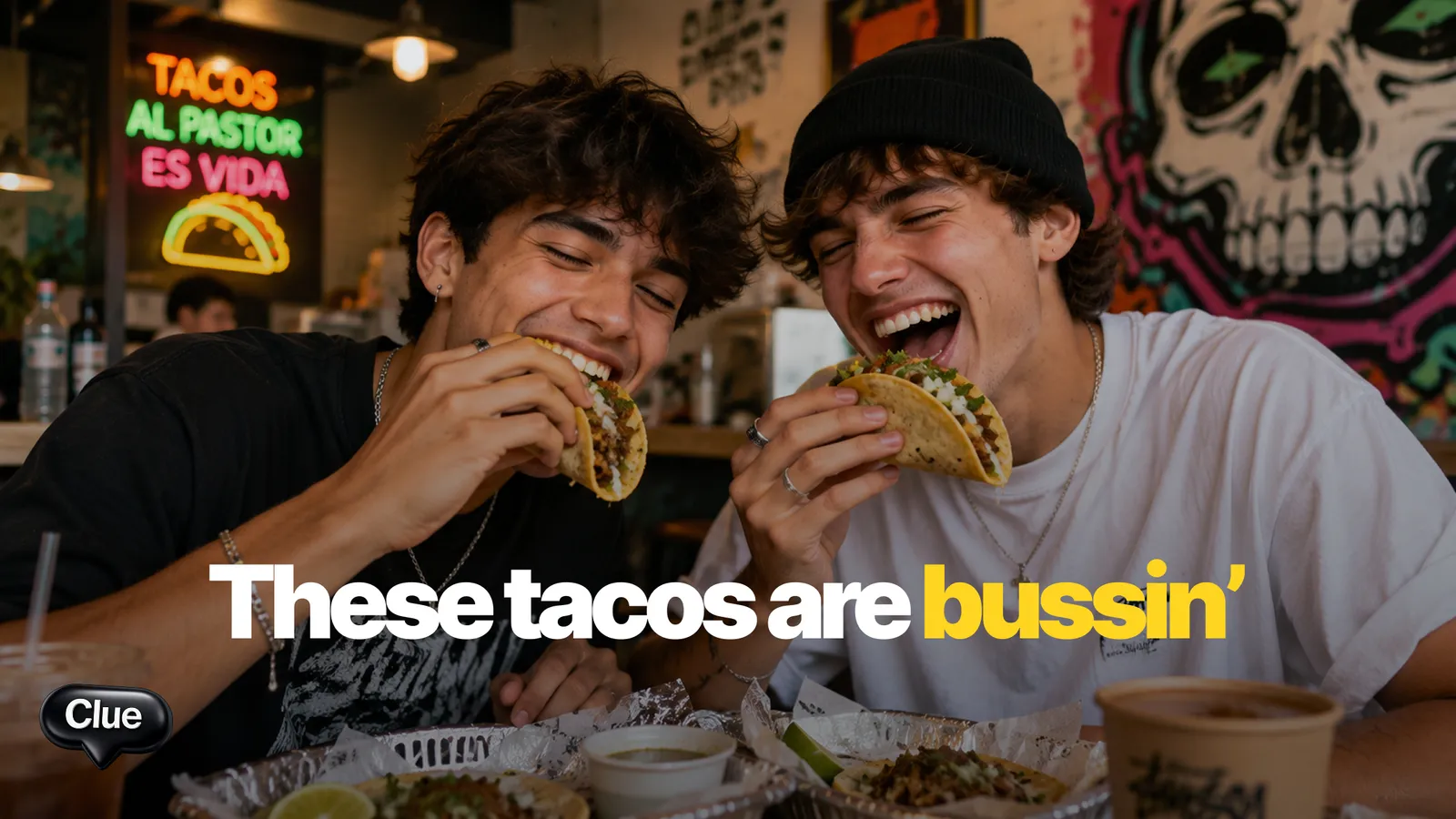
- Bussin’. Very good, usually food. “These tacos are bussin’.”
- Goated. The greatest of all time. “She’s the goated point guard.”
- Sus. Suspicious, suspect. From the game Among Us, now general. “That’s kind of sus.”
- Iykyk. “If you know, you know.” Used for inside references.
- Fire. Excellent. “That outfit is fire.”
- Slaps. Excellent, used for songs. “This song slaps.”
- Big yikes. Strong cringe or disapproval.
- Touch grass. Go outside, log off. “Bro, touch grass.”
- It’s giving X. It resembles or evokes X. “This restaurant is giving 90s diner.”
- Era. A specific phase. “I’m in my reading era.”
- Aura. Energy or coolness someone gives off. “He has main character aura.”
Most of these come from AAVE, Black Twitter, or gaming culture. Half of them will sound dated by 2030.
90s Slang
You will mostly hear this in Friends reruns, in songs from the era, and ironically from older millennials.
- Dope. Cool, excellent. “That’s dope.” Still used, no longer feels 90s.
- Sweet. Cool, great. “Sweet, let’s go.”
- All that. Excellent, impressive. “She thinks she’s all that.”
- Phat. Cool, attractive. Now dated.
- The bomb. Excellent. “That pizza is the bomb.” Now dated.
- Tight. Cool or close. “Those shoes are tight.” “We’re tight.” Mostly dated except in “we’re tight.”
- As if. No way. “Borrow my car? As if.”
- Whatever. Indifferent dismissal. Still used, less peak-90s now.
- Da bomb. Same as “the bomb.” Very dated.
- Word. Agreement. Still used, less common.
If you watch 90s movies (Clueless, Empire Records, anything by Kevin Smith), you will hear all of these constantly. They carry the era like a soundtrack.
2000s Slang
The peak of MSN Messenger, AIM, early texting.
- Lol. Laugh out loud. Still ubiquitous, increasingly used as filler rather than literal laughter.
- Omg. Oh my god. Still everywhere.
- Sup. What’s up. “Sup, dude.” Still casual.
- Dude. Person, originally male, now broadly gender-neutral. Heavy use in California and surf culture.
- Tight. Cool. Already covered, peaked again in early 2000s.
- Sick. Excellent. “That trick was sick.” Crosses 90s and 2000s.
- Off the hook. Excellent. “This party is off the hook.” Now dated.
- Ballin’. Living well, spending. “He’s ballin’ since the IPO.” Still used.
- Holla. Call me. “Holla at me later.” Mostly dated now.
- My bad. Sorry, casual. “My bad, didn’t see you there.” Still used.
- For real. Honestly. “For real though.” Still common, also as “fr.”
- Whack. Bad. “That excuse is whack.” Less common now.
British Slang
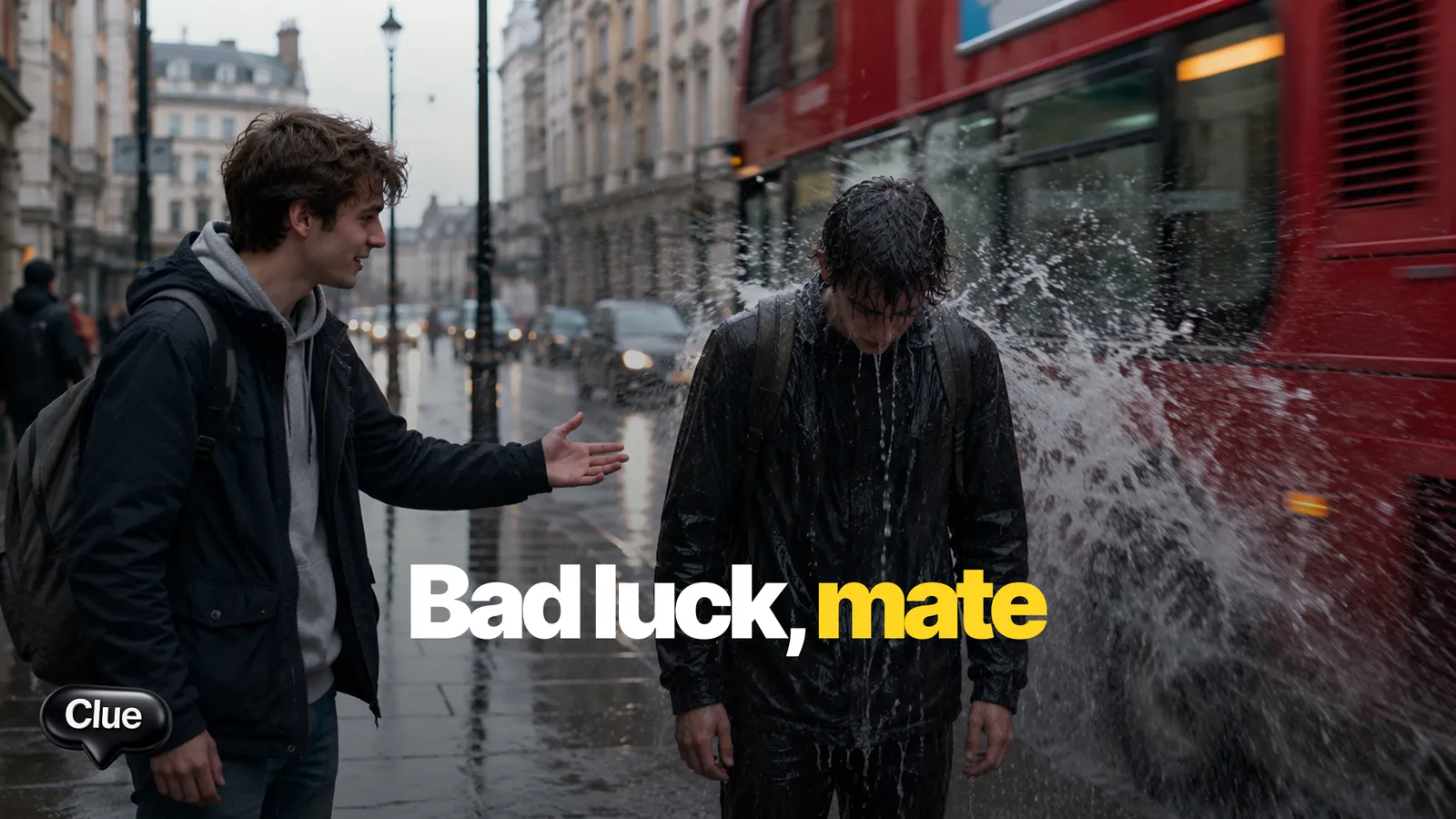
UK slang is rich, regional, and often delightful.
- Cheers. Thanks. Also a toast. “Cheers, mate.”
- Mate. Friend, also used with strangers as a polite “buddy.”
- Bloke. Guy, man. “Some bloke at the pub.”
- Knackered. Exhausted. “I’m absolutely knackered.”
- Chuffed. Pleased. “I’m chuffed about the promotion.”
- Gobsmacked. Astonished. “I was gobsmacked when she told me.”
- Bollocks. Nonsense, or testicles depending on context. “That’s bollocks.” Mild swearing.
- Bloody. Mild intensifier. “Bloody amazing.” “Bloody hell.”
- Cheeky. Slightly rude but charming. “A cheeky pint after work.”
- Daft. Foolish. “Don’t be daft.”
- Posh. Upper-class, fancy. “A posh restaurant.”
- Faff. A fuss or hassle. “Don’t faff about, just choose.”
- Naff. Uncool, tacky. “That’s a bit naff.”
- Skive. Skip work or class. “He skived off Friday.”
- Innit. “Isn’t it.” Used as confirmation. “Hot today, innit?”
- Wagwan. “What’s going on.” From British-Caribbean (Multicultural London English).
- Peng. Attractive, good-looking. UK slang, also MLE.
- Dench. Cool, impressive. UK slang.
- Sound. Good, agreeable. “He’s sound.” “Sound, see you then.”
- Quid. Pound (the currency). “Twenty quid.”
- Fiver, tenner. Five-pound note, ten-pound note.
- Loo. Toilet. “Where’s the loo?”
- Take the piss. Make fun of, or take advantage. “Are you taking the piss?”
- Mug. A fool, easily tricked. “Don’t be a mug.”
- Roadman. A young man in urban British street culture. London-specific.
Australian Slang
Australian slang is famous for diminutives and casual creativity.
- G’day. Hello, good day. Iconic.
- Sheila. Woman. Mostly dated, more in older Australians.
- Bloke. Same as British, man.
- Mate. Friend, used constantly.
- Arvo. Afternoon. “See you this arvo.”
- Brekkie. Breakfast. “Grab brekkie at the cafe.”
- Servo. Gas station, service station. “Stop at the servo.”
- Maccas. McDonald’s.
- Sunnies. Sunglasses.
- Dunny. Toilet.
- Esky. Cooler box.
- Thongs. Flip-flops, sandals. Not underwear, contrary to American usage. Pay attention to this one.
- Doona. Duvet, comforter.
- No worries. No problem, you’re welcome. Used constantly.
- She’ll be right. It will be okay.
- Heaps. Lots. “Heaps of fun.”
- Reckon. Think. “I reckon we should leave.”
- Stoked. Excited, pleased. “I’m stoked about the trip.”
- Crook. Sick or broken. “Feeling a bit crook.” “The car’s gone crook.”
- Dag. Endearingly uncool. “He’s such a dag.” Not insulting.
- Bogan. Lower-class, unrefined person. Mildly derogatory.
- Tinny. A can of beer.
- Stubby. A small bottle of beer.
- Roo. Kangaroo.
- Ute. Pickup truck (utility vehicle).
- Chook. Chicken.
AAVE: A Note on Respect
A huge proportion of mainstream American slang originated in AAVE (African American Vernacular English). “Slay,” “lit,” “shade,” “tea,” “spill the tea,” “throwing shade,” “ghosting,” “main character,” “bussin’,” “no cap,” and many more.
This is not a criticism of using these words. They have entered mainstream English. But three things to keep in mind:
- AAVE is a fully developed dialect of English with its own grammar. It is not “bad English.” It has its own conjugations, tense markers, and syntax.
- Mimicking AAVE features as a non-Black speaker can come across as offensive, especially when done in a “blaccent” or in stereotyped ways. The line is between absorbing words that have entered mainstream English (fine) and performing Blackness (not fine).
- Some terms are more sensitive than others. “Slay” and “no cap” are now broad. The n-word is never acceptable for non-Black speakers, in any context, including in song lyrics. Treat that line as absolute.
The honest middle path: use the slang you would naturally pick up from a diverse media diet. Do not adopt a stylized Black speech pattern that does not match your real voice.
Slang to Avoid
A few categories of slang where learners often misstep.
- Slurs and outdated insults. Words that mock disability, mental health, race, sexuality, or gender are no-go in most contexts. If a word makes anyone in your audience uncomfortable, it is not worth using.
- Dated slang used unironically. “Hip” or “groovy” said with a straight face reads as your dad trying to be cool. Use modern slang or skip it.
- Region-specific slang in the wrong region. “Sweet as” in New Zealand means good. “Sweet” in the US is fine. “Hella” is West Coast US, sounds odd in the UK. “Pissed” means drunk in the UK and angry in the US.
- Slang in formal contexts. Job interviews, business emails, contracts, doctor visits. None of these are slang-friendly.
- Slang with strangers you cannot read. Until you know someone, use neutral language. Slang is for people who get the joke.
How to Use Slang Without Sounding Cringe
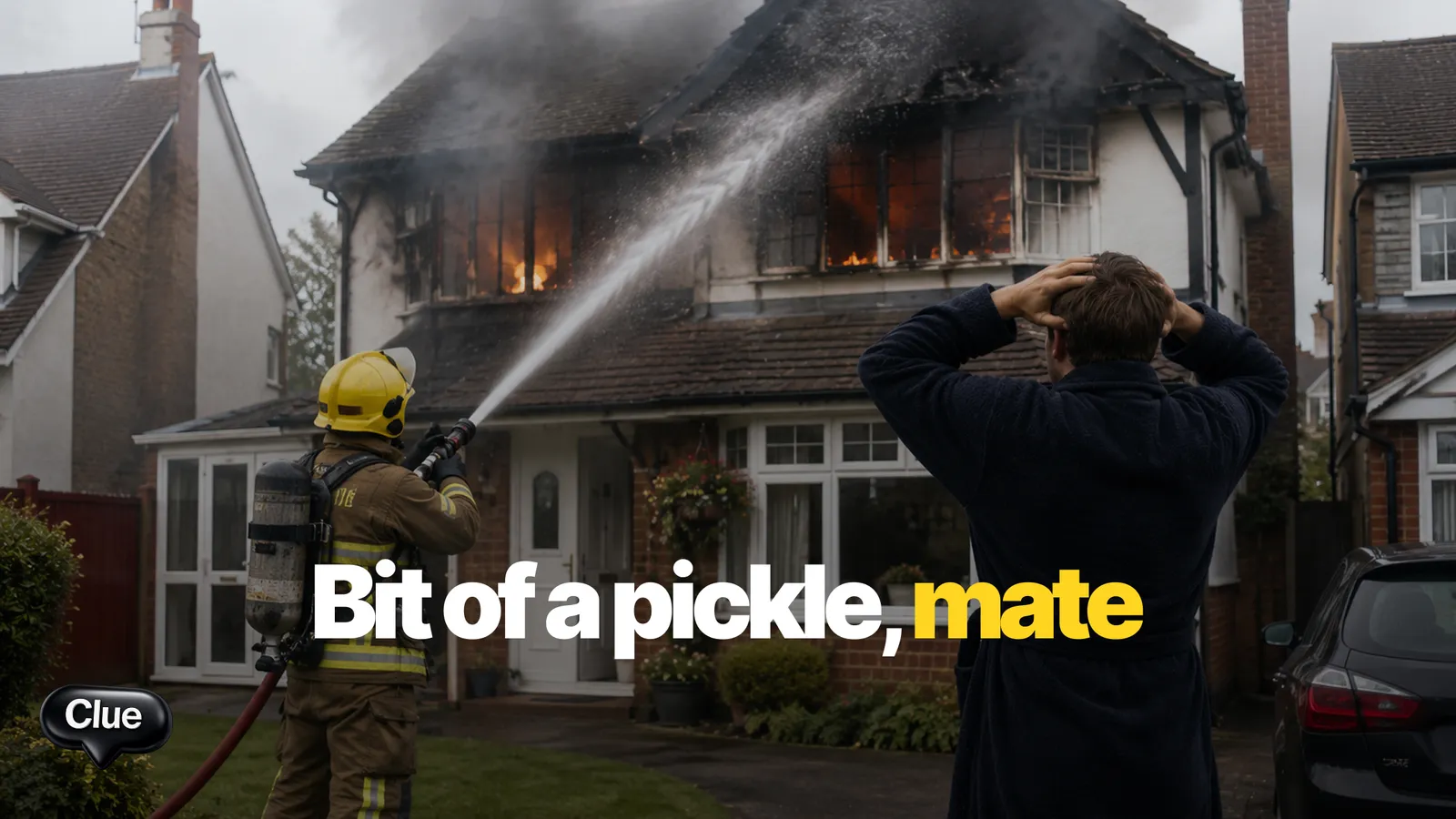
A few rules of thumb:
- Use slang you have heard from people in your environment, not from TikTok lists. If everyone around you says “no cap,” it sounds fine. If you learned it from an article and drop it cold, it lands wrong.
- Match the slang to the speaker. A 22-year-old American on Twitch uses different slang than a 45-year-old British accountant.
- Use sparingly. One slang word per few sentences is plenty. A sentence with three slang terms reads like a parody.
- Lean recognition over production. You only need to use a fraction of the slang you understand. Most of the value of slang knowledge is comprehension.
- Get correction if you use it wrong. Native speakers will not always tell you, but if you have a friend who will, ask them to flag awkward slang use.
- Update your slang every couple of years. What sounded cool in 2018 sounds dated now. Keep absorbing.
- When unsure, use the older, more neutral word. “That’s great” is always fine. “That’s fire” works in some contexts and feels off in others.
Common Mistakes
- Treating slang lists as vocabulary. Slang depends on context. A word that sounds natural from one speaker sounds forced from another.
- Overusing slang to prove fluency. Heavy slang use signals trying-too-hard more often than coolness.
- Mixing eras. “That party was phat and lit, no cap.” Three different eras of slang, nobody talks like that.
- Mixing regions. “Mate, that’s bussin’.” British “mate” with American “bussin’” works occasionally but often reads odd.
- Using slang in writing where speech would call for it. “Hey buddy, this report is mid lol” in a work email is unprofessional.
- Memorizing slang from articles, not from real exposure. Articles are useful for understanding what you have heard. They are bad sources for what to actually say.
- Assuming slang is universal. “Pants” is trousers in the US, underwear in the UK. “Fanny” means butt in the US, female anatomy in the UK. Some slang differences are minor. Some are dangerous.
Where Clue Fits In
The natural way to learn slang is by hearing it constantly in real content, from real speakers, in the moment. When you hear “that movie was mid” in a YouTube review, you tap the word in Clue, see the meaning, and the slang lands with the context of someone actually using it.
This is much more effective than reading articles about slang, because you absorb not just the word but the tone, the context, and the kind of person who uses it. Over months, your slang knowledge stays current because you are consuming current content.
Frequently Asked Questions
Should I use slang in my English?
Yes, sparingly. Using zero slang makes you sound like a textbook. Using lots of slang sounds forced. A small amount that matches your actual environment is natural.
How do I know if slang is current or dated?
Three signs slang is dated: people over 40 use it, it appears in marketing, or you find it on a “list of cool slang” article more than two years old. The freshest slang lives on TikTok and ages out within 2-3 years.
Is it OK to use Black slang as a non-Black speaker?
It depends on the word and the context. Words that have entered mainstream English (“cool,” “vibe,” “slay,” “no cap”) are fine. Stylized performance of AAVE features in your speech is problematic. The n-word is never acceptable for non-Black speakers.
Are some slang words formal enough for work?
A few. “Awesome,” “cool,” “for sure,” “no worries” all started as casual and have become acceptable in most workplaces. Most others (lit, bussin’, no cap) are not yet professional.
How fast does slang change?
Internet slang turns over in 2-5 years. Regional slang (British “knackered,” Australian “arvo”) is more stable, lasting decades. Universal informal English (“cool,” “guy”) is essentially permanent.
Should I learn US, UK, or AU slang?
The one that matches your media diet and your social environment. If you watch mostly American shows, learn American. If you live in London, learn British. Trying to speak all three at once produces an inconsistent voice.
What about regional slang within the US or UK?
Useful if you live there. If you visit New York, “schmear” (cream cheese spread on a bagel) is local. If you visit Boston, “wicked” as an intensifier is local. If you live in London, MLE words like “wagwan,” “peng,” “dench” are common. Pick up what you actually hear, not what guides tell you.
Closing
Slang is the spice of English. Use too little and your speech feels flat. Use too much and it overpowers everything. The goal is to recognize what people around you say, pick a few phrases that fit your voice, and let the rest wash over you. Slang you understand is a much bigger advantage than slang you use. Lean into recognition, stay current, and accept that whatever you adopt today will eventually become the slang someone uses to date you.
Read in other languages
Related articles
- Learn English from Scratch: A0 to B1 on Your Own Starting English from zero as an adult is a different challenge than continuing from an intermediate level. You have no vocabulary to fall back on, no gram
- Clue vs Lingopie: TV Streaming vs Bring-Your-Own Content Clue vs Lingopie compared: a curated TV streaming library for language learners versus a tool that works with any podcast, book, or video you bring.
- English for Turkish Speakers Learn English from real podcasts, videos, and books with one-tap Turkish translations. Offline dictionary, built for Turkish speakers ready for real content.
- Clue vs Babbel: Which Is Better for Learning English in 2026? Babbel is a structured, conversation-focused course; Clue turns real podcasts, videos and books into comprehensible input. How they compare and who each suits.