


Oksana Kovalenko
Language-learning writer · Published May 22, 2026
English Pronunciation: What Matters, What Doesn’t, and 30 Words People Get Wrong
You can speak English with a strong accent and still be perfectly understood. You can also pronounce “comfortable” or “Wednesday” wrong for fifteen years and have no one mention it, until one day someone laughs and you suddenly remember every conversation in which you said it. Pronunciation in English is a moving target with high social weight.
Why English Pronunciation Matters (and Why It Doesn’t)
Three things are true at the same time:
- You will never sound native. Adult learners almost always keep an accent. That is not a failure. It is biology.
- You can absolutely be understood. Most communication breakdowns are not about your accent. They are about a small number of specific sounds, stress patterns, and word choices.
- Some pronunciation errors hurt comprehension more than others. Mispronouncing “thought” as “tought” is mostly fine. Stressing “deVELop” as “DEvelop” can make the word unintelligible.
The goal of pronunciation work is not to lose your accent. It is to fix the specific errors that cause confusion or sound jarring to native ears. Half a year of focused work on five sounds will help you more than ten years of vague effort to sound American.
IPA Basics
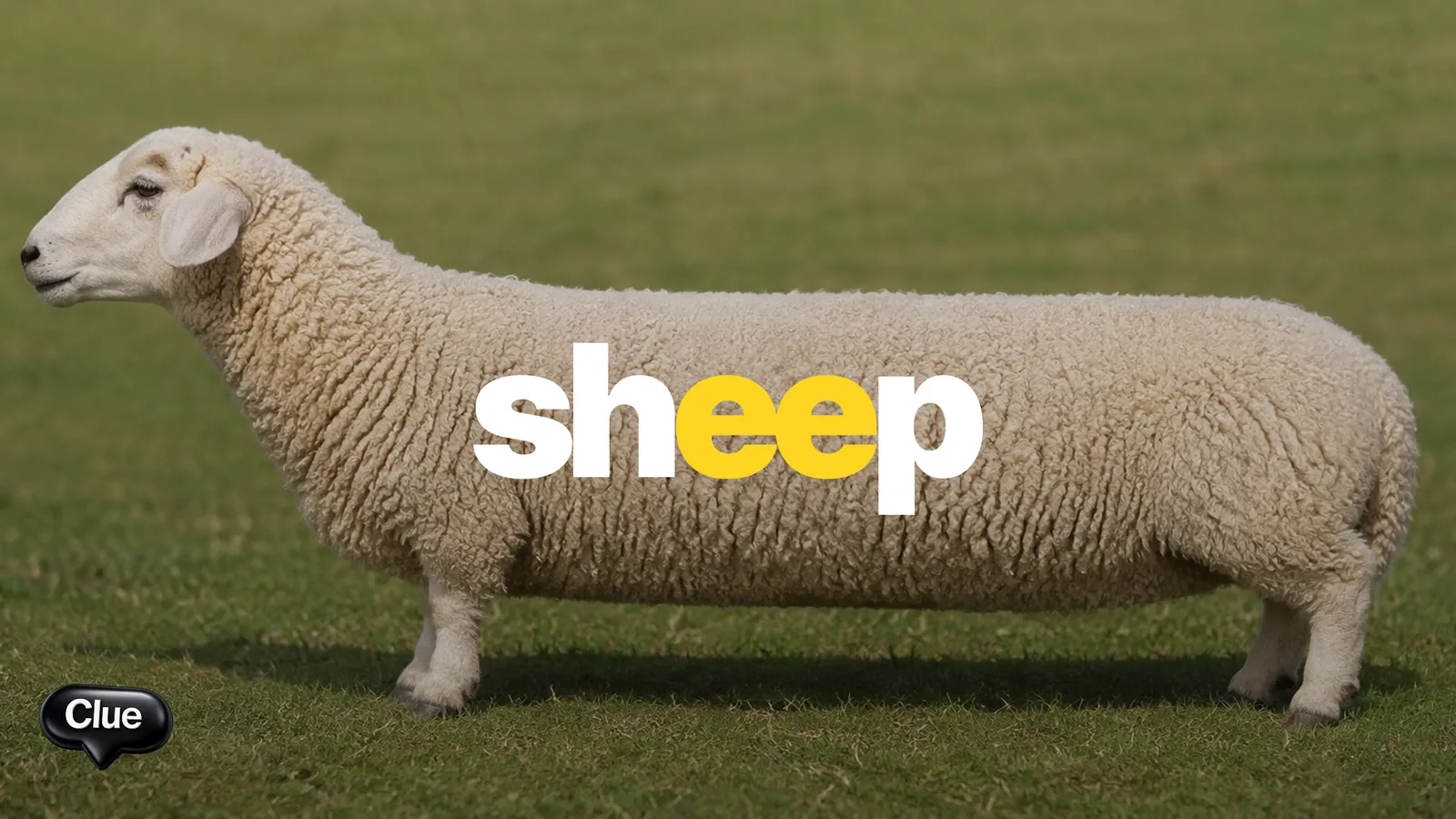
The International Phonetic Alphabet is one symbol per sound. English has roughly 44 sounds (24 consonants, 20 vowels) depending on the dialect, but English spelling only has 26 letters. That mismatch is why “though,” “through,” “tough,” “thought,” and “thorough” all look related and are pronounced completely differently.
You do not need to learn all 44 symbols. You need to recognize a few that matter most.
Vowels worth knowing
- /iː/ — long “ee” as in “sheep”
- /ɪ/ — short “i” as in “ship”
- /e/ — as in “bed”
- /æ/ — flat “a” as in “cat”
- /ʌ/ — as in “cup”
- /ɑː/ — as in “father”
- /uː/ — long “oo” as in “food”
- /ʊ/ — short “oo” as in “foot”
- /ɔː/ — as in “thought” (British) or “thawed”
- /ə/ — the schwa, the most common sound in English, more on this below
Consonants worth knowing
- /θ/ — voiceless “th” as in “think”
- /ð/ — voiced “th” as in “this”
- /ʃ/ — “sh” as in “shoe”
- /ʒ/ — “zh” as in “measure”
- /tʃ/ — “ch” as in “church”
- /dʒ/ — “j” as in “judge”
- /ŋ/ — “ng” as in “sing”
When a dictionary writes /θɔːt/ for “thought,” you should be able to decode it: voiceless “th,” then /ɔː/, then “t.”
The Schwa: The Most Important Sound in English
If you learn one thing from this article, learn the schwa.
The schwa is the weak, blurry vowel sound that English uses in unstressed syllables. It is written /ə/. It is the sound at the beginning of “about” and “above,” at the end of “sofa” and “drama,” and in the middle of “family” and “chocolate.”
Why it matters: English is a stress-timed language. Stressed syllables get full vowels. Unstressed syllables get reduced to schwa or near-schwa. The “a” in “about” is not pronounced like the “a” in “back.” It is the schwa.
Examples where the schwa hides:
- about → /əˈbaʊt/
- banana → /bəˈnɑːnə/ (two schwas)
- family → /ˈfæməli/
- chocolate → /ˈtʃɒklət/
- camera → /ˈkæmrə/
- comfortable → /ˈkʌmftəbəl/ (three syllables in fast speech, with schwas)
- vegetable → /ˈvedʒtəbəl/
If you pronounce every vowel “fully” in English, the rhythm sounds wrong even if every sound is correct. Spanish, Italian, Portuguese, Russian, Polish, and Turkish speakers often over-pronounce vowels. Reducing the unstressed ones to schwa is one of the biggest single improvements you can make.
Word Stress
English uses word stress more strictly than many languages. Get it wrong and the word can become unrecognizable.
- PHOtograph — noun
- phoTOgrapher — person
- photoGRAPHic — adjective
Same root, three different stress patterns. The word changes meaning by where the stress lands.
Some common stress mistakes by language background:
- French speakers often stress the last syllable, because French does. “deveLOP” instead of “deVELop.”
- Polish, Italian, Spanish speakers often stress the second-to-last syllable. “comFORtable” instead of “COMFortable.”
- German speakers often produce strong stress on every syllable, losing the contrast.
Quick rules to learn the patterns:
- Two-syllable nouns usually stress the first: TAble, MUsic, OFFice.
- Two-syllable verbs usually stress the second: deCIDE, repORT, beGIN.
- Words ending in -tion, -sion, -ic, -ity, -ial stress the syllable just before: naTIONal, deCIsion, aTOMic, abiLity, mateRIal.
These rules cover most cases. The exceptions are easier to absorb from exposure than from charts.
Sentence Stress and Intonation
Inside a sentence, English stresses content words (nouns, main verbs, adjectives, adverbs) and reduces function words (articles, prepositions, auxiliaries, pronouns).
- “I’m GOing to the STORE.” Two stresses, the rest is flat and fast.
- “Can you HELP me with this PROblem?” The “Can” and “you” almost disappear.
This is why English sounds “swallowed” to non-native ears. Native speakers do not pronounce every word with equal weight. They emphasize a few and rush through the rest.
Intonation rises at the end of yes-no questions and falls at the end of statements and wh-questions.
- “Are you coming?” → rising at the end
- “When are you coming?” → falling at the end
- “I’m coming.” → falling at the end
Australian and some Californian speech rises at the end of statements (“uptalk”), which can confuse learners trained on falling-intonation models. Both patterns are normal English.
30 Most-Mispronounced Words
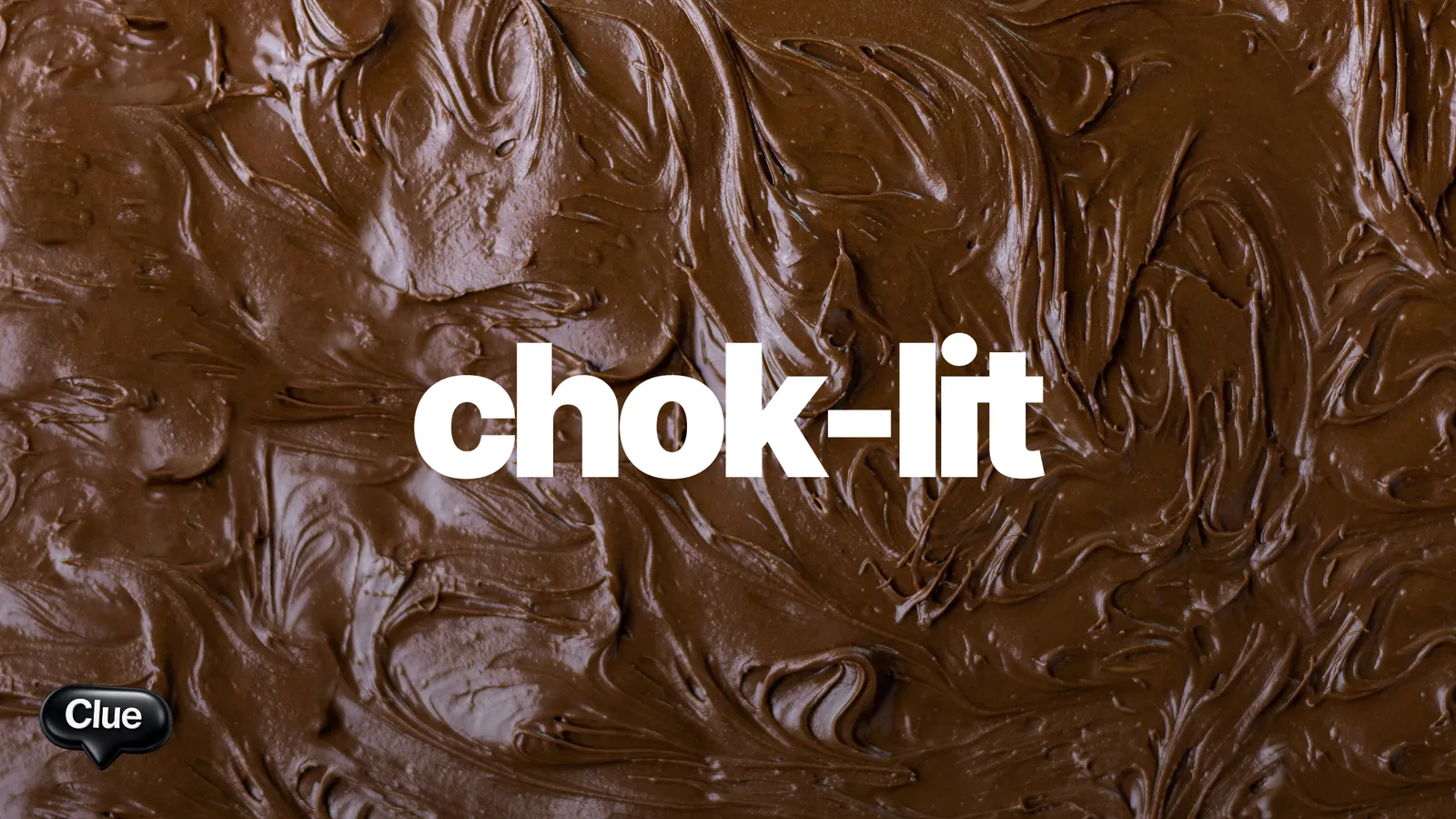
This list focuses on words where many learners get the pronunciation wrong in similar ways. Tap any to hear the right pronunciation in Clue or any online dictionary.
- Comfortable → KUMF-tuh-bul (3 syllables, not 4)
- Wednesday → WENZ-day (no “d” sound)
- Vegetable → VEJ-tuh-bul (3 syllables)
- Chocolate → CHOK-lit (2 syllables in fast speech)
- Restaurant → RES-tron or RES-tuh-rahnt
- Library → LIE-brer-ee (not “libary”)
- February → FEB-yoo-er-ee (the second “r” is often softened)
- Schedule → SKEJ-ool (US) / SHED-yool (UK)
- Iron → EYE-urn (the “r” is almost silent)
- Choir → KWY-er
- Colonel → KUR-nul (sounds like “kernel”)
- Queue → KYOO (just “Q”)
- Receipt → ree-SEET (silent “p”)
- Salmon → SAM-un (silent “l”)
- Almond → AH-mund (silent “l” for many speakers)
- Island → EYE-lund (silent “s”)
- Hour → OW-er (silent “h”)
- Honest → ON-ist (silent “h”)
- Knife → NIFE (silent “k”)
- Knee → NEE (silent “k”)
- Psychology → SY-KOL-uh-jee (silent “p”)
- Pneumonia → noo-MOH-nyuh (silent “p”)
- Mortgage → MOR-gij (silent “t”)
- Castle → KAS-ul (silent “t”)
- Listen → LIS-un (silent “t”)
- Often → OFF-un (often silent “t,” sometimes pronounced)
- Athlete → ATH-leet (2 syllables, not 3)
- Espresso → es-PRES-oh (no “x”)
- Jewelry → JOO-ul-ree (US) / JOO-ul-ur-ee (UK)
- Worcestershire → WUS-ter-shur (this one is just unfair)
Silent Letters
English is full of letters that exist on the page and do not exist in the mouth. Some patterns to remember:
- Silent “k” before “n” — knife, knee, knock, knight
- Silent “b” after “m” — lamb, dumb, climb, comb, thumb
- Silent “b” before “t” — debt, doubt, subtle
- Silent “g” before “n” — gnome, sign, design, foreign
- Silent “h” in some words — hour, honest, honor, herb (US only)
- Silent “l” after “a” in some words — calm, palm, half, walk, talk
- Silent “p” before “n,” “s,” “t” — pneumonia, psychology, receipt
- Silent “t” in some words — listen, castle, whistle, ballet
- Silent “w” before “r” — wrist, write, wrong, wrap
There is no perfect rule. There are patterns. Exposure cements them.
Minimal Pairs

Minimal pairs are two words that differ by exactly one sound. Practicing them trains your ear and mouth to hear and produce the difference.
/ɪ/ vs /iː/ (short i vs long ee)
- ship vs sheep
- live vs leave
- bit vs beat
- fit vs feet
- chip vs cheap
Most Spanish, Italian, Portuguese, Russian, Polish, and Turkish speakers struggle with this distinction. The trick is mouth shape: short “i” is relaxed, long “ee” is tense with the corners of the mouth pulled back.
/ʊ/ vs /uː/ (short oo vs long oo)
- full vs fool
- pull vs pool
- look vs Luke
- foot vs food
/æ/ vs /e/ (flat a vs short e)
- bad vs bed
- man vs men
- sat vs set
- tan vs ten
/θ/ vs /s/ vs /t/ (the “th” problem)
- think vs sink vs tink
- thank vs sank
- three vs tree vs see
The voiceless “th” is made with the tongue between the teeth. Most languages do not have this sound, so learners substitute “s,” “t,” or “f.” Practice slowly. The key is the tongue position.
/v/ vs /w/
- vine vs wine
- vest vs west
- veil vs whale
German, Russian, and some other speakers often confuse these. “V” uses the teeth on the lower lip. “W” uses rounded lips, no teeth.
/b/ vs /p/
- bin vs pin
- back vs pack
- big vs pig
The difference is voicing and aspiration. In English, “p” at the start of a word has a small puff of air. “B” does not.
How to Practice Pronunciation
Listen first, copy second
Before you try to produce a sound, listen to it a dozen times. Pronunciation problems usually start as listening problems. If you cannot hear the difference between “ship” and “sheep,” you cannot produce it.
Record yourself
Use your phone. Read a passage in English, listen back, compare to a native recording. The first time you do this is uncomfortable, and that discomfort is exactly the feedback you need.
Shadow
Pick a short clip (15-30 seconds) of a native speaker. Play it. Speak along, a half-second behind. You are not translating, you are copying the sounds. Do this with the same clip ten times. Then move on.
Focus on five sounds at a time
You cannot fix everything at once. Pick the five sounds that cause you the most trouble (probably “th,” the schwa, and a couple of vowels) and work on them for a month. Then pick five more.
Read out loud
Five to ten minutes a day of reading English text out loud strengthens the muscle memory of producing English sounds in flow. It does not need to be fast or perfect. It just needs to happen.
Trust passive intake
Most of your pronunciation improvement happens unconsciously, from hours of listening. Active practice fixes specific mistakes. Passive listening builds the foundation.
Common Mistakes
- Trying to lose your accent entirely. Almost no adult learner achieves a native accent. The realistic target is being clear and natural, not native.
- Ignoring word stress. Saying every syllable with equal weight (“re-COM-MEND” instead of “re-com-MEND”) is more disruptive to comprehension than mispronouncing individual sounds.
- Pronouncing every vowel fully. English reduces unstressed vowels to schwa. If you don’t, your rhythm sounds wrong.
- Confusing British and American pronunciations. “Schedule,” “tomato,” “either,” “vase” all have different pronunciations across dialects. Pick one and stay consistent.
- Practicing only words, not sentences. Isolated word practice is useful, but English pronunciation lives in flow. Practice phrases and sentences.
- Relying on spelling. English spelling is inconsistent. The word “ghoti” could theoretically be pronounced “fish” (gh as in “tough,” o as in “women,” ti as in “nation”). Spelling is not pronunciation. Listen first.
- Avoiding speaking because of accent shame. The way to improve pronunciation is to speak imperfectly, get feedback, and try again. Hiding produces no progress.
Where Clue Fits In
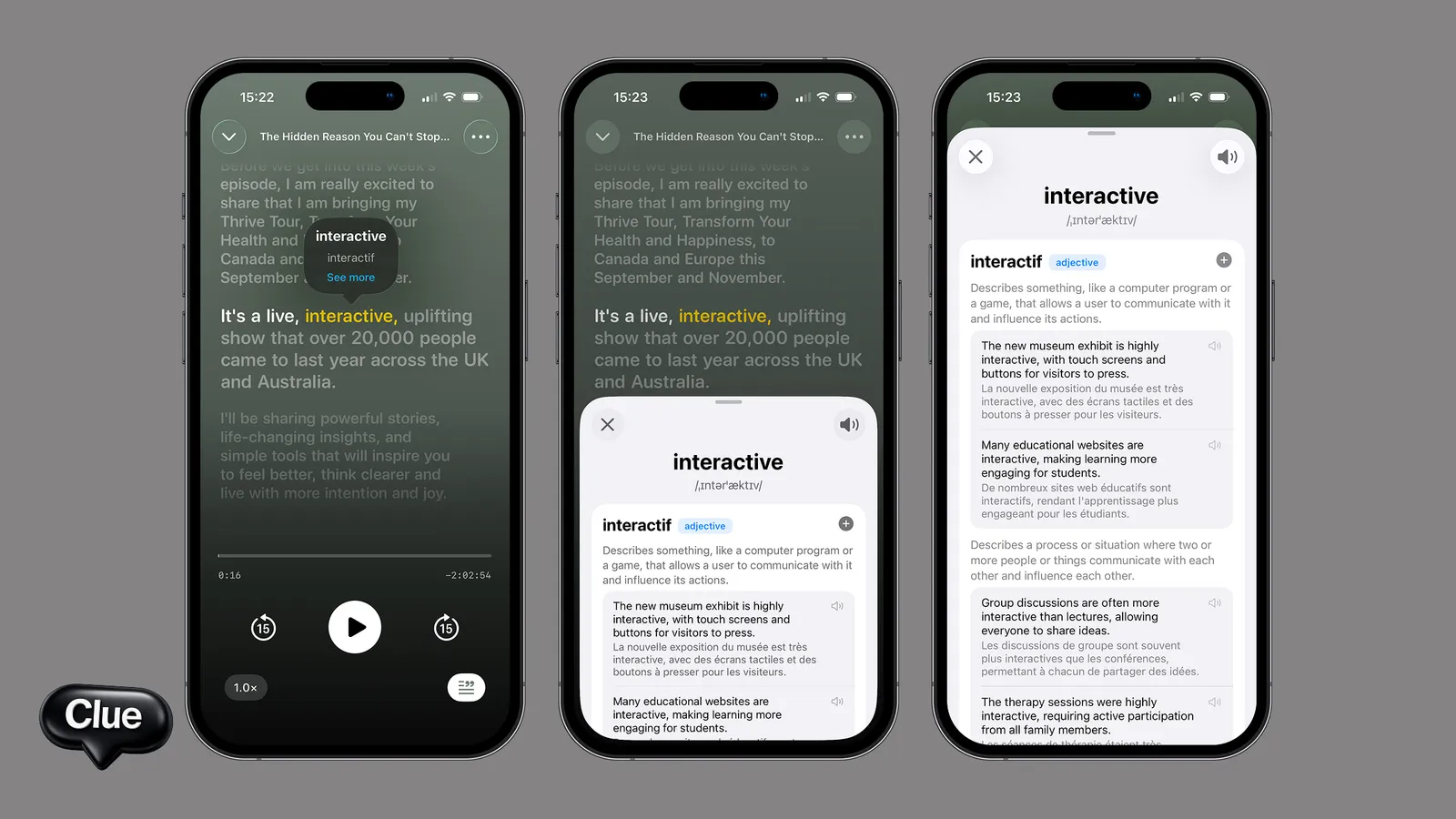
In Clue, every word you tap inside real content comes with its standard pronunciation and an example sentence. You can hear the word inside the podcast or video you were already listening to, then tap to see and hear it isolated. This combination of context plus isolated audio is exactly what pronunciation practice needs.
We do not pretend to be a pronunciation coach. We give you the tools to notice unfamiliar pronunciations as they come up in real content, instead of waiting until you embarrass yourself with “comfortable” three times in front of a coworker.
Frequently Asked Questions
Will I ever sound like a native speaker?
Very rarely. Adult learners who reach near-native pronunciation are unusual. Most people retain some accent, and that is fine. Aim for “clear and natural,” not “indistinguishable.”
How long does it take to improve pronunciation noticeably?
For specific sounds, two to six weeks of daily ten-minute practice usually produces audible improvement. Full overhauls of your accent take a year or more, and most people do not need that.
Should I learn American or British pronunciation?
Whichever you hear most often in your media diet, work, and travel. Mixing them (“schedule” as “shedjool” in one sentence and “skejool” in the next) sounds inconsistent. Pick one default.
Are pronunciation apps useful?
Apps that give you isolated word pronunciations are helpful for individual words. Apps that promise to score your accent are less reliable. The best pronunciation training is listening to real native speakers in volume and copying small chunks.
What’s more important: pronunciation or vocabulary?
Vocabulary, by a wide margin. If you have 5,000 words and a thick accent, you can hold a conversation. If you have 500 words and perfect pronunciation, you cannot. Build vocabulary first.
Do I need to learn IPA?
No, but it helps. Knowing a few IPA symbols means you can decode dictionary entries without guessing. Twenty minutes of study covers the symbols you actually need.
What about pronouncing rare or technical words?
Look them up. Even native speakers do this regularly. “Quinoa,” “Eyjafjallajökull,” and most place names get checked before being said out loud.
Closing
Pronunciation is a long game with diminishing returns. Spend two months on the five sounds that hurt you most and you will jump several levels in perceived fluency. Spend ten years chasing a native accent and you will probably never get there. The point of clear pronunciation is to remove distractions so that what you say lands. Most learners overshoot that goal. You only need to be clear, not perfect.
Read in other languages
Related articles
- Clue vs Lingopie: TV Streaming vs Bring-Your-Own Content Clue vs Lingopie compared: a curated TV streaming library for language learners versus a tool that works with any podcast, book, or video you bring.
- English for Turkish Speakers Learn English from real podcasts, videos, and books with one-tap Turkish translations. Offline dictionary, built for Turkish speakers ready for real content.
- Clue vs Babbel: Which Is Better for Learning English in 2026? Babbel is a structured, conversation-focused course; Clue turns real podcasts, videos and books into comprehensible input. How they compare and who each suits.
- English Phrases for Everyday Situations: What to Actually Say in 10 Common Moments You know the grammar, you know the vocabulary, and then a waiter asks "Are you all set?" and you freeze for two seconds because no one ever taught you…


