

Salud alternativa
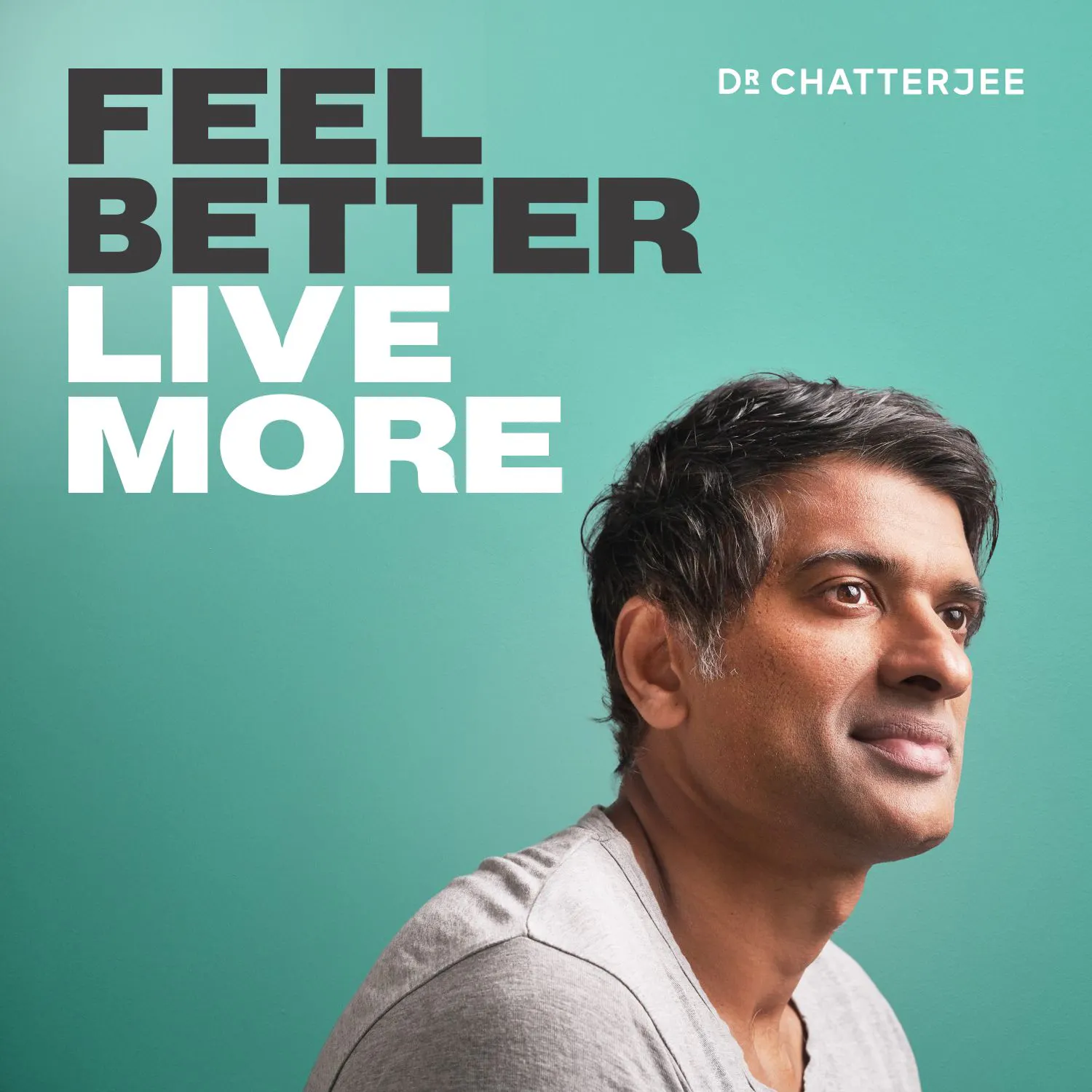
Feel Better, Live More with Dr Rangan Chatterjee
Dr Rangan Chatterjee: GP & Author
“Health has become overcomplicated. I aim to simplify it” In this podcast, we hear stories from leading health experts and exciting personalities who offer easy health life-hacks, expert advice and debunk common health myths giving you the tools to revolutionise how you eat, sleep, move and relax. Hosted by Dr Chatterjee - one of the most influential GPs in the country with nearly 20 years experience, star of BBC 1’s Doctor In the House, and author of 6 internationally best-selling books, including ‘The 4 Pillar Plan’ – Feel Better, Live More aims to inspire, empower and transform the way we feel. When we are healthier, we are happier because when we feel better, we live more. Support the podcast and enjoy Ad-Free episodes. Try FREE for 7 days on Apple Podcasts https://apple.co/feelbetterlivemore. For other podcast platforms go to https://fblm.supercast.com. https://www.drchatterjee.com/podcast https://www.instagram.com/drchatterjee https://www.twitter.com/drchatterjeeuk https://www.facebook.com/DrChatterjee
 Abrir en Clue
Episodios para aprender inglés669

BITESIZE | How To Connect With Nature for Greater Health and Happiness | Tony Riddle #219
19 nov 202114 minOur modern lifestyles are moving us further away from our natural state, but there are ways of living that are much more in sync with our human biology. Feel Better Live More Bitesize is my weekly podcast for your mind, body, and heart. Each week I’ll be featuring inspirational stories and practical tips from some of my former guests. Today’s clip is from episode 71 of the podcast with natural lifestyle coach and record-breaking barefoot endurance athlete, Tony Riddle. In this clip he explains how, through connecting with nature and our natural state, we can experience greater health and happiness. Thanks to our sponsor http://www.athleticgreens.com/livemore Support the podcast and enjoy Ad-Free episodes. Try FREE for 7 days on Apple Podcasts https://apple.co/3oAKmxi. For other podcast platforms go to https://fblm.supercast.com. Show notes and the full podcast are available at drchatterjee.com/71 Follow me on instagram.com/drchatterjee Follow me on facebook.com/DrChatterjee Follow me on twitter.com/drchatterjeeuk DISCLAIMER: The content in the podcast and on this webpage is not intended to constitute or be a substitute for professional medical advice, diagnosis, or treatment. Always seek the advice of your doctor or other qualified health care provider with any questions you may have regarding a medical condition. Never disregard professional medical advice or delay in seeking it because of something you have heard on the podcast or on my website.
How To Train Your Attention and Improve Your Life with Dr Amishi Jha #218
17 nov 20211h 56mWhere is your attention right now? Hopefully it’s on these words – but if you’re getting distracted and are contemplating what you’ll have for dinner or running through your to-do list, please know that you are not alone. Today’s guest shares research which shows that most of us are missing up to 50% of our lives. But if you’d like to change that for the better, you’re in the right place. Dr Amishi Jha is a neuroscientist, professor of psychology at the University of Miami and author of the brilliant new book Peak Mind: Find Your Focus, Own Your Attention, Invest 12 Minutes A Day, which looks at the science of attention. She wants to help us all harness the power of our attention to better meet life’s demands. And I know you’re going to find her advice useful whether it’s at work, at leisure or in your relationships. Amishi describes the three different types of attention: the Flashlight, the Floodlight and the Juggler. She explains how they all work together to keep us not just focused but also safe, productive and agile. What’s most important, she explains, is developing the awareness to know what type of attention, or distraction, you’re experiencing at any one time. We talk about factors which have a negative influence on our attention, namely stress, fear and lack of sleep. And how an inability to focus can not only be a consequence of poor mental health, but a cause as well. Often rumination, focusing too intently on our problems, can keep us in them. So how can we break free? This episode is packed with practical advice on optimising attention for all-round wellbeing and performance. Amishi’s research has shown that, just as we might train our bodies in the gym, so too can we train our brains to direct our focus where we’ll most benefit. And the good news is, we can experience incredible benefits in as little as 12 minutes a day. I really enjoyed this conversation and I hope you do too. Show notes available at https://drchatterjee.com/218 Support the podcast and enjoy Ad-Free episodes. Try FREE for 7 days on Apple Podcasts https://apple.co/3oAKmxi. For other podcast platforms go to https://fblm.supercast.com. Follow me on https://www.instagram.com/drchatterjee Follow me on https://www.facebook.com/DrChatterjee DISCLAIMER: The content in the podcast and on this webpage is not intended to constitute or be a substitute for professional medical advice, diagnosis, or treatment. Always seek the advice of your doctor or other qualified health care provider with any questions you may have regarding a medical condition. Never disregard professional medical advice or delay in seeking it because of something you have heard on the podcast or on my website.

BITESIZE | How to Improve Your Mental Fitness | Natasha Devon #217
12 nov 202113 minWe all know what to do to maintain our physical fitness, but we often don’t think about our mental fitness. Feel Better Live More Bitesize is my weekly podcast for your mind, body, and heart. Each week I’ll be featuring inspirational stories and practical tips from some of my former guests. Today’s clip is from episode 57 of the podcast with body image and mental health campaigner Natasha Devon MBE. In this clip, she explains why it’s so important to keep our mind fit and healthy and gives some great tips for maintaining mental fitness. Thanks to our sponsor http://www.athleticgreens.com/livemore Support the podcast and enjoy Ad-Free episodes. Try FREE for 7 days on Apple Podcasts https://apple.co/3oAKmxi. For other podcast platforms go to https://fblm.supercast.com. Show notes and the full podcast are available at drchatterjee.com//57 Follow me on instagram.com/drchatterjee Follow me on facebook.com/DrChatterjee Follow me on twitter.com/drchatterjeeuk DISCLAIMER: The content in the podcast and on this webpage is not intended to constitute or be a substitute for professional medical advice, diagnosis, or treatment. Always seek the advice of your doctor or other qualified health care provider with any questions you may have regarding a medical condition. Never disregard professional medical advice or delay in seeking it because of something you have heard on the podcast or on my website.

The Secret To Pain-Free Running (and Walking!) with Helen Hall #216
10 nov 20212h 6mHuman beings were born to run. No sooner have we learned to walk than we’re breaking into a run – it’s just another gear. So why do so many of us struggle with running as adults? Today’s guest, Helen Hall, is the running coach I’ve been working with for the past 18 months and who trained me for my recent marathon. As founder of Perpetual Forward Motion Efficient Running Coaching her clients range from elite athletes to ordinary amateurs who want to run or walk pain-free, with greater efficiency and, most importantly, with greater enjoyment. It’s no exaggeration to say Helen has had a profound effect on my life. So I’m delighted to be able to share her wisdom with you in this conversation, which is relevant whether you’re an experienced runner, a novice, or even if running doesn’t appeal at all. We begin our chat by looking at the core principles to Helen’s approach. Awareness is everything and she teaches clients to really notice what their body is doing. Where is your head sitting? How are you using your arms? It’s only when you’ve noticed that you can begin to change. And changing means becoming more efficient – learning the adjustments that help you to move with freedom. Movement, Helen points out, is a ‘job share’. We need to be able to recruit as much of our bodies as we can to do it well. I can testify to this holistic approach. Working with Helen hasn’t just changed my running, it’s helped me to walk faster, breathe better and stand more comfortably. It’s made me aware of how past injuries and trauma can affect you for decades. I’ve even learned how the surgery I had for appendicitis as a child played a huge part in my experience running the London Marathon this autumn. And, this conversation contains my first real deep dive into that recent marathon experience, which many of you have been asking about. It wasn’t the race I’d planned, but it turned out to be the race I needed. Helen helps me unpack why I found it so emotional and explains why my physical struggles were a sign of progress not limitation. I hope this conversation conveys just how valuable I think Helen’s approach is. Whether running is for you or not, I know it’ll get you thinking about how you’re sitting or standing right now, and noticing how you use your body for the rest of the day. Find Helen's video series here https://www.helen-hall.co.uk/product/the-pfm-wujwum-series/ Show notes available at https://drchatterjee.com/216 DISCLAIMER: The content in the podcast and on this webpage is not intended to constitute or be a substitute for professional medical advice, diagnosis, or treatment. Always seek the advice of your doctor or other qualified health care provider with any questions you may have regarding a medical condition. Never disregard professional medical advice or delay in seeking it because of something you have heard on the podcast or on my website.

BITESIZE | Simple Daily Habits to Improve Your Brain Health | Dr Rahul Jandial #215
5 nov 202111 minThe brain is our most vital and complex organ, and there are simple things we can all do to keep it healthy and improve its performance. Feel Better Live More Bitesize is my weekly podcast for your mind, body, and heart. Each week I’ll be featuring inspirational stories and practical tips from some of my former guests. Today’s clip is from episode 76 of the podcast with neuroscientist and brain surgeon Dr Rahul Jandial. In this clip he draws on his knowledge and years of experience as a brain surgeon to share some practical tips that can help us all optimise our brain health and get the best out of our mind at any age. Thanks to our sponsor http://www.athleticgreens.com/livemore Support the podcast and enjoy Ad-Free episodes. Try FREE for 7 days on Apple Podcasts https://apple.co/3oAKmxi. For other podcast platforms go to https://fblm.supercast.com. Show notes and the full podcast are available at drchatterjee.com/76 Follow me on instagram.com/drchatterjee Follow me on facebook.com/DrChatterjee Follow me on twitter.com/drchatterjeeuk DISCLAIMER: The content in the podcast and on this webpage is not intended to constitute or be a substitute for professional medical advice, diagnosis, or treatment. Always seek the advice of your doctor or other qualified health care provider with any questions you may have regarding a medical condition. Never disregard professional medical advice or delay in seeking it because of something you have heard on the podcast or on my website.

Powerful Daily Habits to Reduce Stress and Anxiety #214
3 nov 20211h 8mThis week’s episode is a special compilation episode all about stress: what it is, where it comes from, and what we can do to manage it better in our lives. Even before the events of the past 20 months, we were living in the middle of a stress epidemic. For many years now, the World Health Organization has been calling stress, the health epidemic of the 21st century. Many of us think that we can get away with burning the candle at both ends forever. But the reality is very, very different. Stress impacts every single organ of the body and chronic stress is at the root of many modern chronic diseases. On my podcast, I have had the great pleasure of talking to some of the leading thinkers and scientists across the globe and this week my team and I have put together some of the very best bits from previous episodes to give you actionable tips that I hope help you live a happier, more fulfilling, and stress-free life. This episode includes clips from: Episode 41 – Dr Rangan Chatterjee and Dr Ayan Panja Episode 28 - Rich Roll Episode 183 - Greg McKeown Episode 95 - Claudia Hammond Episode 113 - Brian MacKenzie Episode 124 - James Nestor Episode 109 - Kelly McGonigal Episode 2 - Michael Acton-Smith Episode 80 - Dhru Purohit Show notes available at https://drchatterjee.com/214 Support the podcast and enjoy Ad-Free episodes. Try FREE for 7 days on Apple Podcasts https://apple.co/3oAKmxi. For other podcast platforms go to https://fblm.supercast.com. Follow me on https://www.instagram.com/drchatterjee Follow me on https://www.facebook.com/DrChatterjee Follow me on https://twitter.com/drchatterjeeuk DISCLAIMER: The content in the podcast and on this webpage is not intended to constitute or be a substitute for professional medical advice, diagnosis, or treatment. Always seek the advice of your doctor or other qualified health care provider with any questions you may have regarding a medical condition. Never disregard professional medical advice or delay in seeking it because of something you have heard on the podcast or on my website.

BITESIZE | How To Fear Less | Dr Pippa Grange #213
28 oct 202111 minFear can hold us back in all aspects of our life and stop us from living a life filled with passion and deep fulfilment. Feel Better Live More Bitesize is my weekly podcast for your mind, body, and heart. Each week I’ll be featuring inspirational stories and practical tips from some of my former guests. Today’s clip is from episode 126 of the podcast with psychologist Dr Pippa Grange. Pippa believes most of us are performing at life, not living it - and in this clip, she explains why we should stop holding back, put fear aside and allow ourselves to live the life we want to live. Thanks to our sponsor http://www.athleticgreens.com/livemore Support the podcast and enjoy Ad-Free episodes. Try FREE for 7 days on Apple Podcasts https://apple.co/3oAKmxi. For other podcast platforms go to https://fblm.supercast.com. Show notes and the full podcast are available at drchatterjee.com/126 Follow me on instagram.com/drchatterjee Follow me on facebook.com/DrChatterjee Follow me on twitter.com/drchatterjeeuk DISCLAIMER: The content in the podcast and on this webpage is not intended to constitute or be a substitute for professional medical advice, diagnosis, or treatment. Always seek the advice of your doctor or other qualified health care provider with any questions you may have regarding a medical condition. Never disregard professional medical advice or delay in seeking it because of something you have heard on the podcast or on my website.

How To Eat To Beat Depression And Anxiety with Dr Drew Ramsey #212
26 oct 20211h 38mWe know how vital what we eat is for our physical health. What’s less widely appreciated, despite a wealth of evidence, is just how important the right foods are for our brain and mental health. But my guest today is here to turn the science into easy steps we can all put into action. Dr Drew Ramsay is a psychiatrist and a leader in the emerging field of nutritional psychiatry. He’s assistant clinical professor of psychiatry at Colombia University and founded The Brain Food Clinic in New York. Drew’s book, Eat To Beat Depression And Anxiety: Nourish Your Way To Better Mental Health In Six Weeks is a powerful prescription for optimising your mental health through diet. His clinic incorporates evidence-based nutrition and integrative psychiatry treatments with psychotherapy, coaching, and responsible medication management. He believes everyone working in the field of mental health should be talking about nutrition – and I couldn’t agree more. Over his 20 years as a practising doctor, Drew became frustrated that the robust data confirming a relationship between food and mental health wasn’t making it through to doctors, let alone patients. With depression being the most disabling illness in the world, he’s made it his mission to bring the evidence on nutritional prevention and cure to the masses. The trick, he says, is to find foods that do one of two things. They either feed your gut microbes and fight inflammation (linked to both depression and dementia) or they put your brain in ‘grow mode’. And which foods do these things? Drew reveals his ‘power players’ in our conversation, giving specifics on different nutrients and how they work in the body. He simplifies the research on foods that can treat depression – such as the famous SMILEs trial. And he provides a super-helpful, realistic guide to changes you can make right now (that don’t have to be expensive). Mental well-being is such an important topic and Drew’s work is so valuable. This episode is a must-listen for anyone who wants to do the best by their brain. Show notes available at https://drchatterjee.com/212 Follow me on https://www.instagram.com/drchatterjee Follow me on https://www.facebook.com/DrChatterjee DISCLAIMER: The content in the podcast and on this webpage is not intended to constitute or be a substitute for professional medical advice, diagnosis, or treatment. Always seek the advice of your doctor or other qualified health care provider with any questions you may have regarding a medical condition. Never disregard professional medical advice or delay in seeking it because of something you have heard on the podcast or on my website.

INTRODUCING | Built to Thrive | An Amazon Original #211
21 oct 202114 minI’m excited to announce I’ve just launched a brand new daily podcast called Built to Thrive, exclusively on Amazon Music. Instead of today’s usual Bitesize episode, I’ve decided to share episode 1 of the new podcast for you to enjoy. In just five minutes, Monday to Friday, Built to Thrive offers simple tips, hacks, motivation and advice aimed at helping you feel your best, mentally and physically. There's a new theme each week, with every day offering a new opportunity to improve the way you feel, whatever your starting point. If you enjoyed listening you can listen for free every day, Monday to Friday, by clicking here https://amazon.co.uk/BuiltToThrive Thanks to our sponsor http://www.athleticgreens.com/livemore Follow me on https://www.instagram.com/drchatterjee/ Follow me on https://www.facebook.com/drchatterjee Follow me on https://twitter.com/drchatterjeeuk DISCLAIMER: The content in the podcast and on this webpage is not intended to constitute or be a substitute for professional medical advice, diagnosis, or treatment. Always seek the advice of your doctor or other qualified health care provider with any questions you may have regarding a medical condition. Never disregard professional medical advice or delay in seeking it because of something you have heard on the podcast or on my website.

How To Rewrite Your Life Story with John McAvoy #210
19 oct 20212h 6mCAUTION: This episode contains themes of an adult nature. Before he came to see me today, my guest John McAvoy took a walk around Strangeways prison. For a former inmate, that might sound an unlikely way to start the day. But for John, it’s the sort of thing he does on a regular basis, to remind himself where he’s come from. This is John’s third appearance on the podcast, but for those new to his story, he was a teenager raised into a life of organised crime. By the age of 18 he was one of the UK’s most notorious armed robbers and was sentenced to two life sentences. John spent 10 years in maximum-security prisons but during that time he transformed his life, describing his release as a ‘rebirth’. Today John’s not just a record-breaking, Nike-sponsored athlete, he’s a man on a mission to make amends and make sure no other child goes that same route into crime. Through initiatives like his Open Doors campaign, to give young people access to school sports facilities during holidays, he’s inspiring new generations to rewrite their stories. But it’s not just youngsters John’s experience and wisdom speaks to. He’ll be too modest to agree with me, but I hear a spirituality and philosophy in his words that we can all benefit from. Our deep and honest discussion covers John’s move to the Alps to live a simple life, rejecting the wealth he could easily command. We talk about connection, forgiveness, the importance of not judging people – and we even ponder the meaning of life. I’m struck by how people like John, who have achieved incredible self-transformation, are the perfect figureheads to help inspire and create positive change in society. He’s a master of storytelling who uses his own, unique experience to give us access to new perspectives. I really hope you enjoy this conversation. Show notes available at https://drchatterjee.com/210 Support the podcast and enjoy Ad-Free episodes. Try FREE for 7 days on Apple Podcasts https://apple.co/3oAKmxi. For other podcast platforms go to https://fblm.supercast.com. Follow me on https://www.instagram.com/drchatterjee Follow me on https://www.facebook.com/DrChatterjee Follow me on https://twitter.com/drchatterjeeuk DISCLAIMER: The content in the podcast and on this webpage is not intended to constitute or be a substitute for professional medical advice, diagnosis, or treatment. Always seek the advice of your doctor or other qualified health care provider with any questions you may have regarding a medical condition. Never disregard professional medical advice or delay in seeking it because of something you have heard on the podcast or on my website.

BITESIZE | How to Create a Happy Life | Professor Paul Dolan #209
14 oct 202115 minWe all want to be happy, but what truly brings us happiness is often not what we think. Feel Better Live More Bitesize is my weekly podcast for your mind, body, and heart. Each week I’ll be featuring inspirational stories and practical tips from some of my former guests. Today’s clip is from episode 54 of the podcast with behavioural scientist and author of the books ‘Happy Ever After’ and ‘Happiness by Design’, Professor Paul Dolan. Paul believes that happiness is subjective and if we free ourselves from the myth of the perfect life, we can each create a life that’s worth living. Thanks to our sponsor http://www.athleticgreens.com/livemore Support the podcast and enjoy Ad-Free episodes. Try FREE for 7 days on Apple Podcasts https://apple.co/3oAKmxi. For other podcast platforms go to https://fblm.supercast.com. Show notes and the full podcast are available at drchatterjee.com/54 Follow me on instagram.com/drchatterjee Follow me on facebook.com/DrChatterjee Follow me on twitter.com/drchatterjeeuk DISCLAIMER: The content in the podcast and on this webpage is not intended to constitute or be a substitute for professional medical advice, diagnosis, or treatment. Always seek the advice of your doctor or other qualified health care provider with any questions you may have regarding a medical condition. Never disregard professional medical advice or delay in seeking it because of something you have heard on the podcast or on my website.

Why We Age and Why We Don’t Have To, with Professor David Sinclair #208
12 oct 20212h 18mMy guest today is a revolutionary thinker and ground-breaking scientist who’s on a mission to make you younger. And if that sounds promising, you’ll be pleased to know this podcast contains practical advice you can start to follow today. He’s Australian biologist and Harvard professor David Sinclair, author of Lifespan: Why We Age – And Why We Don’t Have To. David is one of the world’s leading scientific authorities on longevity, ageing and how to slow its effects. His research interest is the epigenetics of ageing and how we can reprogramme our genes to stop and even reverse it. That’s right – reverse the ageing process. And when you listen to him explain the science, it’s not as crazy as it sounds. The key to staying young, he explains, is inducing hormesis, a state of survival in our bodies, and you don’t need a lab to do it. Simple habits like skipping meals, eating more plants and less meat, certain types of exercise, and hot/cold therapies can create just enough adversity to switch on our bodies’ longevity genes. David’s goal is not vanity. It’s not to make us young for the sake of it. Instead, he’s shining a spotlight on ageing as the root cause of all the major chronic diseases that ultimately kill us. Heart disease, stroke, cancer, diabetes, dementia – his research suggests they could all be eliminated if we looked at the common cause, instead of treating the end symptoms. Of course, this would result in a population who spent significantly more time on earth, so we discuss the ethical questions this raises in the light of our climate and economic crises. Would ageing really be better described as a disease than a natural, inevitable process? This conversation contains so many thinking points and lots of practical tips that we can all start to apply immediately. Would you want to live to 150, if you could do so in full health? CAUTION: If you have type-2 diabetes or are on any blood sugar lowering medications, talk to a healthcare professional before you go for prolonged periods without eating. Show notes available at https://drchatterjee.com/208 Support the podcast and enjoy Ad-Free episodes. Try FREE for 7 days on Apple Podcasts https://apple.co/3oAKmxi. For other podcast platforms go to https://fblm.supercast.com. Follow me on https://www.instagram.com/drchatterjee DISCLAIMER: The content in the podcast and on this webpage is not intended to constitute or be a substitute for professional medical advice, diagnosis, or treatment. Always seek the advice of your doctor or other qualified health care provider with any questions you may have regarding a medical condition. Never disregard professional medical advice or delay in seeking it because of something you have heard on the podcast or on my website.

BITESIZE | Discover Your True Self for Peace and Purpose | Kilian Jornet #207
7 oct 202112 minWhen was the last time you were truly alone? When we take some time away from the storm of information we receive every day, the benefits can be transformative. Feel Better Live More Bitesize is my weekly podcast for your mind, body, and heart. Each week I’ll be featuring inspirational stories and practical tips from some of my former guests. Today’s clip is from episode 66 of the podcast with mountain runner and global icon, Kilian Jornet. One of the incredible feats Kilian has achieved is climbing Everest twice in one week, and in this clip, he explains why we need to spend time alone in order to connect with ourselves and live our best lives. Thanks to our sponsor http://www.athleticgreens.com/livemore Support the podcast and enjoy Ad-Free episodes. Try FREE for 7 days on Apple Podcasts https://apple.co/3oAKmxi. For other podcast platforms go to https://fblm.supercast.com. Show notes and the full podcast are available at drchatterjee.com/66 Follow me on instagram.com/drchatterjee Follow me on facebook.com/DrChatterjee Follow me on twitter.com/drchatterjeeuk DISCLAIMER: The content in the podcast and on this webpage is not intended to constitute or be a substitute for professional medical advice, diagnosis, or treatment. Always seek the advice of your doctor or other qualified health care provider with any questions you may have regarding a medical condition. Never disregard professional medical advice or delay in seeking it because of something you have heard on the podcast or on my website.

How To Optimize Your Immune System & Fight Viruses with Dr Roger Seheult #206
5 oct 20212h 4mThis week’s episode is all about the immune system and my guest is Dr Roger Seheult. He is a California based medical doctor, who practises as a critical care doctor also specialising in pulmonology and sleep. Although you might expect an intensive care doctor to be concerned only with emergency medicine and quick fixes, Dr Seheult is really passionate about prevention. And when it comes to understanding inflammation and immunity, I can’t think of a better person to explain the science. Whether you’re worried about coronavirus, you want to avoid other winter bugs, or your goal is fending off chronic disease, I think you will find this conversation really useful. We begin by discussing the link between inflammation and immunity. We speak in depth about the link between low vitamin D levels and coronavirus, how it might be used as both preventive and treatment, and exactly how much we should all be taking. Vitamin D is produced on exposure to sunlight, which leads us to talk about the importance of light – and dark – at the right times, for our circadian rhythms. This of course impacts on sleep and what Roger has to say about its vital role in immunity might just persuade any night owls out there to turn in early tonight. From hot and cold therapies to nutritional supplements, food to forest bathing, stress-relief to spirituality, there’s so much useful stuff here. I hope you enjoy this conversation and can use it as a toolkit for feeling your best as we head into the colder months. Show notes available at https://drchatterjee.com/206 Support the podcast and enjoy Ad-Free episodes. Try FREE for 7 days on Apple Podcasts https://apple.co/3oAKmxi. For other podcast platforms go to https://fblm.supercast.com. Follow me on https://www.instagram.com/drchatterjee Follow me on https://www.facebook.com/DrChatterjee Follow me on https://twitter.com/drchatterjeeuk DISCLAIMER: The content in the podcast and on this webpage is not intended to constitute or be a substitute for professional medical advice, diagnosis, or treatment. Always seek the advice of your doctor or other qualified health care provider with any questions you may have regarding a medical condition. Never disregard professional medical advice or delay in seeking it because of something you have heard on the podcast or on my website.

BITESIZE | The Secret to Solving the Stress Cycle | Drs Emily and Amelia Nagoski #205
30 sept 202114 minStress is a physiological cycle that has a beginning, a middle and an end. And by understanding how to complete the stress response cycle, you can get rid of the stress even if you can’t remove the stressor. Feel Better Live More Bitesize is my weekly podcast for your mind, body, and heart. Each week I’ll be featuring inspirational stories and practical tips from some of my former guests. Today’s clip is from episode 60 of the podcast with authors of the book ‘Burnout: The Secret to Solving the Stress Cycle’, Drs Emily and Amelia Nagoski. In this clip, they explain the importance of understanding the stress cycle, and the powerful and practical tools we can all use to minimise stress in our lives. Thanks to our sponsor http://www.athleticgreens.com/livemore Support the podcast and enjoy Ad-Free episodes. Try FREE for 7 days on Apple Podcasts https://apple.co/3oAKmxi. For other podcast platforms go to https://fblm.supercast.com. Show notes and the full podcast are available at drchatterjee.com/60 Follow me on instagram.com/drchatterjee Follow me on facebook.com/DrChatterjee Follow me on twitter.com/drchatterjeeuk DISCLAIMER: The content in the podcast and on this webpage is not intended to constitute or be a substitute for professional medical advice, diagnosis, or treatment. Always seek the advice of your doctor or other qualified health care provider with any questions you may have regarding a medical condition. Never disregard professional medical advice or delay in seeking it because of something you have heard on the podcast or on my website.

Why Running A Marathon Will Change Your Life with Hugh Brasher #204
28 sept 20211h 56mThis Sunday 3rd October, I’ll be one of 40,000 people taking to the streets to run the Virgin Money London Marathon. So, in preparation for what I’m told will be a life-changing day, I spoke to its Event Director, Hugh Brasher. But this episode is more than a conversation about running. It’s about the magic that happens when hundreds of thousands of people come together and revel in what’s possible. We begin by talking about its history, the famous atmosphere, crowd support and many other factors that make the London Marathon experience unique. We also talk about the vision behind the London Marathon, its inspirational aims and objectives that are still based around those drawn up by Hugh’s father, who co-founded the race 40 years ago. And they have more to do with social unity than sporting prowess. If it’s running tips you’re after, there are plenty of them here. But we also discuss the importance of personal goals – how there’s more to marathon success than a certain finishing time. We talk about making mass-participation events more diverse, supporting the ‘back of the pack’ runners but also how we can use physical activity as a tool for life transformation. Whether you run, walk, spectate, volunteer, or watch it on TV, I hope this conversation might inspire you to get involved one day with the London Marathon. Or perhaps you’ll seek out an event more local to you. The point, which Hugh makes so beautifully here, is that the sport is almost secondary. This event is about community, commitment, coming together and celebrating the human spirit. I’ll see you on the start line. Show notes available at https://drchatterjee.com/204 Support the podcast and enjoy Ad-Free episodes. Try FREE for 7 days on Apple Podcasts https://apple.co/3oAKmxi. For other podcast platforms go to https://fblm.supercast.com. Follow me on https://www.instagram.com/drchatterjee Follow me on https://www.facebook.com/DrChatterjee Follow me on https://twitter.com/drchatterjeeuk DISCLAIMER: The content in the podcast and on this webpage is not intended to constitute or be a substitute for professional medical advice, diagnosis, or treatment. Always seek the advice of your doctor or other qualified health care provider with any questions you may have regarding a medical condition. Never disregard professional medical advice or delay in seeking it because of something you have heard on the podcast or on my website.

BITESIZE | The Simple Habit That Can Transform Your Life | Danny Penman #203
23 sept 202112 minAre you sleepwalking through life, or are you really living it? Feel Better Live More Bitesize is my weekly podcast for your mind, body, and heart. Each week I’ll be featuring inspirational stories and practical tips from some of my former guests. Today’s clip is from episode 30 of the podcast with award-winning author and expert in mindfulness and meditation Danny Penman. It’s easy to live our day-to-day lives on autopilot and, in this clip, Danny gives some great tips on how we can use mindfulness to become more present and to fully connect with life. Thanks to our sponsor http://www.athleticgreens.com/livemore Support the podcast and enjoy Ad-Free episodes. Try FREE for 7 days on Apple Podcasts https://apple.co/3oAKmxi. For other podcast platforms go to https://fblm.supercast.com. Show notes and the full podcast are available at drchatterjee.com/30 Follow me on instagram.com/drchatterjee Follow me on facebook.com/DrChatterjee Follow me on twitter.com/drchatterjeeuk DISCLAIMER: The content in the podcast and on this webpage is not intended to constitute or be a substitute for professional medical advice, diagnosis, or treatment. Always seek the advice of your doctor or other qualified health care provider with any questions you may have regarding a medical condition. Never disregard professional medical advice or delay in seeking it because of something you have heard on the podcast or on my website.

How to Defy the Odds and Become Your Own Champion with Olympic Boxer Ramla Ali #202
21 sept 20211h 49mCaution: Contains themes of an adult nature. The term ‘inspirational’ can be overused when it comes to describing public figures. But in the case of today’s guest, it couldn’t be more fitting. Ramla Ali is a professional sportswoman who became the first-ever boxer to compete for Somalia in the Tokyo 2020 Olympic Games. Her incredible story is told in her new book Not Without A Fight: Ten Steps To Becoming Your Own Champion, and I’m honoured to hear it from her first hand. Ramla is a former refugee whose family fled from Somalia to Kenya after the civil war. After settling in the UK, she describes a pivotal moment in her teenage years when she was attacked by a group of boys for wearing a hijab. This, together with advice from her GP that she was obese, proved an incentive for Ramla to begin boxing. But it was a secret she kept hidden from her traditional, religious family. We talk about the range of feelings these events gave rise to, sharing our thoughts on the immigrant experience, and on being the subject of parental disapproval as well as pride. And we discuss Ramla’s journey to the Olympics and how much the African experience differs to that of Western athletes. Until she found sponsorship, modelling helped to pay Ramla’s way in sport. Yet she talks with touching honesty about struggles with confidence, self-esteem and finding her identity as a Somali woman in the public eye. Today, Ramla’s confidence comes from the knowledge she has achieved all this against the odds – and that her fight helps women and girls of all backgrounds, races and religions to be seen. She’s giving back not just through this platform and as a Unicef Ambassador, but through her Sisters Club, a free boxing club that provides a safe space for women in London to access the sport. Ramla is a true role model and living proof that we can all be our own champions. I really think you are going to enjoy listening. Show notes available at https://drchatterjee.com/202 Support the podcast and enjoy Ad-Free episodes. Try FREE for 7 days on Apple Podcasts https://apple.co/3oAKmxi. For other podcast platforms go to https://fblm.supercast.com. Follow me on https://www.instagram.com/drchatterjee Follow me on https://www.facebook.com/DrChatterjee DISCLAIMER: The content in the podcast and on this webpage is not intended to constitute or be a substitute for professional medical advice, diagnosis, or treatment. Always seek the advice of your doctor or other qualified health care provider with any questions you may have regarding a medical condition. Never disregard professional medical advice or delay in seeking it because of something you have heard on the podcast or on my website.

BITESIZE | How to Live a Long, Healthy and Happy Life | Dan Buettner #201
16 sept 202115 minExperts say that with the right lifestyle, the chances are you may live up to a decade longer. But we all want to make sure we stay fit, healthy and active in our old age too. Feel Better Live More Bitesize is my weekly podcast for your mind, body, and heart. Each week I’ll be featuring inspirational stories and practical tips from some of my former guests. Today’s clip is from episode 67 of the podcast with National Geographic Explorer and author Dan Buettner Dan has led teams of researchers across the globe to discover the secrets of Blue Zones – geographical areas where high percentages of centenarians live long and active lives. In this clip, he explains what we can all learn from his findings in order to live a healthy, happy and full life. Thanks to our sponsor http://www.athleticgreens.com/livemore Show notes and the full podcast are available at drchatterjee.com/67 Support the podcast and enjoy Ad-Free episodes. Try FREE for 7 days on Apple Podcasts https://apple.co/3oAKmxi. For other podcast platforms go to https://fblm.supercast.com. Follow me on instagram.com/drchatterjee Follow me on facebook.com/DrChatterjee Follow me on twitter.com/drchatterjeeuk DISCLAIMER: The content in the podcast and on this webpage is not intended to constitute or be a substitute for professional medical advice, diagnosis, or treatment. Always seek the advice of your doctor or other qualified health care provider with any questions you may have regarding a medical condition. Never disregard professional medical advice or delay in seeking it because of something you have heard on the podcast or on my website.

Dr Andrew Weil on How To Reduce Inflammation and Create Health #200
14 sept 20211h 52mI’m kicking off this season of the podcast with a very special guest. Dr Andrew Weil is a pioneer in the field of integrative health and is the founder and Director of the University of Arizona’s Center for Integrative Medicine – where he’s also Clinical Professor of Medicine and Professor of Public Health. He’s achieved global recognition as an expert on medicinal plants and alternative medicine and is blazing a trail for medical education reform in the US and around the world. Andrew has been out there for more than 50 years promoting a healing-oriented approach to healthcare, bringing together mind, body and spirit. Andrew describes integrative medicine as the “Intelligent combination of conventional medicine with natural and preventative strategies and selective use of alternative medicine.” It puts an emphasis on lifestyle medicine, mind-body interactions and the patient-practitioner relationship. We discuss this relationship and the lost art of listening. We talk about the shortcomings of modern, Western medicine – how being a doctor today can mean simply giving out drugs to mask symptoms (which can ultimately prolong and even worsen them). It’s this frustration at being unable to truly help that drives most medics to study Andrew’s revolutionary course. We delve into the topic of chronic inflammation – now a widely accepted cause of many serious health conditions, thanks in no small part to Andrew’s instincts and research. He shares some practical suggestion from his own anti-inflammatory eating plan, as well as the importance of mitigating stress. Breathwork, he says, is the game-changer here. Stress is a clear example of the mind-body connection at work, yet it remains a link modern medicine fails to address. We talk about how terms like psychosomatic or ‘all in your head’ have negative connotations, when the placebo effect is in fact proof of our mind’s healing power. When it comes to research and treatments, it’s a result scientists should be ruling in, not out. This is a whistle-stop tour of wellbeing, from the healing potential of psychedelics and the benefits of matcha tea, to the future of national healthcare systems, the value of sacred rituals, and some good news about dark chocolate. So much of my approach to health is aligned with Dr Weil’s and it was a joy to discuss our common ground and goals. This is a positive and practical conversation that I hope will inspire you. Show notes available at https://drchatterjee.com/200 Support the podcast and enjoy Ad-Free episodes. Try FREE for 7 days on Apple Podcasts https://apple.co/3oAKmxi. For other podcast platforms go to https://fblm.supercast.com. DISCLAIMER: The content in the podcast and on this webpage is not intended to constitute or be a substitute for professional medical advice, diagnosis, or treatment. Always seek the advice of your doctor or other qualified health care provider with any questions you may have regarding a medical condition. Never disregard professional medical advice or delay in seeking it because of something you have heard on the podcast or on my website.

How To Design Your Perfect Life with Peter Crone #199
13 jul 20211h 41mCAUTION: This podcast episode contains mild swearing. Today’s guest believes that the only thing separating you from living your perfect life, is the dialogue that exists within your subconscious mind. This philosophy is very much in alignment with my own and so I was delighted to welcome Peter Crone, a.k.a ‘the mind architect’ back onto the podcast for the third time. Peter is a writer, speaker and thought leader in human potential and has worked with world-famous actors, athletes and the business elite yet the lessons he teaches are universal truths that apply to each and every one of us. We begin the conversation discussing how the biggest illusion that humans have is believing that their experience is generated from circumstance – that they only feel the way they feel because of what is going on around them. This makes us a victim of circumstance. Peter explains that in fact, the suffering we feel is caused and created by ourselves and we have the power to choose how we respond to any situation. This he says, is true freedom. This way of thinking applies to all areas of our life, including our relationships. Our primal desire to be loved and accepted often means that we put the onus on the people around us to provide security and our sense of worth. We expect others to behave a certain way towards us and when they don’t, we feel hurt and sometimes rejected. Peter explains what is really going on in these situations and what we can do to start changing them. We also talk about how holding onto a sense of identity can be problematic, the role emotions play in disease and how parents can help their children reduce the likelihood of developing negative thought patterns. If you heard my last conversations with Peter, you’ll know how life-changing this way of thinking can be. This conversation has even more anecdotes and I think it will leave you with lots of ideas to reflect on in your own life. Show notes available at https://drchatterjee.com/199 Follow me on https://www.instagram.com/drchatterjee Follow me on https://www.facebook.com/DrChatterjee Follow me on https://twitter.com/drchatterjeeuk DISCLAIMER: The content in the podcast and on this webpage is not intended to constitute or be a substitute for professional medical advice, diagnosis, or treatment. Always seek the advice of your doctor or other qualified health care provider with any questions you may have regarding a medical condition. Never disregard professional medical advice or delay in seeking it because of something you have heard on the podcast or on my website.

BONUS | Gareth Southgate: Anything is Possible
9 jul 20211h 39mRE-RELEASE: This episode first aired in December 2020. Today’s guest joins me fresh from a run of autumn camps with the England football team. He’s their manager, Gareth Southgate OBE, and I speak to him about his new book, Anything Is Possible. It’s not really a football memoir, but more a guide to life and there are brilliant lessons for all of us in there – non-football fans included! Gareth had an illustrious career as a professional football player in the 1990s and as England manager, took the England team to the semi-finals of the 2018 FIFA World Cup for the first time in 28 years. We discuss how Gareth achieved this by employing psychologists (such as my former guest Pippa Grange), modelling emotional intelligence and communicating with each player as an individual. He promotes a mindset of positive drivers not negative drivers: focusing on what players might achieve, rather than what might go wrong. Most importantly, he reinstated a sense of fun. I love his humble, warm, inclusive approach. Under his watch, footballers have started to look more like role models again. Gareth explains how he used to be a shy teenage player and with his book, he aims to help youngsters get over self-limiting beliefs, nerves and anxieties and learn to be brave – and he shares some great dressing-room stories with me as examples. It may be written for children and young people, with Gareth’s role as ambassador for The Prince’s Trust in mind, but it contains universal wisdom for all ages. I had so much to ask him, and we managed to cover topics from how players cope without a crowd, to how he breaks the news when someone’s not made the team and the real meaning of bravery. We talk about the pressures on players from social media but also how it can be a force for good, helping Raheem Stirling and Marcus Rashford change attitudes and lives through their respective campaigns against racism and childhood hunger. I can’t emphasize enough that you don’t need to be into football to appreciate this conversation. It’s about having confidence, working hard, taking responsibility and being authentic. It was such an honour to speak with Gareth and he’s certainly reignited my love of the beautiful game. I can’t help but agree with him that when we come together in a positive way over sport, it has the potential to change the world. I hope you enjoy this conversation as much as I did. Show notes available at https://drchatterjee.com/140 Follow me on https://www.instagram.com/drchatterjee Follow me on https://www.facebook.com/DrChatterjee Follow me on https://twitter.com/drchatterjeeuk DISCLAIMER: The content in the podcast and on this webpage is not intended to constitute or be a substitute for professional medical advice, diagnosis, or treatment. Always seek the advice of your doctor or other qualified health care provider with any questions you may have regarding a medical condition. Never disregard professional medical advice or delay in seeking it because of something you have heard on the podcast or on my website.

BITESIZE | Why We Need Friends to Thrive | Dhru Purohit #198
8 jul 202118 minLife can be busy, and it’s easy to forget to make time to catch up with friends– but spending time with your friends is more important than you think. Feel Better Live More Bitesize is my weekly podcast for your mind, body, and heart. Each week I’ll be featuring inspirational stories and practical tips from some of my former guests. Today’s clip is from episode 80 of the podcast with my good friend and fellow podcast host Dhru Purohit. In this clip, he explains why our friendships are so important, and why we need deep connections to others to truly thrive. Show notes and the full podcast are available at drchatterjee.com/80 Thanks to our sponsor http://www.athleticgreens.com/livemore Follow me on instagram.com/drchatterjee Follow me on facebook.com/DrChatterjee Follow me on twitter.com/drchatterjeeuk DISCLAIMER: The content in the podcast and on this webpage is not intended to constitute or be a substitute for professional medical advice, diagnosis, or treatment. Always seek the advice of your doctor or other qualified health care provider with any questions you may have regarding a medical condition. Never disregard professional medical advice or delay in seeking it because of something you have heard on the podcast or on my website.

How To Transform Your Health Through Your Breath with James Nestor #197
6 jul 20212h 28mCAUTION: This episode contains mild swearing. I’m delighted to welcome James Nestor, the brilliant science journalist and author of Breath: The New Science of a Lost Art back to the podcast. James and I first spoke last September on episode 124. It was such a popular episode – in fact the YouTube version is my most-watched show! And I knew there was so much more I wanted to talk about with this inspiring guest, who’s such a wealth of knowledge on the untapped potential of breathwork. Since its publication last spring, James’s book has become an international bestseller, translated into 30 languages. Much of its appeal, I believe, comes from the author’s easy-to-read yet rigorous, objective approach. James isn’t trying to convince us that any one technique is better than another, or to push his opinion. He writes as an enquiring journalist, looking for the science to support effects that have been celebrated for thousands of years. It doesn’t matter if you missed last year’s conversation or you’re new to the concept of breathwork, as this episode is a handy recap. We cover all the basics of nasal breathing, the science of carbon dioxide tolerance, and the benefits of harnessing our breath for conditions ranging from asthma to anxiety, emphysema to scoliosis. And if you did catch our previous chat? Rest assured we go way deeper in this one! We delve into some of the super-breathing techniques like Tummo breathing (as popularised by Wim Hof), Holotropic Breathwork and Sudarshan Kriya. James shares his own experience of each, as well as the evidence behind them. Not only has James spent years researching and collating his work, he’s been talking about his findings non-stop to a fascinated audience for the past year. And yet his enthusiasm shows no sign of waning. That, he says, is because he has first-hand knowledge of how life-changing breathwork can be. It’s free, it’s easy, it doesn’t require much of your time, and the results can be instantaneous. I think you’ll be motivated and inspired to try some of the tips that James shares as you listen. So why is it that we have come so far from what should come naturally to us? Answers to all this, and more, in today’s episode. I hope you enjoy listening. Show notes available at https://drchatterjee.com/197 Follow me on https://www.instagram.com/drchatterjee DISCLAIMER: The content in the podcast and on this webpage is not intended to constitute or be a substitute for professional medical advice, diagnosis, or treatment. Always seek the advice of your doctor or other qualified health care provider with any questions you may have regarding a medical condition. Never disregard professional medical advice or delay in seeking it because of something you have heard on the podcast or on my website.

BITESIZE | Why We Were Born to Run | Vassos Alexander #196
1 jul 202116 minDo you think that running just isn’t for you? Or do you already enjoy running? Feel Better Live More Bitesize is my weekly podcast for your mind, body, and heart. Each week I’ll be featuring inspirational stories and practical tips from some of my former guests. Today’s clip is from episode 31 of the podcast with sports reporter, author, and endurance runner, Vassos Alexander. In this clip, he shares his inspirational journey - from being unfit and out of shape to running ultramarathons. He believes it doesn’t matter how far you run or how fast, just giving it a try could benefit your life in so many positive ways, and he gives some great tips on how to get started. Show notes and the full podcast are available at drchatterjee.com/31 Thanks to our sponsor http://www.athleticgreens.com/livemore Follow me on instagram.com/drchatterjee Follow me on facebook.com/DrChatterjee Follow me on twitter.com/drchatterjeeuk DISCLAIMER: The content in the podcast and on this webpage is not intended to constitute or be a substitute for professional medical advice, diagnosis, or treatment. Always seek the advice of your doctor or other qualified health care provider with any questions you may have regarding a medical condition. Never disregard professional medical advice or delay in seeking it because of something you have heard on the podcast or on my website.
How To Find Inspiration Everywhere You Look with Light Watkins #195
29 jun 20211h 40mCAUTION: This episode contains mild swearing. My guest today is internationally acclaimed meditation teacher, speaker and author, Light Watkins. I first spoke to him back on episode 23 of the podcast, when I know he inspired many of you to start a practice of meditation by breaking down common misconceptions and stripping away some of the rules and rigidity around meditation. So we begin this episode by talking about how our own approaches to meditation have evolved. We discuss the importance of consistency and how meditation is a catalyst for change even when you’re not meditating. Light explains how he committed to sending out a Daily Dose of Inspiration – a positive story, anecdote, or learning - to his email list back in 2016. Now, some of these emails have come together in Light’s latest book, Knowing Where To Look: 108 Daily Doses Of Inspiration. We talk about how he managed this huge undertaking – by approaching writing in the same way he meditates: consistently. The process quickly showed him that it’s possible to find inspiration everywhere you look. It trained him to look at life through a different lens and find life’s silver linings. In this conversation, Light shares how we can all find the inspiration that is all around us by training ourselves to look for it. We talk about how you can learn to trust your inner guide by starting small - Light calls it his ‘divine GPS’, a power greater than himself that’s showing him the way to go. Whether you believe in a higher power or not, just being open to the idea that there’s a different way to view every situation is a powerful skill to cultivate. Think, ‘Why is this happening for me’ not ‘Why is it happening to me’, he advises. This conversation is full of inspiring anecdotes and advice that I hope will give you a new perspective. Show notes available at https://drchatterjee.com/195 Follow me on https://www.instagram.com/drchatterjee Follow me on https://www.facebook.com/DrChatterjee Follow me on https://twitter.com/drchatterjeeuk DISCLAIMER: The content in the podcast and on this webpage is not intended to constitute or be a substitute for professional medical advice, diagnosis, or treatment. Always seek the advice of your doctor or other qualified health care provider with any questions you may have regarding a medical condition. Never disregard professional medical advice or delay in seeking it because of something you have heard on the podcast or on my website.

BITESIZE | Why Sleep Matters (and How to Get More) | Matthew Walker #194
24 jun 202115 minWe often think of sleep as the third pillar of health underneath diet and exercise, but Matthew believes sleep is the first pillar on which all others sit. Feel Better Live More Bitesize is my weekly podcast for your mind, body, and heart. Each week I’ll be featuring inspirational stories and practical tips from some of my former guests. Today’s guest is world-leading sleep researcher, author of the international best-selling book ‘Why We Sleep’ and Professor of Neuroscience and Psychology, Matthew Walker. Matthew shares research on how important sleep is for our health and the amazing power it has to recharge our mind and body. We explore how proper sleep can benefit your life and Matthew shares his tips for better sleep. Show notes and the full podcast are available at https://drchatterjee.com/26 Thanks to our sponsor http://www.athleticgreens.com/livemore Follow me on https://www.instagram.com/drchatterjee Follow me on https://www.facebook.com/DrChatterjee Follow me on https://twitter.com/drchatterjeeuk DISCLAIMER: The content in the podcast and on this webpage is not intended to constitute or be a substitute for professional medical advice, diagnosis, or treatment. Always seek the advice of your doctor or other qualified health care provider with any questions you may have regarding a medical condition. Never disregard professional medical advice or delay in seeking it because of something you have heard on the podcast or on my website.

How Admitting Powerlessness Can Change Your Life with Benjamin Francis Leftwich #193
22 jun 20211h 57mCAUTION: Contains themes of an adult nature. I believe that we can all learn something about ourselves from every single person we interact with and that it is through hearing other people’s stories that we can learn the most. Today’s guest has a really powerful story to share – he is the singer-songwriter, Benjamin Francis Leftwich. I’ve been a huge fan of his work since his 2011 debut album and I think his music connects with people in an incredible way. Ben’s fourth studio album, To Carry a Whale, has just been released – the first that he has recorded in sobriety. Ben and I begin by talking about the disconnect between success and happiness. At the peak of his early fame a decade ago, he confesses that contentment still eluded him. He had success, fame, opportunities, riches – Ben acknowledges all his privileges. But he could not shake feeling uncomfortable in his own skin, like there was a hole in his heart that he could not fill. In Benjamin’s case, it was drink and drugs he tried to fill the hole with. But as we discuss, addiction comes in many guises. I think to some degree we’re all seeking to fill that hole in our souls, to ‘fix’ whatever we feel is wrong or missing in our lives. We can all feel an emptiness at times. And whether it’s alcohol, sugar, caffeine, gambling, sex, shopping or something else we choose to fill it with, few of us are strangers to that feeling. That’s not to diminish what, for Ben, has clearly been a long and traumatic journey. It’s a privilege to hear him share so honestly about his experience – and what he’s learned in recovery over the past three years. There’s so much in what Ben does in recovery, one day at a time, that I feel could be helpful to each and every one of us. For example, we discuss the difference between saying sorry and really making amends – how the latter means being accountable, asking for forgiveness, while not trying to manipulate the other person’s response. And we talk about the importance of connection and community. How the regular meetings Benjamin and other recovering addicts attend have adapted online during the pandemic and retained their power. We cover so much in this conversation – including, of course, plenty about the music. We talk spirituality, the inherent goodness in people and his goal of progress not perfection. I’m struck by Ben’s gratitude and energy and grateful for his authentic and touching words. This is a powerful conversation and I really think you are going to enjoy listening. If you or someone you know is struggling with addiction and would like help, here are some sites that you/they may find helpful: Alcoholics Anonymous (UK) https://www.alcoholics-anonymous.org.uk/ Alcoholics Anonymous (US & Canada) https://aa.org/ Alcoholics Anonymous (Australia) https://aa.org.au/ Narcotics Anonymous (UK) https://ukna.org/ Narcotics Anonymous (Worldwide) https://na.org/ Help Me Stop (UK) https://www.na.org/meetingsearch/ Help For Families (UK) https://adfam.org.uk/help-for-families/useful-organisations Show notes available at https://drchatterjee.com/193 Follow me on https://www.instagram.com/drchatterjee Follow me on https://www.facebook.com/DrChatterjee Follow me on https://twitter.com/drchatterjeeuk DISCLAIMER: The content in the podcast and on this webpage is not intended to constitute or be a substitute for professional medical advice, diagnosis, or treatment. Always seek the advice of your doctor or other qualified health care provider with any questions you may have regarding a medical condition. Never disregard professional medical advice or delay in seeking it because of something you have heard on the podcast or on my website.

BITESIZE | Simple Daily Habits to Reduce Stress and Anxiety | Dr Mithu Storoni #192
17 jun 202115 minWe are living in the middle of a stress epidemic - the World Health Organization calls stress ‘the health epidemic of the twenty-first century’. But what can we do about it? Feel Better Live More Bitesize is my weekly podcast for your mind, body, and heart. Each week I’ll be featuring inspirational stories and practical tips from some of my former guests. Today’s clip is from episode 56 of the podcast with neuroscientist, researcher and author of the book ‘Stress-Proof, Dr. Mithu Storoni. In this clip, Mithu reveals the results of her research on the common causes of stress and how it affects our health. She gives some great practical tips on how we can help to buffer ourselves from the consequences of stress by changing some of our daily habits. Show notes and the full podcast are available at drchatterjee.com/56 Thanks to our sponsor http://www.athleticgreens.com/livemore Follow me on instagram.com/drchatterjee Follow me on facebook.com/DrChatterjee Follow me on twitter.com/drchatterjeeuk DISCLAIMER: The content in the podcast and on this webpage is not intended to constitute or be a substitute for professional medical advice, diagnosis, or treatment. Always seek the advice of your doctor or other qualified health care provider with any questions you may have regarding a medical condition. Never disregard professional medical advice or delay in seeking it because of something you have heard on the podcast or on my website.

The Truth About Calories with Dr Herman Pontzer #191
15 jun 20211h 24mWe’ve been told that the more we move, the more calories we will burn but today’s guest is here to explain why this way of thinking is wrong. Dr Herman Pontzer is an evolutionary biologist who researches how our deep past shaped the way our bodies work today. Over the past 20 years, Herman has conducted ground-breaking research across a range of settings, including pioneering fieldwork where he lived with the Hadza hunter-gatherers in northern Tanzania. The Hadza are considered one of the last hunter-gatherer tribes in the world and provide a unique insight into the way we used to live. In our conversation today and in his new book, Burn: The Misunderstood Science of Metabolism, Herman reveals his findings that despite the fact that Hadza men and women get between five and ten times more physical activity every day than most women in the USA or Europe, their total energy expenditure – the amount of calories they burn – is the same. Exercise does not increase our metabolism. Instead, we burn calories within a very narrow range: nearly 3,000 calories per day for men and 2,400 calories for women, no matter our activity level. In fact, our metabolism - the way our body burns energy – affects every aspect of our biology from our pace of growth, reproduction and ageing to our weight and health. If we burn more energy in one area, our bodies will adjust by spending less energy in another. But all this doesn’t mean that you shouldn’t exercise. Far from it. Herman explains why movement is essential for humans. We also discuss what the real paleo diet looks like and how many of us have been seduced into expecting every meal to be mind-blowingly tasty. Finally, Herman describes what it was like living with the Hadza and shares the lessons he learned from observing this ancient way of life. This is an enthralling episode and I hope you enjoy listening. Show notes available at https://drchatterjee.com/191 Follow me on instagram.com/drchatterjee/ Follow me on facebook.com/DrChatterjee/ Follow me on twitter.com/drchatterjeeuk DISCLAIMER: The content in the podcast and on this webpage is not intended to constitute or be a substitute for professional medical advice, diagnosis, or treatment. Always seek the advice of your doctor or other qualified health care provider with any questions you may have regarding a medical condition. Never disregard professional medical advice or delay in seeking it because of something you have heard on the podcast or on my website.