
 Clue'da aç
İngilizce öğrenmek için bölümler847
The Life Scientific: Bruce Malamud
7 Ağu 202327 min<p>From landslides and wildfires to floods and tornadoes, Bruce Malamud has spent his career travelling the world and studying natural hazards.</p><p>Today, he is Wilson Chair of Hazard and Risk and executive director of the Institute of Hazard, Risk and Resilience at Durham University - but as he tells Jim al-Khalili, a lifelong passion for discovery has taken Bruce from volunteering with the Peace Corps in West Africa and a Fulbright Fellowship in Argentina, to fieldwork in India; not only studying hazards themselves, but also the people they affect - and building up the character and resilience to overcome personal tragedy along the way.</p><p>Over the years, his work in the field has opened up new ways of understanding such events: from statistical modelling to show how groups of hazards occur, to examining the cascading relationships between multiple hazards. And today, his focus is on projects that can bring tangible benefits to people at serious risk from environmental hazards - finding innovative ways to help them to better manage that threat.</p><p>(Photo: Bruce Malamud. Credit: Bruce Malamud)</p>
The Life Scientific: Andre Geim
31 Tem 202327 min<p>The world around us is three-dimensional. Yet, there are materials that can be regarded as two-dimensional. They are only one layer of atoms thick and have remarkable properties that are different from their three-dimensional counterparts.</p><p>Sir Andre Geim created the first-ever man-made 2D material, by isolating graphene, and is one of the pioneers in this line of research. Even beyond his Nobel Prize-winning work on graphene, he has explored new ideas in many different areas of physics throughout his career. Andre tells Jim al-Khalili about his time growing up in the Soviet Union, being rejected from university based on his German ethnicity, his move to Western Europe, and levitating frogs.</p><p>(Photo: 2010 Nobel Physics laureate Andre Geim during 2019 China Science Fiction Convention, Beijing, 3 November, 2019. Credit: VCG/Getty Images)</p>
In search of stardust
24 Tem 202331 min<p>Norwegian jazz musician Jon Larsen was having breakfast one clear spring morning when he noticed a tiny black speck land on his clean, white table. With no wind, birds or planes in sight, he wondered if it fell from space.</p><p>Dust from space is not as fanciful as it sounds. Billions of microscopic meteorites, dating back to the birth of our solar system, fall onto Earth every year. But they are so tiny, hidden among the copious dust of everyday life, that scientists believe they are impossible to find outside ultra clean environments like Antarctica.</p><p>But this doesn’t deter Jon, who, against the advice of all experts, decides he is going to be the first person to find an urban micrometeorite.</p><p>He takes presenter Caroline Steel and planetary scientist Dr Matthew Genge up onto some roofs, in search of the elusive particles. Can we find stardust on the top of the BBC? </p><p>Featuring Jon Larsen, Dr Matthew Genge and Svein Aarbostad.</p><p>Presenter: Caroline Steel</p><p>(Image: Cygnus Nebulosity and Starclouds Credit: VW Pics / Contributor | Getty Images)</p>
Bodies, brains and computers
17 Tem 202328 min<p>We've been building computers to think like us for years, but our ability to replicate human senses has been impossible. Until now. </p><p>Evolutionary biologist and broadcaster Professor Ben Garrod, is off to meet some of the sensory innovators and technological pioneers who are developing human like-sensing technology. From skin patches that can read our sugar levels, to brain implants that could use our thoughts to control computers. This is the technology that could blur the boundary between body, mind, and computer chip. </p><p>We meet Jules Howard, a zoologist who uses VR to help us explore the anatomical worlds inside animals. Jules shows us the inner-workings of a ducks vagina. We meet Anagram, who’s augmented reality experiences can visualise the inner-worlds of those experiencing schizophrenia and ADHD. We play with the health monitors and wearable tech that claim they could make us fitter, happier, and more productive humans. And meet Dr David Putrino, a clinician with Mount Sinai in New York, who’s conducting some of the first medically-approved surgery for brain implants. </p><p>Presenter: Professor Ben Garrod Producer: Robbie Wojciechowski Production co-ordinator: Jonathan Harris</p><p>(Image: Artificial intelligence robot and binary. Credit: Yuichiro Chino/Getty Images)</p>
Remote touch
10 Tem 202327 min<p>We've been building computers to think like us for years, but our ability to replicate human senses has been impossible. Until now. This technological revolution is starting to profoundly change not only how we interact with the world around us, but is allowing us to see, hear, smell, taste and even touch things we never imagined possible before.</p><p>An artificial intelligence revolution is super-charging sensing technology, promising us eyes with laser precision, ears that can distinguish every sound in a mile's radius and noses than can sniff out the early signs of forest fires before the first flame forms.</p><p>Evolutionary biologist and broadcaster Professor Ben Garrod is off to meet some of these sensory innovators and technological pioneers - the programmers, robotics engineers and neuroscientists, who are turning our world upside down and inside out.</p><p>In episode four - we’ll explore touch and what role does it plays for our nearest living relatives. Ben tries to give his mum a hug from 5,000 miles away. We discover what brain scans show when Ben given both painful and pleasurable touch. We explore what role the body could play in our use of computers in the future. We hear about remotely-operated sex toys. And learn about how all this might shift our understandings of intimate relationships in the future.</p><p>Could these new technologies and natural evolutions be redefining what it is to touch? Ben takes us through the amazing adaptations, and technological developments that could help touch become digitised.</p><p>Presenter: Prof Ben Garrod Producer: Robbie Wojciechowski Production Co-ordinator: Jonathan Harris</p><p>(Photo: Hands touching fingers. Credit: Kelvin Murray/Getty Images)</p>
The Evidence: Exploring the concept of solastalgia
8 Tem 202350 min<p>In The Evidence on the BBC World Service, Claudia Hammond will be exploring the concept of solastalgia; broadly defined as the pain or emotional suffering brought about by environmental change close to your home or cherished place. </p><p>Made in collaboration with Wellcome Collection, Claudia Hammond and an expert panel examine this relatively new concept, one that might be increasingly heard about as the effects of climate change are felt. </p><p>Claudia will be hearing stories of solastalgia from communities in Kenya and Indonesia and examining where storytelling fits in with other types of evidence when it comes to health and wellbeing. What kind of impact can personal stories of loss have on policy makers? </p><p>On stage with Claudia and in front of a live studio audience, are artist Victoria Pratt, Creative Director of Invisible Flock; Daniel Kobei, Director of Ogiek People’s Development Program; epidemiologist Dr Elaine Flores from the Centre on Climate Change and Planetary Health at the London School of Hygiene and Tropical Medicine; former prime minister of Australia Julia Gillard and environmental activist Laetania Belai Djandam </p><p>Produced by: Helena Selby and Geraldine Fitzgerald Studio Engineers: Emma Harth and Duncan Hannant </p><p>Photo: Man standing in grey climate whilst looking towards bright climate. Credit: Getty Images.</p>

Smelly people
3 Tem 202327 min<p>We've been building computers to think like us for years, but our ability to replicate human senses has been impossible. Until now. This technological revolution is starting to profoundly change not only how we interact with the world around us, but is allowing us to see, hear, smell, taste and even touch things we never imagined possible before.</p><p>An artificial intelligence revolution is super-charging sensing technology, promising us eyes with laser precision, ears that can distinguish every sound in a mile's radius and noses than can sniff out the early signs of forest fires before the first flame forms.</p><p>Evolutionary biologist and broadcaster Professor Ben Garrod, is off to meet some of these sensory innovators and technological pioneers. The archaeologists, ecologists and medics, who are turning our world upside down and inside out.</p><p>Could these new technologies and natural evolutions be redefining what it is to smell? Ben takes us through the amazing adaptations, and technological developments that could help broaden how we think of our noses.</p><p>Presenter: Professor Ben Garrod Producer: Robbie Wojciechowski Production co-ordinator: Jonathan Harris</p><p>(Photo: Close up of human nose smelling an animated smell. Credit | Getty Images)</p>

Sound solutions
27 Haz 202328 min<p>We've been building computers to think like us for years, but our ability to replicate human senses has been impossible. Until now. This technological revolution is starting to profoundly change not only how we interact with the world around us, but is allowing us to see, hear, smell, taste and even touch things we never imagined possible before.</p><p>An artificial intelligence revolution is super-charging sensing technology, promising us eyes with laser precision, ears that can distinguish every sound in a mile's radius and noses that can sniff out the early signs of forest fires before the first flame forms.</p><p>Evolutionary biologist and broadcaster Professor Ben Garrod is off to meet some of these sensory innovators and technological pioneers; The archaeologists, ecologists and medics, who are turning our world upside down and inside out.</p><p>In episode two, Ben finds sound solutions to tricky problems. We’ll hear about the ear which works up to depths of 500m below the ocean. In this light-deprived oceanic environment, we’ll find out how sound has become the most important sense. We’ll learn how noise pollution has inspired a number of revolutionary scientists to create sound-based solutions to better animal conservation. Along the way, we’ll meet engineers and computer programmers who’ve been able to find animals we thought previously extinct, and learn how one colour blind ornithologist mapped the entirety of a Caribbean archipelago so he could help protect his favourite species from storms and freak climate events.</p><p>Could these new technologies and natural evolutions be redefining what it is to hear? Ben takes us through the amazing adaptations and technological developments that could help stretch our hearing further than ever before.</p><p>Produced by Robbie Wojciechowski Presented by Professor Ben Garrod Production Coordinator: Jonathan Harris</p><p>(Photo: Field mouse with large ears. Credit: Zoological Society of London/PA Wire)</p>
Seeing more
22 Haz 202328 min<p>We've been building computers to think like us for years, but our ability to replicate human senses has been impossible. Until now. This technological revolution is starting to profoundly change not only how we interact with the world around us, but is allowing us to see, hear, smell, taste and even touch things we never imagined possible before.</p><p>An Artificial Intelligence revolution is super-charging sensing technology, promising us eyes with laser precision, ears that can distinguish every sound in a mile radius and noses than can sniff out the early signs of forest fires before the first flame forms.</p><p>Evolutionary biologist and broadcaster Prof Ben Garrod, is off to meet some of these sensory innovators and technological pioneers. The archaeologists, ecologists and medics, who are turning our world upside down and inside out.</p><p>In episode one, Ben tries seeing further. The visible world to us is tiny, and we are able to detect just a fraction of the light spectrum that is out there. But new technology is pushing the boundary of what is visible. Ground penetrating LIDAR arrays are helping us to peel back the layers of planet Earth, and see the remains of ancient civilisations, previously invisible to us. The same technology is being used on the moons of Jupiter to provide 3D maps of the craters of faraway worlds. In the forests of west Africa, we meet the psychologists using infrared to monitor the stress levels of silverback gorillas being returned to the wild. And in a lab in central London, we meet the extraordinary animals that see hidden patterns in the natural world and perhaps even fields that are entirely invisible to us.</p><p>Could these new technologies be redefining what it is to see, hear, smell, and feel? Ben takes us through the amazing adaptations and development under the bonnet, and speculates where else these all seeing eyes may yet gaze.</p><p>Presenter: Professor Ben Garrod Producer: Robbie Wojciechowski Production co-ordinator: Jonathan Harris</p><p>(Image: Concept illustration of eye seen through clouds. Credit: Hans Neleman/Getty Images)</p>
Sperm counts
12 Haz 202328 min<p>James Gallagher get's behind the hype to find out if sperm counts are really falling? There are plenty of headlines telling us they are, but also scientists who disagree - he unpicks the evidence with two of them. James also gets his own sperm sample analysed and meets a couple who found the reason behind their low count was one of the leading causes of male infertility.</p>
Psychedelics
5 Haz 202328 min<p>James Gallagher reports on a psychedelic renaissance; a new wave of research testing hallucinogenic drugs like magic mushrooms to treat mental health conditions.</p><p>There’s genuine excitement and some early encouraging evidence. A manufacturer tells James that in five years’ time, it’s possible that psychedelics could be part of the medicine cabinet – but with the hype, there’s risk too and there’s much still to learn about who these drugs could help and how.</p><p>Presenter: James Gallagher Producer: Geraldine Fitzgerald</p><p>Image: Fungi on purple background. Credit: Getty Images.</p>
Fungal pandemic threat
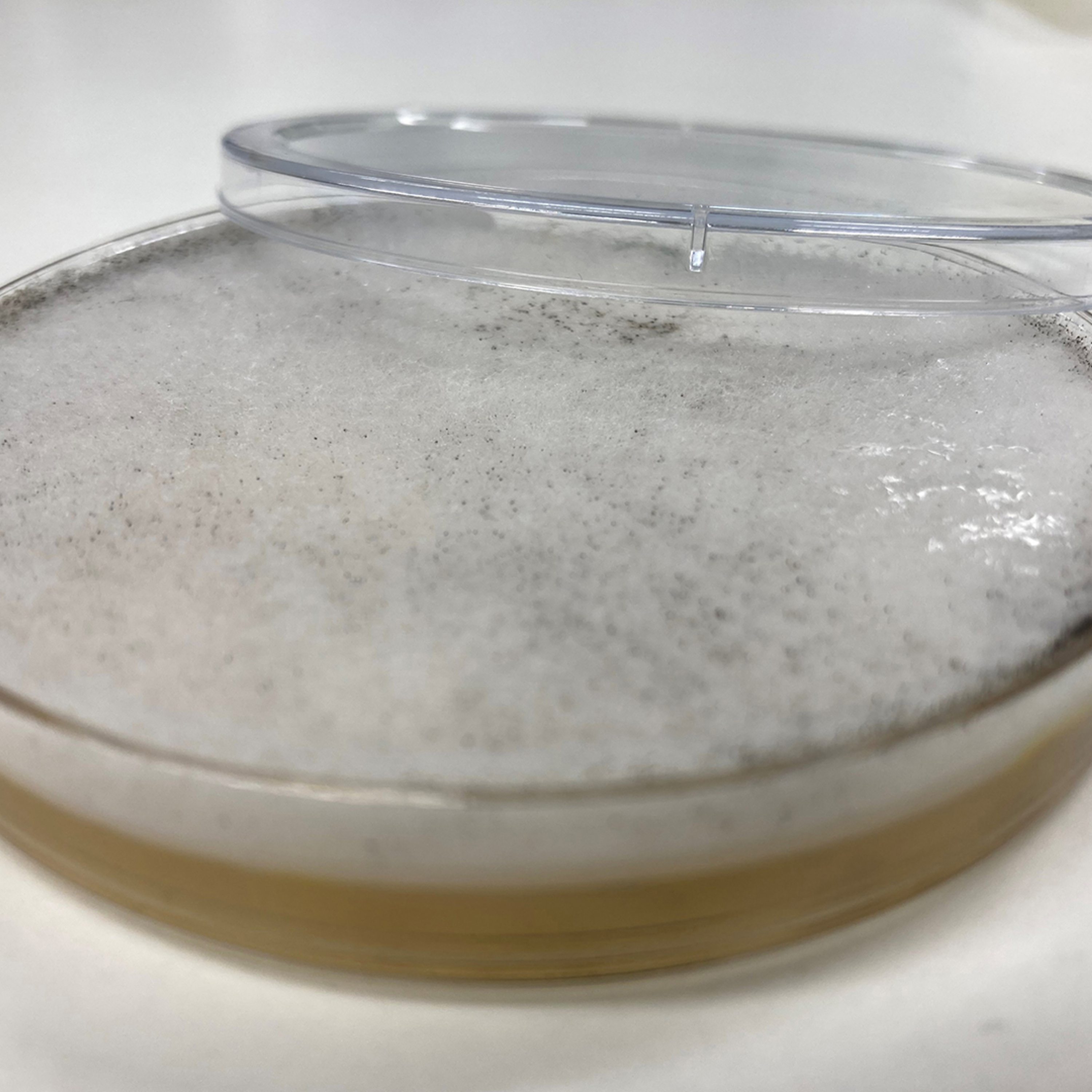
29 May 202328 min<p>We are familiar with fungal infections like Thrush and Athlete’s Foot, but fungal diseases that can kill are on the increase. The World Health Organisation is so concerned that it has published its first ever list of life threatening fungi. James Gallagher hears stories of hospitals being shut down, a ruined honeymoon and fungal infections that consume human tissue leaving terrible disfigurement. Add to that The Last of Us, a hit video game turned TV series where a parasitic fungus manipulating the brains of ants has jumped to people. Sounds fanciful but while this particular fungus could not cross from ants to humans, Dr Neil Stone explains why invasive fungal infections are on the rise and a potential pandemic should not be dismissed.</p>

Food Insecurity
22 May 202328 min<p>Soaring food prices mean putting food on the table is a daily struggle. This is the grim reality for millions around the world. But hunger, so long a feature in lower-income countries, is becoming a familiar picture in richer ones too. James Gallagher reports from the UK, one of the wealthiest countries in the world, where food prices are rising at the fastest rate for 45 years and millions are turning to charity to feed themselves and their families. He visits the charities which help people to continue to eat and cook healthy food and hears from Professor Sir Michael Marmot from University College London, who has spent a lifetime researching the consequences of inequality and poverty. Food insecurity, he tells James, damages the health of children and adults.</p>
Maggots in medicine
15 May 202328 min<p>After centuries of use in wound-healing, the maggot is back. The rise of the drug-resistant superbug means fresh eyes are focused on the superpowers of the larvae of the greenbottle fly species, Lucilia Sericata. James Gallagher reports on the healthcare professionals who are turning to maggot therapy to help clean up wounds and stop infection. </p><p>He talks to Melanie who has Type 1 Diabetes and had a quarter of her foot amputated. When the skin around the wound started to die, threatening the whole limb, she was offered maggot therapy. Now a self-declared maggot superfan, Melanie watched as the larvae, inside a bag a bit like a teabag, digested the dead skin on her foot.</p><p>And James visits a factory in Wales, BioMonde, preparing medical grade fly eggs for use across the UK health service.</p><p>(Photo: Larvae of the greenbottle fly sitting on so-called horse blood agar seen through a magnifying glass at the pharmaceutical company BioMonde. Credit: David Hecker/DDP/AFP/Getty Images)</p>
Lazy guide to exercise
8 May 202328 min<p>James Gallagher is on a mission to find out what is the least amount of exercise you can do to still stay healthy. James goes on a Ramblers wellbeing walk, uses a treadmill for the first time and takes a hot bath all to find out how lazy he can be and still gain some health benefits.</p><p>(Photo: James Gallagher on a treadmill. Credit: Emma Lynch)</p>
The impossible number
1 May 202328 min<p>There is a bizarre number in maths referred to simply as ‘i’. It appears to break the rules of arithmetic - but turns out to be utterly essential for applications across engineering and physics. We are talking about the square root of -1, which makes no sense.</p><p>Professor Fry waxes lyrical about the beauty and power of this so-called ‘imaginary’ number to a sceptical Dr Rutherford. </p><p>Dr Michael Brooks, author of The Maths That Made Us, tells the surprising story of the duelling Italian mathematicians who gave birth to this strange idea, and shares how Silicon Valley turned it into cold hard cash. Professor Jeff O’Connell, Ohlone College California, demonstrates that it is all about oscillations, and Dr Eleanor Knox, philosopher of physics at KCL and a senior visiting fellow at the University of Pittsburgh reveals that imaginary numbers are indispensable for the most fundamental physics of all - quantum mechanics.</p>
The mind-numbing medicine
27 Nis 202328 min<p>This episode will render you oblivious, conked out and blissfully unaware. It’s about anaesthetics: those potent potions that send you into a deep, deathly sleep. Listener Alicia wants to know how they work, so our sleuths call on the expertise of consultant anaesthetist Dr Fiona Donald. Fiona shares her experience from the clinical frontline, and explains what we do and don’t know about how these chemicals work their mind-numbing magic.</p><p>We hear about ground-breaking research led by Professor Irene Tracey, which reveals how a pattern of slow brain waves can be used to determine the optimum dosage of these dangerous drugs.</p><p>And finally, Drs Rutherford and Fry wonder: what does all this tell us about normal consciousness? Professor Anil Seth shares how we can use brain tech to measure different levels of conscious awareness – from sleepy to psychedelic.</p>
The resurrection quest
24 Nis 202327 min<p>‘Can we bring back extinct species?’ wonders listener Mikko Campbell. Well, Professor Fry is pretty excited by the prospect of woolly mammoths roaming the Siberian tundra once more. And everyone is impressed with the science that might make it happen. But Dr Rutherford comes out STRONGLY against the whole thing. Can our expert guests win him over?</p><p>Dr Helen Pilcher shares the tale of Celia the lonely mountain goat, and makes the case for cloning to help protect species at risk of extinction. Professor Beth Shapiro sets out how biotech company ‘Colossal’ plans to engineer Asian elephants’ DNA to make a new group of mammoth-like creatures. And we hear how genetic technologies are being used in conservation efforts around the world.</p><p>BUT WHAT ABOUT T-REXES? Not gonna happen. Sorry.</p><p>Contributors: Dr Helen Pilcher, author of ‘Bring Back the King: The New Science of De-Extinction’, Professor Beth Shapiro from the University of California Santa Cruz, Dr Ben Novak of Revive and Restore and Tullis Matson from Nature’s SAFE.</p>
The puzzle of the pyramids
10 Nis 202328 min<p>The Great Pyramids of Giza are awesome feats of engineering and precision. So who built them - and how? Was it a mysteriously super-advanced civilization now oddly extinct? Was it even aliens?</p><p>Nah, course not! Rutherford and Fry investigate how these inspiring monuments were really constructed, and learn about the complex civilisation and efficient bureaucracy that made them possible.</p><p>Professor Sarah Parcak busts the myth that they were built by slaves. In fact, she reveals, it was gangs of well-paid blokes fuelled by the ancient Egyptian equivalent of burgers and beer. And Dr Chris Naunton explains how it was not some mysterious tech, but incredible organisation and teamwork which made it possible to transport massive stone blocks over long distances several thousand years before trucks arrived.</p><p>Dr Heba Abd El Gawad points out how racism led to bizarre assumptions in the history of archaeology, and how those assumptions linger in contemporary conspiracy theories which refuse to accept that Egyptians could have built the pyramids themselves!</p><p>Contributors: Professor Sarah Parcak, University of Alabama, Dr Chris Naunton, Egyptologist and broadcaster, Dr Heba Abd El Gawad, University College London</p>
The Case of The Blind Man's Eye
27 Mar 202328 min<p>Close your eyes and think of a giraffe. Can you see it? I mean, *really* see it - in rich, vivid detail? If not - you aren’t alone!</p><p>We’ve had scores of messages from listeners who report having a ‘blind mind’s eye’. They don’t see mental images at all and they want to know why. Jude from Perth wants to know what makes her brain different, and Diane from Scotland wonders whether it affectes her ability to remember family holidays.</p><p>Our sleuths learn that this is a condition recently termed ‘aphantasia’. They meet the chap who came up with the name, Professor Adam Zeman, a neurologist from the University of Exeter, and quiz him on the brain mechanisms behind this mystery.</p><p>Professor Julia Simner - a psychologist who, herself, doesn’t see mental images - shares the surprising research into how aphants differ slightly from others in a range of cognitive skills. We also hear about the world class artists and animators who can’t visualise - but can create beautiful, imaginary worlds.</p><p>Philosophy professor Fiona Macpherson from the University of Glasgow, deepens the mystery: perhaps this largely hidden phenomenon is behind some of the most profound disagreements in the history of psychology. Our mental experiences are all very different - maybe that’s why thinkers have come up with such different theories about how our minds work.</p><p>Search for the “VVIQ” or Vividness of Visual Imagery questionnaire to take the test yourself. Look for “The Perception Census” to take part in this massive online study of perceptual variation. And look up the 'Aphtantasia Network' if you're curious to find out more.</p><p>Presenters: Hannah Fry and Adam Rutherford Contributors: Professor Adam Zeman, Professor Julia Simner, Professor Fiona Macpherson</p>
Our Microbes and Our Health
25 Mar 202349 min<p>We are a teeming mass of interconnected microbes and the impact of this microscopic universe on our health, our minds, even our moods, is profound.</p><p>Made in collaboration with Wellcome Collection, Claudia Hammond and an expert panel explore one of the fastest moving areas of science and what it means for modern medicine. </p><p>Recorded in front of a live audience at Wellcome’s Reading Room in London, Claudia discovers how our microbes could be harnessed to improve our mental and physical health. </p><p>And along with the scientific insights, there are important answers to questions everybody wants to know the answer to, such as why some peoples’ “emissions” smell so badly and how having a dog or cat enriches your microbiome.</p><p>On stage with Claudia are immunologist Professor Sheena Cruickshank from the University of Manchester, microbiologist Professor Glenn Gibson from the University of Reading and neuroscientist Professor John Cryan from University College Cork in Ireland.</p><p>Produced by: Fiona Hill and Elisabeth Tuohy Studio Engineer: Bob Nettles and Emma Hearth</p><p>Image: Scanning electron micrograph (SEM) of bacteria cultured from a sample of human faeces. Credit: Steve Gschmeissner/Science Photo Library/Getty Images</p>
Judith Bunbury: Unearthing the secrets of Ancient Egypt
20 Mar 202327 min<p>Think Sahara Desert, think intense heat and drought. We see the Sahara as an unrelenting, frazzling, white place. But geo-archaeologist Dr Judith Bunbury says in the not so distant past, the region looked more like a safari park.</p><p>In the more recent New Kingdom of Ancient Egypt, from around 3500 years ago (the time of some of Egypt’s most famous kings like Ahmose I, Thutmose III, Akhenaten, Tutankhamun and queens like Hatshepsut) core samples shows evidence of rainfall, huge lakes, springs, trees, birds, hares and even gazelle, very different from today.</p><p>By combining geology with archaeology, Dr Bunbury, from the department of Earth Sciences at the University of Cambridge and Senior Tutor at St Edmund’s College, tells Jim al-Khalili that evidence of how people adapted to their ever-changing landscape is buried in the mud, dust and sedimentary samples beneath these ancient sites, waiting to be discovered.</p><p>The geo-archaeological research by Judith and her team, has helped to demonstrate that the building of the temples at Karnak near Luxor, added to by each of the Pharaohs, was completely dependent on the mighty Nile, a river which, over millennia, has wriggled and writhed, creating new land on one bank as it consumes land on another. Buildings and monuments were adapted and extended as the river constantly changed course.</p>
The Life Scientific: Clifford Johnson
13 Mar 202328 min<p>Clifford Johnson's career to date has spanned some seemingly very different industries - from exploring quantum mechanics around string theory and black holes, to consulting on some of Hollywood's biggest movies; but it makes sense once you understand his ambition of making science accessible to all.</p><p>A Professor in the Department of Physics and Astronomy at the University of Southern California in Los Angeles, Clifford's worked in the United States for decades – but was born in the UK, then spent his formative years on the Caribbean island of Montserrat, before moving back to England to study. Here, he fell in love with quantum mechanics - before moving to the US, where he's broken new ground in finding ways to talk about quantum gravity and black holes.</p><p>Clifford's other big passion is getting as many people as possible engaged with science, making it more exciting, entertaining and most importantly diverse - and it's this attitude that's led to regular work as a science consultant on various TV shows and films; and even a recent cameo in a major movie.</p>
The Life Scientific: Rebecca Kilner
6 Mar 202328 min<p>A fur-stripped mouse carcase might not sound like the cosiest of homes – but that is where the burying beetle makes its nest, and where Rebecca Kilner has focused much of her research.</p><p>A professor of evolutionary biology at the University of Cambridge, Rebecca’s work – initially with cuckoos, then more recently with beetles – has shed invaluable light on the relationship between social behaviours and evolution.</p><p>She tells Jim al-Khalili how the beetles' helpfully swift generational churn and mouse-based parenting has allowed her team to study evolution in action, demonstrating for the first time what was previously just evolutionary theory.</p>
The magnetic mystery
4 Mar 202328 min<p>Magnets are inside loads of everyday electronic kit - speakers, motors, phones and more - but listener Lucas is mystified. What, he wonders, is a magnetic field?</p><p>Our sleuths set out to investigate the mysterious power of magnets, with the help of wizard physicist Dr Felix Flicker, lecturer in physics at Cardiff University and author of the The Magick of Matter, and materials scientist Dr Anna Ploszajski, author of Handmade.</p><p>They cover the secrets of lodestones, naturally occurring magnetic rocks, how to levitate crystals, frogs and maybe even people.</p><p>Matthew Swallow, the Chair of the UK Magnetics Society, explains why magnets make the best brakes for rollercoasters, and Dr Ploszajski explains how magnetically-induced eddy currents are used to sort through our recycling.</p><p>Finally, Dr Flicker persuades Adam and Hannah that to really understand magnetic fields you have to leave classical physics behind, and go quantum. So our sleuths take a leap into the strange subatomic realm.</p>
The Life Scientific: Tim Lamont
27 Şub 202328 min<p>Tim Lamont is a young scientist making waves. Arriving on the Great Barrier Reef after a mass bleaching event, Tim saw his research plans disappear and was personally devastated by the destruction. But from that event he discovered a novel way to restore coral reefs. Playing the sounds of a healthy coral reef entices fish in to recolonise the wrecked reefs. Tim's emotional journey forced him to realise that environmental scientists can no longer just observe. They need to find new prisms with which to view the world and to intervene to save or protect the natural environment.</p>
Bad Blood: Newgenics
20 Şub 202328 min<p>Are we entering a ‘newgenic’ age - where cutting-edge technologies and the power of personal choice could achieve the kind of genetic perfection that 20th century eugenicists were after?</p><p>In 2018, a Chinese scientist illegally attempted to precision edit the genome of two embryos. It didn’t work as intended. Twin sisters - Lulu and Nana - were later born, but their identity, and the status of their health, is shrouded in secrecy. They were the first designer babies.</p><p>Other technological developments are also coming together in ways that could change reproduction: IVF can produce multiple viable embryos, and polygenic screening could be used to select between them.</p><p>Increased understanding and control of our genetics is seen as a threat by some - an inevitable force for division. But instead of allowing genetics to separate and rank people, perhaps there’s a way it can be used - actively - to promote equality. Professor Paige Harden shares her suggestion of an anti-eugenic politics which makes use of genetic information</p><p>Contributors: Dr Helen O'Neill, lecturer in Reproductive and Molecular Genetics at University College London, Dr Jamie Metzl, author of Hacking Darwin, Professor Kathryn Paige Harden from the University of Texas and author of The Genetic Lottery: Why DNA Matters for Social Equality.</p>
Bad Blood: The curse of Mendel
13 Şub 202328 min<p>In the mid-19th Century, an Augustinian friar called Gregor Mendel made a breakthrough. By breeding pea plants and observing how certain traits were passed on, Mendel realised there must be units - little packets - of information determining characteristics. He had effectively discovered the gene.</p><p>His insights inspired eugenicists from the 1900s onwards. If traits were passed on by specific genes, then their policies should stop people with ‘bad’ genes from having children.</p><p>Mendel’s ideas are still used in classrooms today - to teach about traits like eye colour. But the eugenicists thought Mendel's simple explanations applied to everything - from so-called ‘feeblemindedness’ to criminality and even pauperism.</p><p>Today, we recognise certain genetic conditions as being passed on in a Mendelian way. Achondroplasia - which results in short stature - is one example, caused by a single genetic variant. We hear from Professor Tom Shakespeare about the condition, about his own decision to have children despite knowing the condition was heritable - and the reaction of the medical establishment.</p><p>We also explore how genetics is taught in schools today and the danger of relying on Mendel’s appealingly simple but misleading account.</p><p>Contributors include Dr Brian Donovan, senior research scientist at BSCS, Prof Tom Shakespeare, disability researcher at London School of Hygiene and Tropical Medicine, and Dr Christine Patch, principal staff scientist in Genomic Counselling in the Society and Ethics Research group, part of Wellcome Connecting Science.</p><p>(Photo: Johann Gregor Mendel (1822-1884). Austrian botanist, followed breeding experiments, discovered paired units of heritable characteristics. Credit: Hulton Archive/Getty Images)</p>
Bad Blood: Rassenhygiene
6 Şub 202328 min<p>In the name of eugenics, the Nazi state sterilised hundreds of thousands against their will, murdered disabled children and embarked on a programme of genocide.</p><p>We like to believe that Nazi atrocities were a unique aberration, a grotesque historical outlier. But it turns out that leading American eugenicists and lawmakers like Madison Grant and Harry Laughlin inspired many of the Nazi programmes, from the mass sterilisation of those deemed ‘unfit’ to the Nuremberg laws preventing the marriage of Jews and non-Jews. Indeed, before World War Two, many eugenicists across the world regarded the Nazi regime with envious admiration.</p><p>The Nazis went further, faster than anyone before them. But ultimately, the story of Nazi eugenics is one of international connection and continuity.</p><p>With contributions from Prof Stefan Kühl from the University of Bielefield, Prof Amy Carney from Penn State Behrend, Dr Jonathan Spiro from Castleton University, Prof Sheila Weiss from Clarkson University and Dr Barbara Warnock from the Wiener Holocaust Library</p><p>(Photo: German women carrying children of an alleged aryan purity in a Lebensborn selection centre, births by eugenicists methods during World War Two. Credit Keystone-France Getty Images)</p>
Bad Blood: Birth controlled
30 Oca 202328 min<p>Who should be prevented from having children? And who gets to decide? Across 20th century America, there was a battle to control birth - a battle which rages on to this day.</p><p>In 1907, the state of Indiana passed the first sterilisation law in the world. Government-run institutions were granted the power to sterilise those deemed degenerate - often against their will.</p><p>In the same period, women are becoming more educated, empowered and sexually liberated. In the Roaring Twenties, the flappers start dancing the Charleston and women win the right to vote.</p><p>But contraception is still illegal and utterly taboo. The pioneering campaigner Margaret Sanger, begins her decades long activism to secure women access to birth control - the only way, she argues, women can be truly free.</p><p>In the final part of the episode, sterilisation survivor and campaigner Elaine Riddick shares her painful but remarkable story.</p><p>Contributors: Professor Alexandra Minna Stern from the UCLA Institue of Society and Genetics, Professor Wendy Kline from Purdue Univerity, Elaine and Tony Riddick from the Rebecca Project for Justice</p><p>Featuring the voice of Joanna Monro</p><p>(Photo: Elaine Riddick was sterilised without her consent, when she was 14, in North Carolina. Credit: Tami Chappell/The Washington Post/Getty Images)</p>



