

Альтернативная медицина
Feel Better, Live More with Dr Rangan Chatterjee
Dr Rangan Chatterjee: GP & Author
“Health has become overcomplicated. I aim to simplify it” In this podcast, we hear stories from leading health experts and exciting personalities who offer easy health life-hacks, expert advice and debunk common health myths giving you the tools to revolutionise how you eat, sleep, move and relax. Hosted by Dr Chatterjee - one of the most influential GPs in the country with nearly 20 years experience, star of BBC 1’s Doctor In the House, and author of 6 internationally best-selling books, including ‘The 4 Pillar Plan’ – Feel Better, Live More aims to inspire, empower and transform the way we feel. When we are healthier, we are happier because when we feel better, we live more. Support the podcast and enjoy Ad-Free episodes. Try FREE for 7 days on Apple Podcasts https://apple.co/feelbetterlivemore. For other podcast platforms go to https://fblm.supercast.com. https://www.drchatterjee.com/podcast https://www.instagram.com/drchatterjee https://www.twitter.com/drchatterjeeuk https://www.facebook.com/DrChatterjee
 Открыть в Clue
Эпизоды для изучения английского669

BITESIZE | What You Need To Know About Strength, Menopause & Healthy Ageing | Dr Stacy Sims #673
9 июл. 2026 г.30 minAs we get older, have you ever wondered why the exercise advice we’ve been given doesn’t seem to work as well as it once did? As we move into our 40s and beyond, our physiology changes in ways that can often feel confusing and frustrating. But what if we could harness those changes to feel stronger, healthier and more resilient than ever before? Feel Better Live More Bitesize is my weekly podcast for your mind, body, and heart.  Each week I’ll be featuring inspirational stories and practical tips from some of my former guests.  Today’s clip is from episode 578 of the podcast with exercise physiologist and nutritional scientist, Dr Stacy Sims. Stacy is dedicated to helping active women – and the people who support them – take back control of their bodies, health and lives through science-based knowledge and practical tools. In this clip, Stacy shares why conventional fitness advice often fails women in midlife, and what many of us may be missing when it comes to improving our health, vitality and resilience as we age. Stacy’s insights remind us that with the right information and support, we can build strength, confidence and better health at any stage of life. Thanks to our sponsor https://heights.com/livemore Show notes and the full podcast are available at drchatterjee.com/578 Support the podcast and enjoy Ad-Free episodes. Try FREE for 7 days on Apple Podcasts https://apple.co/feelbetterlivemore For other podcast platforms go to https://fblm.supercast.com. DISCLAIMER: The content in the podcast and on this webpage is not intended to constitute or be a substitute for professional medical advice, diagnosis, or treatment. Always seek the advice of your doctor or other qualified health care provider with any questions you may have regarding a medical condition. Never disregard professional medical advice or delay in seeking it because of something you have heard on the podcast or on my website.

How To Finally Fix Your Sleep, Wake Up Rested & Transform Your Life with Dr Michael Breus #672
7 июл. 2026 г.2h“Sleep is a lot like love: the less you look for it, the more it shows up.” So says my guest on this episode, one of the world's leading sleep doctors, who’s here to reveal the five common traps that are stopping us getting the rest we need. Dr Michael Breus is a clinical psychologist and sleep specialist based in California. He’s the author of several books, including the brilliantly helpful, Sleep, Drink, Breathe. Over the course of his 25-year career, he’s helped thousands of people transform their health by changing the way they sleep. You’ll love his bold, no-nonsense manner and warm, practical advice. In this conversation, we unpack the sleep myths that are keeping us stuck. We talk about why chasing eight hours could be working against you, why sleeping in at the weekend may be doing more harm than good, and why freaking out about your sleep is making it worse. We also explore what is really happening in your body to cause that 3am wake-up, and the practical techniques that can help you get back to sleep quickly and calmly. Michael shares his own diagnosis of sleep apnoea, which will surprise you given his background, and opens up a conversation I think many of you will find both reassuring and galvanising. He dispels common myths around testing and treatment, and makes a clear case for investigating your symptoms – it could change your life. We also cover sleep tracking and how to interpret what your wearables say without driving yourself to distraction. Michael gives his view on the supplements worth considering and those that are not. We talk about the specific challenges facing women going through perimenopause and menopause, and he gives practical advice for shift workers, parents, and carers who feel they can’t get the hours they need. We close by talking through his five-step plan, which is simple, evidence-based, and immediately actionable. It will help you sleep better from tonight. Wherever you are in your journey towards restful, restorative sleep, you will hear something new in this insightful and surprising conversation. By going back to basics, Michael offers some truly fresh perspectives on this most fundamental pillar of your health. The Thrive Tour: Transform Your Health and Happiness, a live show: Book Your Tickets https://drchatterjee.com/live Thanks to our sponsors: https://hellolingo.com/livemore https://dohealth.co/livemore https://thewayapp.com/livemore https://drinkag1.com/livemore Show notes https://drchatterjee.com/672 DISCLAIMER: The content in the podcast and on this webpage is not intended to be a substitute for professional medical advice, diagnosis, or treatment. Always seek the advice of your doctor or qualified healthcare provider. Never disregard professional medical advice or delay in seeking it because of something you have heard on the podcast or on my website.
BITESIZE | A Shaolin Master's Guide to Self-Mastery, Negative Thoughts & Finding Inner Peace | Master Shi Heng Yi #671
2 июл. 2026 г.24 minToday’s guest belongs to the 35th generation of Shaolin Masters and began practising Kung Fu at the age of four. In the 38 years since, he’s acquired a wealth of knowledge in Chinese martial arts and Zen Buddhism. Feel Better Live More Bitesize is my weekly podcast for your mind, body, and heart. Each week I’ll be featuring inspirational stories and practical tips from some of my former guests. Today’s clip is from episode 426 of the podcast with Master Shi Heng Yi. In this clip, he shares a beautiful concept - and caution - that our thoughts may shape our destiny, and explains why cultivating greater awareness of our inner world could transform the way we experience our lives. Thanks to our sponsor https://thewayapp.com/livemore Show notes and the full podcast are available at drchatterjee.com/426 Support the podcast and enjoy Ad-Free episodes. Try FREE for 7 days on Apple Podcasts https://apple.co/feelbetterlivemore For other podcast platforms go to https://fblm.supercast.com. DISCLAIMER: The content in the podcast and on this webpage is not intended to constitute or be a substitute for professional medical advice, diagnosis, or treatment. Always seek the advice of your doctor or other qualified health care provider with any questions you may have regarding a medical condition. Never disregard professional medical advice or delay in seeking it because of something you have heard on the podcast or on my website.

How To Live An Intentional Life with Professor C Thi Nguyen #670
30 июн. 2026 г.2h 15mWe’re living in a world that has become extraordinarily skilled at measuring success. But most of us never stop to question which standards really matter to us. Are you chasing success by someone else's definition, without even knowing it? This episode will help you figure that out. My guest is C Thi Nguyen, Associate Professor of Philosophy at the University of Utah and the author of The Score: How to Stop Playing Someone Else's Game, one of the most thought-provoking books I’ve read. This conversation explores where our values really come from, what games and hobbies can teach us about living with freedom, and why so much of what matters most in life resists being measured at all. Thi has developed a fascinating framework for understanding one of the defining problems of modern life: what he calls ‘value capture’. It’s the process by which our own rich, personal values are replaced by simplified external metrics (think followers and likes, salaries, exam grades – even health metrics like your weight or blood pressure score). These metrics can never show the full picture of a human life – but they can end up running it. And once you understand this concept of value capture, you’ll start to notice it everywhere. Thi and I discuss why our culture is so poor at honouring the ‘unmeasurables’. We talk about why joy, love, forgiveness and the quality of our relationships are the substance of a life well lived. Yet they’re systematically undervalued, not because they’re unimportant, but because they’re hard to count. He’s somewhat of an expert on play, whether through sport, board games or hobbies, and we discuss what these activities, often dismissed as trivial, can teach us about meaning and how to live well. Plus, we debate the difference between principles and algorithmic rules – a distinction that might change how you approach your health and your life more broadly. What I love about Thi's thinking is that he’s not telling us to throw out all forms of measurement. He’s more nuanced than that. He is asking us to wake up to the difference between the scorecard we have inherited from the world around us, and the one we would choose for ourselves. He wants us to know that the first step towards genuine fulfilment is simply becoming aware of whose game you have been playing. The Thrive Tour: Transform Your Health and Happiness, a live show: Book Your Tickets https://drchatterjee.com/live Thanks to our sponsors: https://thewayapp.com/livemore https://hellolingo.com/livemore https://exhalecoffee.com/livemore https://drinkag1.com/livemore Show notes https://drchatterjee.com/670 DISCLAIMER: The content in the podcast and on this webpage is not intended to be a substitute for professional medical advice, diagnosis, or treatment. Always seek the advice of your doctor or qualified healthcare provider. Never disregard professional medical advice or delay in seeking it because of something you have heard on the podcast or on my website.

BITESIZE | 3 Foods to Avoid for Better Brain Health (& How to Reduce Them In Your Diet) | Max Lugavere #669
25 июн. 2026 г.24 minToday’s guest believes brain decline is not inevitable, we all have agency in how we age, and the secret lies in our food. Feel Better Live More Bitesize is my weekly podcast for your mind, body, and heart. Each week I’ll be featuring inspirational stories and practical tips from some of my former guests. Today’s clip is from episode 330 of the podcast with science journalist and New York Times bestselling author, Max Lugavere. Max is passionate about helping people improve their brain health, their longevity and how they feel by optimising their diet. In this clip, he shares three food types that he believes are worth reducing or removing from our diets, and explains why doing so could have many benefits for our health. Max’s message is one of balance and realism. We can all make choices every single day that set us on the path to better health, even if we’re only taking baby steps. Making small changes could have a meaningful impact on our health. Thanks to our sponsor https://heights.com/livemore Show notes and the full podcast are available at drchatterjee.com/330 Support the podcast and enjoy Ad-Free episodes. Try FREE for 7 days on Apple Podcasts https://apple.co/feelbetterlivemore For other podcast platforms go to https://fblm.supercast.com. DISCLAIMER: The content in the podcast and on this webpage is not intended to constitute or be a substitute for professional medical advice, diagnosis, or treatment. Always seek the advice of your doctor or other qualified health care provider with any questions you may have regarding a medical condition. Never disregard professional medical advice or delay in seeking it because of something you have heard on the podcast or on my website.

The Science of Deep Rest: How Relaxation Calms Stress & Slows Ageing with Dr Elissa Epel #668
23 июн. 2026 г.1h 26mCould the stress you barely notice be more harmful than you think? Most of us know chronic stress is bad for us, but few of us realise how deep that damage can go – or how much power we have to reverse it. In this enlightening episode, I speak with one of the world's leading stress researchers Dr Elissa Epel, a professor of psychiatry at the University of California, to explore the latest science of stress, ageing – and why deep rest may be the remedy we’re overlooking. Elissa's research as a health psychologist reveals that chronic stress can age our immune systems by as much as 10 years. But with the right habits we can activate the repair mechanisms that slow and even reverse that process. We talk about her framework of four mind states – red, yellow, green and blue – outlined in her book, The Seven-Day Stress Prescription. I find it one of the most useful tools for understanding our place on the stress spectrum at any given moment. We explore why so many of us have lost the ability to relax, the importance of deep rest for cellular repair, and the evening habits that transform the quality of your sleep. We also discuss the very latest in wearable technology and the metrics Elissa believes are worth tracking. She makes the distinction between monitoring daily stress levels and the tech that can now track longer-term trends. And she shares her experience with continuous glucose monitoring and what it revealed to her about the relationship between stress, sleep and metabolic health. I loved hearing about the Big Joy Project, Elissa’s ongoing study of around 20,000 people, finding that small, simple acts of kindness and connection can shift our emotions over the course of a week and make us more altruistic and prosocial. At a time when the world can feel divided, I think that matters enormously. Finally, we explore how changing the story you tell yourself about a stressful situation, current or past, can transform your physiological response. This reframing is something I’ve learned to do and find endlessly empowering. Our perception is not just a mental experience. It shapes our biology. Elissa is an open-hearted communicator, whose generosity comes across in everything she shares with us here. Whether you struggle with overwhelm, or you suspect you’re more stressed than you realise, I know this conversation has advice you’ll want to take on board. The Thrive Tour: Transform Your Health and Happiness, a live show: Book Your Tickets https://drchatterjee.com/live Thanks to our sponsors: https://exhalecoffee.com/livemore https://boncharge.com/livemore https://thewayapp.com/livemore https://airbnb.co.uk/host Show notes https://drchatterjee.com/668 DISCLAIMER: The content in the podcast and on this webpage is not intended to be a substitute for professional medical advice, diagnosis, or treatment. Always seek the advice of your doctor or qualified healthcare provider. Never disregard professional medical advice or delay in seeking it because of something you have heard on the podcast or on my website.

BITESIZE | How to Break the Anxiety Cycle | Dr Russell Kennedy #667
18 июн. 2026 г.21 minA lot of people are struggling with anxiety at the moment, especially in a world that often feels out of control. Feel Better Live More Bitesize is my weekly podcast for your mind, body, and heart. Each week I’ll be featuring inspirational stories and practical tips from some of my former guests. Today’s clip is from episode 370 of the podcast with physician and neuroscientist, Dr Russell Kennedy, who previously suffered with crippling anxiety for over 30 years. Russell insists anxiety isn’t a disorder of the mind. Our worries are merely a symptom - and one that keeps us in our heads and away from the real problem. His core message is that it’s often more effective to use the body to calm the mind, than the mind to calm the body. In this clip, he explains why anxiety may have less to do with our thoughts than we realise, and shares practical strategies that could help us begin breaking the anxiety cycle. For Thrive Tour tickets and info visit: https://drchatterjee.com/live/ Join my 21-day energy reset: https://drchatterjee.com/reset Show notes and the full podcast are available at drchatterjee.com/370 Support the podcast and enjoy Ad-Free episodes. Try FREE for 7 days on Apple Podcasts https://apple.co/feelbetterlivemore For other podcast platforms go to https://fblm.supercast.com. DISCLAIMER: The content in the podcast and on this webpage is not intended to constitute or be a substitute for professional medical advice, diagnosis, or treatment. Always seek the advice of your doctor or other qualified health care provider with any questions you may have regarding a medical condition. Never disregard professional medical advice or delay in seeking it because of something you have heard on the podcast or on my website.

The 5 Most Important Biomarkers That Influence Your Health & How To Live Better For Longer with Dr Florence Comite #666
16 июн. 2026 г.1h 41mYou might assume that how you’ll age is down to your genes. That your disease risk is out of your hands, sealed by midlife, and something to manage rather than change. But Dr Florence Comite has spent 30 years proving that assumption wrong. And for this conversation, she’s brought the evidence. Florence is a clinician-scientist, Yale and National Institutes of Health-trained endocrinologist, and some might call her a disruptor. Her life’s work has been built on the radical idea that decline is not inevitable, it is detectable. And because it’s detectable, it’s reversible. Her new book, Invincible: Defy Your Genetic Destiny to Live Better Longer, has the core message that our health trajectory is far from fixed. By tuning into our body’s signals, and understanding our physiology, we can make targeted changes to improve how we feel, function and age. In this episode, Florence and I explore why the Western medical model – built around treating disease not creating health – leaves people in the dark when it comes to disease risk. We discuss why the type and frequency of blood tests your doctor currently offers is lacking, as well as what you should ask for (or seek privately) if you want to truly understand your health. Florence talks us through the five blood biomarkers she believes every adult should know about, including one – fasting insulin – that your doctor is highly unlikely to check but that I agree with her is absolutely critical. And she explains why free testosterone is vital for both men and women, how it connects to muscle, memory, bone density, blood sugar and heart health, and why optimising it has transformed some of her patients’ lives. We also sing the praises of continuous glucose monitors. We discuss what they reveal about your individual response to food, why two people can eat the same meal with different results, and how the order in which you eat your meal can change your health. This is a conversation about taking control. It’s about owning your data, your trends – and your future. Florence and I share the belief that our healthcare systems need to move from reactive to proactive. In time, I’m hopeful that will happen. But in the meantime her clinic – and my own Do Health app – are paving an exciting way for you to get ahead of the curve. The Thrive Tour: Transform Your Health and Happiness, a live show: Book Your Tickets https://drchatterjee.com/live Thanks to our sponsors: https://heights.com/livemore https://dohealth.co/livemore https://hellolingo.com/livemore https://airbnb.co.uk/host Show notes https://drchatterjee.com/666 DISCLAIMER: The content in the podcast and on this webpage is not intended to be a substitute for professional medical advice, diagnosis, or treatment. Always seek the advice of your doctor or qualified healthcare provider. Never disregard professional medical advice or delay in seeking it because of something you have heard on the podcast or on my website.

BITESIZE | How to Stop Overthinking, Embrace Uncertainty & Enjoy Life More | Dr Ellen Langer #665
11 июн. 2026 г.26 minMany of us spend time agonising over decisions, regretting past choices or wondering what might have happened if we'd chosen differently. But today’s guest believes this way of thinking is based on a fundamental misconception. Today’s clip is from episode 537 of the podcast with Professor of Psychology at Harvard University, Dr Ellen Langer. Ellen has spent over 50 years conducting ground-breaking research into the power of the mind and how our thoughts can shape every aspect of our lives. In this clip, she shares a refreshing approach to decision making that could help us stop overthinking, let go of regret and feel more confident in the choices we make. Ellen is a wonderful human, full of knowledge, expertise and passion. She is the recipient of three Distinguished Scientists awards and the author of twelve books, including The Mindful Body: Thinking Our Way to Chronic Health. Thanks to our sponsor https://thewayapp.com/livemore Join my 21-day energy reset: https://drchatterjee.com/reset Show notes and the full podcast are available at drchatterjee.com/537 Support the podcast and enjoy Ad-Free episodes. Try FREE for 7 days on Apple Podcasts https://apple.co/feelbetterlivemore For other podcast platforms go to https://fblm.supercast.com. DISCLAIMER: The content in the podcast and on this webpage is not intended to constitute or be a substitute for professional medical advice, diagnosis, or treatment. Always seek the advice of your doctor or other qualified health care provider with any questions you may have regarding a medical condition. Never disregard professional medical advice or delay in seeking it because of something you have heard on the podcast or on my website.

The Hidden Reason You Can't Stop Overthinking, People-Pleasing And Overworking with Dr Nicole LePera #664
9 июн. 2026 г.2h 1mWhy do we sometimes react in ways we don’t mean to? Why does criticism land so heavily when others can brush it off? And why, even when life looks good from the outside, do we feel stuck on the inside? This week’s guest offers a new perspective on all this – and an optimistic way forward. With nearly 10 million followers on Instagram as The Holistic Psychologist, Dr Nicole LePera has helped countless people see their lifelong patterns through a helpful new lens. She joins me to discuss her fantastic book, Reparenting the Inner Child: The New Science of Our Oldest Wounds and How to Heal Them. At the heart of our conversation is an important idea: we don’t see the world as it is, we see it through the state of our nervous system. Nicole highlights the signs that yours may be calling the shots, such as restlessness, numbness, disproportionate reactions and the constant need to be busy. And she explains how those patterns trace back to a part of us shaped long before we had the language for it: our inner child. We explore how childhood adaptations follow us into adulthood, often without us realising, shaping our relationships, our careers, our sensitivity to criticism, and our self-worth. Nicole walks us through some of the parent archetypes from her book. And we discuss the universal choice every child makes between authenticity and attachment (and what this costs us later). Importantly, this is never about blaming, parent or child – acceptance of the past (rather than approval or forgiveness) is how we begin to change. You’ll be fascinated to hear Nicole explain how trauma from generations before us may still be wired into our bodies, but we can break the cycle. We also discuss why conflict in relationships can be healthy, and why healing is a two-step process: becoming aware, and then making different choices. The best part? You’ll come away from this conversation with the tools for change. Nicole talks us through her practical strategies, including the conscious check-in, the three body anchors, bilateral stimulation, and getting to know yourself through simple, mindful moments. Whether you've spent years exploring attachment and inner-child work, or this is your first therapy session, I know you’ll find something here that stays with you. As Nicole says, healing isn’t about reaching an end point. It’s an ongoing process, available to all of us at any moment that we choose to join in. The Thrive Tour: Transform Your Health and Happiness, a live show: Book Your Tickets https://drchatterjee.com/live Thanks to our sponsors: https://dohealth.co/livemore https://thesleepreset.com/podcast https://hellolingo.com/livemore https://airbnb.co.uk/host Show notes https://drchatterjee.com/664 DISCLAIMER: The content in the podcast and on this webpage is not intended to be a substitute for professional medical advice, diagnosis, or treatment. Always seek the advice of your doctor or qualified healthcare provider. Never disregard professional medical advice or delay in seeking it because of something you have heard on the podcast or on my website.

BITESIZE | 3 Hidden Causes of Low Energy (and What You Can Do About Them) | Dr Rangan Chatterjee #663
4 июн. 2026 г.14 minMany of us assume low energy is simply a consequence of being busy or not getting enough sleep. But there can be other factors contributing to how we feel that often go unnoticed. I’ve decided to try something a little bit different as a Bitesize episode this week. I wanted to record a solo episode about the topic of energy because one of the most common things I hear from patients is that they feel exhausted or overwhelmed even when they seem to be getting enough sleep. So, in this episode, I share a few often overlooked reasons that can leave us feeling low in energy, along with some simple strategies that could quickly begin to help. Please note: these symptoms can also occur in a range of conditions, including depression, sleep apnoea, thyroid disorders and anaemia. If your symptoms persist, or if you have any concerns, it’s important to seek advice from a qualified healthcare professional. For Thrive Tour tickets and info visit: https://drchatterjee.com/live/ Join my 21-day energy reset: https://drchatterjee.com/reset Support the podcast and enjoy Ad-Free episodes. Try FREE for 7 days on Apple Podcasts https://apple.co/feelbetterlivemore For other podcast platforms go to https://fblm.supercast.com. DISCLAIMER: The content in the podcast and on this webpage is not intended to constitute or be a substitute for professional medical advice, diagnosis, or treatment. Always seek the advice of your doctor or other qualified health care provider with any questions you may have regarding a medical condition. Never disregard professional medical advice or delay in seeking it because of something you have heard on the podcast or on my website.

The Revolutionary Science Of Recovering From Chronic Pain, Fatigue, Anxiety & Depression with Dr Howard Schubiner #662
2 июн. 2026 г.1h 35mImagine being told for 25 years that your pain is incurable – then making a full recovery within six weeks. That’s exactly what happened to one of the case studies in this episode and his story is far from exceptional. Could it be that much of the chronic pain we accept in life isn’t evidence our body is broken, but a sign our brain is trying to protect us? My guest this week is Dr Howard Schubiner, one of the world’s leading experts in chronic pain and the mind-body interaction. He’s spent more than 20 years working wonders with people who’d been told their pain was untreatable. He’s published over 100 scientific papers, runs one of the most respected programmes of its kind in the US, and his new book, Unlearn Your Pain, is set to transform how we think about suffering. To kick off this game-changing conversation, Howard debunks some common beliefs around pain, including the assumption that an MRI scan will accurately diagnose back issues. We talk about why bulging discs, degeneration and other scary-sounding findings show up just as often in people who aren’t in pain. And why the language used in scan reports can sometimes do real harm. To explain this, Howard talks us through the difference between structural and neuroplastic pain. The key learning here? All pain is created by the brain, through something called predictive processing. In structural pain, there’s clear tissue damage so your brain creates pain to help you protect the area and seek help. In neuroplastic pain, there’s some sort of perceived danger but no real injury. Here’s what’s important: both types are real. You are feeling pain. The difference is in the treatment. For that, Howard shares his five-part framework for reversing neuroplastic pain – and it has nothing to do with painkillers. He also reveals how the same principles can be applied to tinnitus, dizziness, brain fog, long covid, IBS, anxiety, depression, fatigue and more. We talk childhood, the personality traits that subtly make us more vulnerable to neuroplastic symptoms, and why women are so often the ones carrying the weight. Whether you're living with a long-term condition yourself, supporting someone who is, or you’re simply curious about the communication pathways between our bodies and our brains, this is an episode you won’t want to miss. The Thrive Tour: Transform Your Health and Happiness, a live show: Book Your Tickets https://drchatterjee.com/live Thanks to our sponsors: https://airbnb.co.uk/host https://dohealth.co/livemore https://thewayapp.com/livemore https://drinkag1.com/livemore Show notes https://drchatterjee.com/662 DISCLAIMER: The content in the podcast and on this webpage is not intended to be a substitute for professional medical advice, diagnosis, or treatment. Always seek the advice of your doctor or qualified healthcare provider. Never disregard professional medical advice or delay in seeking it because of something you have heard on the podcast or on my website.
BITESIZE | The 5 Minute Habits That Can Transform Your Health | Dr Rangan Chatterjee #661
28 мая 2026 г.22 minWhy is it that so many of us find it hard to stick to a new diet or lifestyle plan? We all start off well enough – full of energy and optimism but then the novelty soon wears off and life gets in the way. After some time, we are right back where we first started. Feel Better Live More Bitesize is my weekly podcast for your mind, body, and heart. Each week I’ll be featuring inspirational stories and practical tips from some of my former guests. Today’s clip is from episode 92 of the podcast when my good friend, Dr Ayan Panja, put me in the hot seat. In this clip, we explore why lasting change doesn’t often come from huge life overhauls or extreme routines, but from small actions repeated consistently over time. We discuss why so many health plans fail, how 5 minute habits can create a powerful ripple effect throughout our lives, and why sustainable lifestyle change may be much simpler than we think. For Thrive Tour tickets and info visit: https://drchatterjee.com/live/ Show notes and the full podcast are available at drchatterjee.com/92 Support the podcast and enjoy Ad-Free episodes. Try FREE for 7 days on Apple Podcasts https://apple.co/feelbetterlivemore For other podcast platforms go to https://fblm.supercast.com. DISCLAIMER: The content in the podcast and on this webpage is not intended to constitute or be a substitute for professional medical advice, diagnosis, or treatment. Always seek the advice of your doctor or other qualified health care provider with any questions you may have regarding a medical condition. Never disregard professional medical advice or delay in seeking it because of something you have heard on the podcast or on my website.
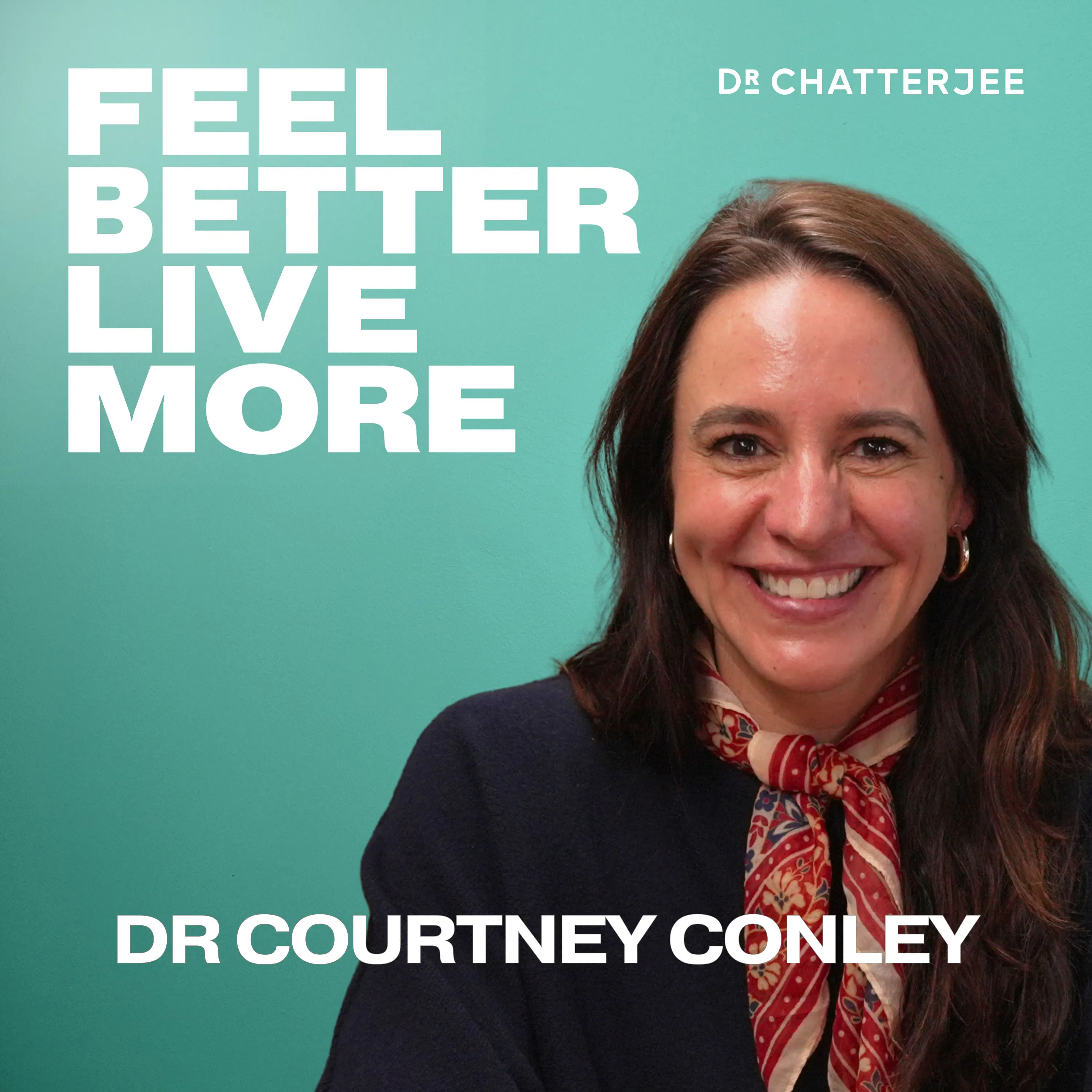
The Life Changing Magic Of Walking & How To Do It Better with Dr Courtney Conley #660
26 мая 2026 г.2h 7mMost of us walk every day without really thinking about it – but this episode is guaranteed to change that. Because this simple, free, radical act is one of the most powerful things you can do for your body, your brain and your longevity. In this episode I’m joined by Dr Courtney Conley, for a conversation that will transform how you feel about your feet and how you use them. Courtney is a movement specialist who’s passionate about helping people move through life with strength, ease and confidence. She's co-author of the must-read new book, Walk: Your Life Depends On It, and this is her second appearance on the show, following one of our most listened-to episodes of the year. We begin by unpacking the 10,000 steps a day target – where it came from and what the research shows we really need (clue: it’s less than you think… but it matters way more than you think). We talk through the wealth of benefits walking brings, with Courtney explaining that wherever you are on the scale, adding just a thousand steps a day can lower your risk of dementia, depression and all-cause mortality. We cover chronic pain and why walking is more likely to help than hinder you. Courtney shares her practical cues for walking more efficiently, including rolling through your feet, walking tall and nasal breathing (try them as you listen and you’ll see why they work). And we discuss why strength and power are equally important components of fitness that we need to protect as we age. There’s also a wealth of information on foot issues from plantar fasciitis to Achilles’ pain, bunions and osteopenia. Plus Courtney’s how-to guide for transitioning from cushioned to functional or minimal footwear. Whether you currently walk a lot, a little, or somewhere in between, I think you'll come away from this conversation with a renewed appreciation for what your feet can do for you. All of us, whatever our age or starting point, can benefit from walking more or better – and this episode will help you do that, one step at a time. The Thrive Tour: Transform Your Health and Happiness, a live show: Book Your Tickets https://drchatterjee.com/live Thanks to our sponsors: https://drinkag1.com/livemore https://thewayapp.com/livemore Show notes https://drchatterjee.com/660 DISCLAIMER: The content in the podcast and on this webpage is not intended to be a substitute for professional medical advice, diagnosis, or treatment. Always seek the advice of your doctor or qualified healthcare provider. Never disregard professional medical advice or delay in seeking it because of something you have heard on the podcast or on my website.

BITESIZE | The Wealth Money Can’t Buy: How to Live a Happier, Richer and More Fulfilled Life | Robin Sharma #659
21 мая 2026 г.25 minIn a world where we’re constantly bombarded with images of material success, it’s easy to fall into the trap of comparing ourselves to others and believing that more money means more happiness. But what if there’s more to wealth than just money? Today’s clip is from episode 471 of the podcast with best-selling author and one of the top leadership and personal mastery experts in the world, Robin Sharma. In this clip, Robin shares his perspective on why so many people may be chasing the wrong version of success, and what it truly means to live a rich life. We also discuss why traditional self-help approaches often fall short, particularly in the realm of personal growth and happiness, and how society’s obsession with hustle culture and toxic positivity has exacerbated the problem of burnout and dissatisfaction.His approach offers a much-needed alternative to the endless pursuit of material success, showing us how to create a life that’s ‘wealthy’ in all the ways that matter most. Thanks to our sponsor https://heights.com/livemore Show notes and the full podcast are available at drchatterjee.com/471 Support the podcast and enjoy Ad-Free episodes. Try FREE for 7 days on Apple Podcasts https://apple.co/feelbetterlivemore For other podcast platforms go to https://fblm.supercast.com. DISCLAIMER: The content in the podcast and on this webpage is not intended to constitute or be a substitute for professional medical advice, diagnosis, or treatment. Always seek the advice of your doctor or other qualified health care provider with any questions you may have regarding a medical condition. Never disregard professional medical advice or delay in seeking it because of something you have heard on the podcast or on my website.
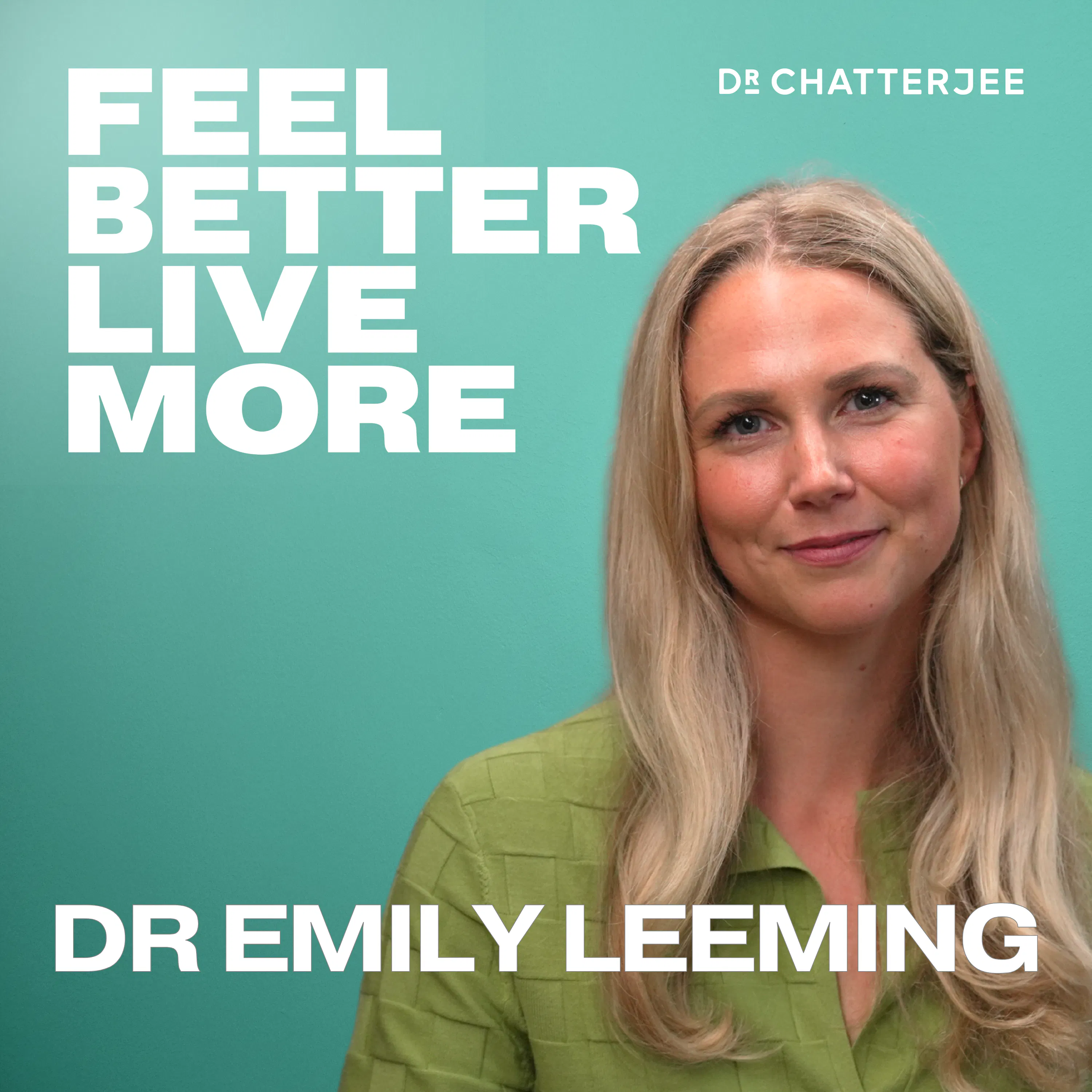
The Simple Nutrient That Could Transform Your Gut Health, Brain Power & Longevity with Dr Emily Leeming #658
19 мая 2026 г.1h 32mThe chances are, you’re one of the 96 percent who aren’t getting enough fibre. And I’m not talking a little bit off the mark. For most of us, our intake is seriously lacking. Why does that matter? Because given everything we now know about what fibre does for our gut, our brain, our metabolism, our mood, our weight and our long-term disease risk, it’s an easy fix that we’re missing. Joining me on the podcast is Dr Emily Leeming, a dietitian and researcher at King's College London, who’s spent years studying the relationship between what we eat and the health of our gut microbiome. Her new book, Fibre Power, makes the case – compellingly and practically – that fibre may be the most underrated nutrient in our diets. As a scientist, a clinician who works directly with patients, and a former chef, her advice is evidence-based yet grounded in what works in a real kitchen, for real people. In this episode we explore what fibre is, where it’s found, and why it’s so much more than a digestive aid. Emily explains how it feeds the trillions of microbes living in your gut, and why those microbes (and the compounds they produce) have a reach that extends to your immune system, your metabolism, your brain, your hormones, and your risk of serious disease. We look at the evidence linking fibre intake to lower rates of type 2 diabetes, heart disease, bowel cancer, and depression. Emily also shares findings from the major bowel-cancer study she’s running at King's, investigating why rates in the under-50s are on the rise. Crucially, our conversation is packed with actionable advice. I love Emily’s simple, memorable frameworks for building more fibre into your meals without overhauling your diet, spending more money, or filling yourself with gas! We also spend time on the people for whom blanket advice doesn't always apply, such as those with IBS, type 2 diabetes, people navigating the menopause or following certain diets. And Emily has solutions for every scenario. Fibre is so much more than a dull, functional food. It’s one of the most researched nutrients in existence. So whether you’ve never thought much about it, or you already know it matters but keep falling short, I think this episode will give you both the motivation and the tools to include more of it. Small shifts, made consistently, really do add up – and this conversation is an inspiring place to start. The Thrive Tour: Transform Your Health and Happiness, a live show: Book Your Tickets https://drchatterjee.com/live Thanks to our sponsors: https://thesleepreset.com/podcast https://dohealth.co/livemore https://exhalecoffee.com/livemore Show notes https://drchatterjee.com/658 DISCLAIMER: The content in the podcast and on this webpage is not intended to be a substitute for professional medical advice, diagnosis, or treatment. Always seek the advice of your doctor or qualified healthcare provider. Never disregard professional medical advice or delay in seeking it because of something you have heard on the podcast or on my website.

BITESIZE | How Your Smartphone Is Changing Your Brain, Focus & Mental Health | Dr Anders Hansen #657
14 мая 2026 г.19 minA topic that I’m truly passionate about is the introduction of social media and smartphones into all aspects of our lives - changing the way we think, feel and connect with one another. Feel Better Live More Bitesize is my weekly podcast for your mind, body, and heart. Each week I’ll be featuring inspirational stories and practical tips from some of my former guests. Today’s clip is from episode 381 of the podcast with psychiatrist, globally renowned speaker, and best-selling author Dr Anders Hansen. In this clip, he explains how our attention has become one of the most valuable commodities in today’s world, why our devices are designed to keep us hooked, and he shares some simple ways we can begin to take back control and reconnect with what really matters. Thanks to our sponsor https://drinkag1.com/livemore Show notes and the full podcast are available at drchatterjee.com/381 Support the podcast and enjoy Ad-Free episodes. Try FREE for 7 days on Apple Podcasts https://apple.co/feelbetterlivemore For other podcast platforms go to https://fblm.supercast.com. DISCLAIMER: The content in the podcast and on this webpage is not intended to constitute or be a substitute for professional medical advice, diagnosis, or treatment. Always seek the advice of your doctor or other qualified health care provider with any questions you may have regarding a medical condition. Never disregard professional medical advice or delay in seeking it because of something you have heard on the podcast or on my website.

How To Recover From Burnout (It’s Not What You Expect) with Pippa Grange #656
12 мая 2026 г.1h 43mWhat if burnout isn't a sign that something is broken in you, but a sign that something needs to change? That's the question at the heart of this conversation – and it’ll shift the way you think about your energy, your career, and how you’re spending your one life. My guest is Pippa Grange, the renowned psychologist, performance coach, and author of Life Reclaimed. Pippa spent 25 years working with the highest performers in the world of business and sport (including her famous stint with the England football team). But her wisdom today is for all of us – particularly anyone who feels like they’re running on empty, or that the way they’re living isn’t working for them anymore. We begin by talking about why overperformance is so prevalent these days, and why it’s not a personal failing but a cultural shift. Pippa describes burnout as something that happens when life’s pace and pressure outweighs our ability to cope. We overperform at work, at home, even socially – and we’ve forgotten what balance looks like. The solution? Her framework of ‘regenerative performance’, built around a simple but powerful cycle: perform, rest, renew. And if that sounds familiar, it’s because it’s happening right in front of us every day – in nature. For Pippa, nature is the most intelligent model we have for sustainable human performance. After all, we’re a part of the natural world – and it’s moving away from these instinctive, biological cycles that has led to our collective burnout. Fortunately, she’s developed four core principles to guide us from overperformance into regenerative performance. They’re all about listening to the intelligence of the body rather than overriding it; tuning into our natural selves to develop sustainable patterns. And she brings the principles to life with practical tools you can use straight away, including a simple midday check-in that takes under a minute – and that I’ll definitely be incorporating into my day. This is a really important conversation, which offers a valuable, viable alternative to giving up. Follow Pippa’s advice and you can reconnect with your natural cycles. You can make meaningful change from within your life, rather than trying to escape it. It’s time to stop pushing through and start reclaiming the life you were meant to lead. The Thrive Tour: Transform Your Health and Happiness, a live show: Book Your Tickets https://drchatterjee.com/live Thanks to our sponsors: https://dohealth.co/livemore https://thewayapp.com/livemore https://boncharge.com/livemore Show notes https://drchatterjee.com/656 DISCLAIMER: The content in the podcast and on this webpage is not intended to be a substitute for professional medical advice, diagnosis, or treatment. Always seek the advice of your doctor or qualified healthcare provider. Never disregard professional medical advice or delay in seeking it because of something you have heard on the podcast or on my website.
BITESIZE | How to Sleep Better, Get More Energy & Improve Your Mental Wellbeing | Dr Kristen Holmes #655
7 мая 2026 г.27 minIn our hyper-connected modern world, where we have access to artificial light and food around the clock, we’ve drifted far from our body’s natural rhythms. But what if reconnecting with these internal clocks could be the key to unlocking better health, and more energy? Feel Better Live More Bitesize is my weekly podcast for your mind, body, and heart. Each week I’ll be featuring inspirational stories and practical tips from some of my former guests. Today’s clip is from episode 479 of the podcast with Global Head of Human Performance and Principal Scientist at WHOOP, Dr Kristen Holmes. In this clip, we discuss practical strategies for harmonising our circadian rhythms in the context of modern life. Kristen explains how factors like late meals and irregular routines can disrupt your body’s natural rhythms, and shares some simple changes that can make a real difference. This episode is packed with actionable insights, and I hope it leaves you feeling empowered to take control of your daily rhythms and experience the transformative effects on your health. For Thrive Tour tickets and info visit: https://drchatterjee.com/live/ Show notes and the full podcast are available at drchatterjee.com/479 Support the podcast and enjoy Ad-Free episodes. Try FREE for 7 days on Apple Podcasts https://apple.co/feelbetterlivemore For other podcast platforms go to https://fblm.supercast.com. DISCLAIMER: The content in the podcast and on this webpage is not intended to constitute or be a substitute for professional medical advice, diagnosis, or treatment. Always seek the advice of your doctor or other qualified health care provider with any questions you may have regarding a medical condition. Never disregard professional medical advice or delay in seeking it because of something you have heard on the podcast or on my website.
Why Creativity Is The Most Powerful Health Tool You’re Not Using with Professor Daisy Fancourt #654
5 мая 2026 г.1h 31mMost of us know that nutrition, movement and sleep are key pillars of health. But what if I told you that creativity belongs in the same conversation – and the science to prove it has been mounting up for decades? Professor Daisy Fancourt, one of the world’s leading health researchers, has uncovered a wealth of evidence linking engagement with the arts to improved mental and physical health. It’s all collected in her wonderful book, Art Cure, and I only wish it had existed as required reading when I was a medical student. Daisy agrees it’s been a ‘bizarrely well-kept secret’. We think of creative pursuits – music, theatre, dancing, arts and crafts – as ‘nice to haves’ but not necessary parts of life. But she believes a public awareness shift is on the horizon. Just as we’ve come to understand that exercise is an essential component of health, so too will we realise that ‘art as medicine’ is a scientific fact – one to be prescribed not ignored. It’s quite the promise – and a really exciting one to consider. Because for most of us, the arts represent enjoyment. So this health advice could be the easiest and most pleasurable you’ve ever followed! During this conversation Daisy and I discuss what engaging with the arts really means, and why it differs from non-creative, relaxing activities. We talk about the rise in screen-based ‘junk’ art, and why the post-pandemic continuum of virtual experiences can’t match real-world ones. And we explore how the arts tick lots of wellbeing boxes, from arousing nostalgia to firing the imagination, building confidence and communities to getting us moving. Most of us instinctively get it: the creative side of life is good for us. The science behind it though, is extraordinary. From lowering blood pressure to slowing biological ageing, reducing dementia risk to lowering inflammation, these aren’t small effects. Engaging with the arts has even been shown to cut older adults' risk of dying by 31 percent. Yet none of this has made it into mainstream health conversations – until now. There is so much packed into this joyous episode, from the surprising power of music to the unique combination of benefits that come from dancing. Daisy also shares some original ways to incorporate the arts into your life more – you’ll never think of your five a day, or your commute, in the same way again. We’re born creative and embrace it in childhood, but I think we stop prioritising it as adults. This conversation will kickstart it again. Support the podcast and enjoy Ad-Free episodes. Try FREE for 7 days on Apple Podcasts https://apple.co/feelbetterlivemore. For other podcast platforms go to https://fblm.supercast.com. Thanks to our sponsors: https://dohealth.co/livemore https://heights.com/livemore https://drinkag1.com/livemore Show notes https://drchatterjee.com/654 DISCLAIMER: The content in the podcast and on this webpage is not intended to be a substitute for professional medical advice, diagnosis, or treatment. Always seek the advice of your doctor or qualified healthcare provider. Never disregard professional medical advice or delay in seeking it because of something you have heard on the podcast or on my website.

BITESIZE | How To Become Less Reactive & Cultivate A Deep Sense Of Calm | Jonny Miller #653
30 апр. 2026 г.21 minMany of us are living with chronically dysregulated nervous systems, yet we mistake this reactive state for normal. Research suggests that our nervous system acts as a lens through which we experience reality. But when that lens is out of balance, we start to see threats where none exist, and respond in an exaggerated way to everyday situations. Today’s clip is from episode 569 of the podcast with Jonny Miller - founder of Nervous System Mastery, a 5-week bootcamp where he has taught over a thousand students how to cultivate calm, rewire reactivity and restore aliveness. In this clip he shares why learning to work with your body can change how you respond to stress, reduce reactivity, and help you move from overwhelm to calm. Thanks to our sponsor https://drinkag1.com/livemore Show notes and the full podcast are available at https://drchatterjee.com/569 Support the podcast and enjoy Ad-Free episodes. Try FREE for 7 days on Apple Podcasts https://apple.co/feelbetterlivemore For other podcast platforms go to https://fblm.supercast.com. DISCLAIMER: The content in the podcast and on this webpage is not intended to constitute or be a substitute for professional medical advice, diagnosis, or treatment. Always seek the advice of your doctor or other qualified health care provider with any questions you may have regarding a medical condition. Never disregard professional medical advice or delay in seeking it because of something you have heard on the podcast or on my website
Why You Can’t Stop Eating Sugar And Ultra Processed Foods with Dr Jen Unwin #652
28 апр. 2026 г.2h 1mEver wondered why you can’t stop at just one biscuit? Or why your efforts to eat better go so well for a few days, but you’re soon back where you started – frustrated, ashamed and wondering what’s wrong with you? This episode has the answers you need, along with a roadmap for regaining control. I’m speaking with Dr Jen Unwin, a clinical psychologist who has struggled with and overcome food addiction. And if you’re thinking ‘I didn’t think that was a thing’ then stay tuned for the facts that will convince you otherwise. Over decades trying to understand her own relationship with food, Jen discovered that for a significant number of people, a compulsive habit around sugar and ultra-processed foods is real and damaging. In this enlightening conversation, she explains how sugar lights up the same reward centres in the brain as nicotine and alcohol. And how our hunter-gatherer ancestors may not have needed an ‘off switch’ for eating, but our modern food industry makes it almost impossible for vulnerable people to say no. The research is strong – and Jen is part of a charity campaigning to have food addiction formally recognised by the World Health Organization. That way millions of people would be able to get help from their doctors, in the same way as people with drug and alcohol misuse disorders – instead of being dismissed for a lack of discipline or willpower. Many of us get cravings or have a fondness for sweet or ‘blissy’ foods. So when does that tip into addiction? Jen shares a clever, six-point, self-assessment tool called CRAVED, which you can use right now to understand whether your relationship with food might be problematic. And we get super practical, with advice on whether cutting down or going cold turkey is right for you, how to handle social situations when everyone around you is indulging, and how to set up your home environment for success. Whether you score one or six on the CRAVED scale, I’m certain there’s something in this conversation for everyone. And if you’re someone who has been battling this quietly, perhaps feeling ashamed or hopeless, I honestly believe Jen’s message might mark a turning point for you – one that helps you see a way forward. Fill out our audience survey via https://drchatterjee.com/survey Support the podcast and enjoy Ad-Free episodes. Try FREE for 7 days on Apple Podcasts https://apple.co/feelbetterlivemore. For other podcast platforms go to https://fblm.supercast.com. Thanks to our sponsors: https://dohealth.co/livemore https://thesleepreset.com/podcast https://boncharge.com/livemore Show notes https://drchatterjee.com/652 DISCLAIMER: The content in the podcast and on this webpage is not intended to be a substitute for professional medical advice, diagnosis, or treatment. Always seek the advice of your doctor or qualified healthcare provider. Never disregard professional medical advice or delay in seeking it because of something you have heard on the podcast or on my website.

BITESIZE | The Truth About Caffeine with Neuroscientist Dr Tommy Wood #651
23 апр. 2026 г.16 minToday’s guest, like myself, is passionate about empowering individuals to take control of their health by simplifying the wealth of information that exists and giving people practical, realistic recommendations. Feel Better Live More Bitesize is my weekly podcast for your mind, body, and heart. Each week I’ll be featuring inspirational stories and practical tips from some of my former guests. Today’s clip is from episode 404 of the podcast with Dr Tommy Wood. Tommy is Assistant Professor of Paediatrics and Neuroscience at the University of Washington, US. In this clip, we aim to cut through some of the confusion about caffeine, including how it may affect your energy, focus, sleep, stress levels and even performance in ways you may not expect. We discuss why caffeine isn’t simply ‘good’ or ‘bad’, why timing and dose matter, and how finding what works for you may be the most important thing of all. Thanks to our sponsor https://thewayapp.com/livemore Show notes and the full podcast are available at drchatterjee.com/404 Support the podcast and enjoy Ad-Free episodes. Try FREE for 7 days on Apple Podcasts https://apple.co/feelbetterlivemore For other podcast platforms go to https://fblm.supercast.com. DISCLAIMER: The content in the podcast and on this webpage is not intended to constitute or be a substitute for professional medical advice, diagnosis, or treatment. Always seek the advice of your doctor or other qualified health care provider with any questions you may have regarding a medical condition. Never disregard professional medical advice or delay in seeking it because of something you have heard on the podcast or on my website.

How To Stop Limiting Yourself And Liberate Your Full Potential with Nir Eyal #650
21 апр. 2026 г.1h 50mThis podcast could change the way you think about every goal you’ve set, every relationship you’re struggling with – and every story you tell yourself about what you’re capable of. It all comes down to something most of us have never thought to question: our beliefs. And what you’ll hear in this conversation might be the most practical, liberating idea you come across all year. I’m speaking with Nir Eyal, the bestselling author of Hooked and Indistractable, whose powerful new book Beyond Belief draws on years of research into the psychology of why we limit ourselves – and how to stop. Nir opens the conversation with a striking claim: human beings never perceive reality as it truly is. Our brains filter everything through our existing beliefs and expectations, and most of the time, we have no idea it’s happening. The good news? Once you understand this, you can start choosing beliefs that actually work for you. In this conversation, we explore why persistence – not talent or intelligence – is the number one predictor of whether you’ll reach your goals. Nir reveals the crucial difference between pain and suffering, including the astonishing story of a man who underwent surgery without anaesthetic and felt no suffering at all. We talk about why positive thinking may not be the motivator you think it is, and what the research says you should do instead. And Nir shares his crucial insight that beliefs are tools, not truths. So we can choose which to adopt based on whether they serve us. Nir shares some personal stories of how he’s used his tools to lose weight, repair relationships and reframe his ADHD diagnosis as a skills gap not a debilitating condition. But what you’ll love most about listening is the clear, practical framework he gives us for doing the same. You’ll learn how to spot the beliefs that are draining you and ask, could the opposite be true, even just for a while? Whether you’re navigating a health challenge, a difficult relationship, a career crossroads, or just that nagging voice telling you it’s too late, tune in for the solution. It’s never too late to swap limiting beliefs for ones that liberate you instead. Fill out our audience survey via https://drchatterjee.com/survey Support the podcast and enjoy Ad-Free episodes. Try FREE for 7 days on Apple Podcasts https://apple.co/feelbetterlivemore. For other podcast platforms go to https://fblm.supercast.com. Thanks to our sponsors: https://dohealth.co/livemore https://thewayapp.com/livemore Show notes https://drchatterjee.com/650 DISCLAIMER: The content in the podcast and on this webpage is not intended to be a substitute for professional medical advice, diagnosis, or treatment. Always seek the advice of your doctor or qualified healthcare provider. Never disregard professional medical advice or delay in seeking it because of something you have heard on the podcast or on my website.

BITESIZE | A Monk’s Guide to Finding Happiness (Even When Things Don’t Go Your Way) | Haemin Sunim #649
16 апр. 2026 г.22 minToday’s guest believes that even when things don’t go our way, there’s always an opportunity for growth and unexpected joy. Feel Better, Live More Bitesize is my weekly podcast for your mind, body, and heart. Each week I’ll be featuring inspirational stories and practical tips from some of my former guests. Today's clip is from episode 476 of the podcast with Buddhist monk and author Haemin Sunim. Haemin is a Zen Buddhist teacher and the author of two Sunday Times bestselling books, including his very latest, the beautiful: ‘When Things Don’t Go Your Way: Zen Wisdom for Difficult Times.’ In this clip, we discuss the crucially important notion that we always have a choice in how we interpret and respond to life’s challenges even when things don’t go our way. Thanks to our sponsor https://heights.com/livemore Show notes and the full podcast are available at https://drchatterjee.com/476 Support the podcast and enjoy Ad-Free episodes. Try FREE for 7 days on Apple Podcasts https://apple.co/feelbetterlivemore. For other podcast platforms go to https://fblm.supercast.com. DISCLAIMER: The content in the podcast and on this webpage is not intended to constitute or be a substitute for professional medical advice, diagnosis, or treatment. Always seek the advice of your doctor or other qualified health care provider with any questions you may have regarding a medical condition. Never disregard professional medical advice or delay in seeking it because of something you have heard on the podcast or on my website.
How To Support Your Immunity, Reduce Inflammation & Age Better with Dr Jenna Macciochi #648
14 апр. 2026 г.2h 3mMost of us only think about our immune system when we're ill. But what if it's actually the single most important system shaping your health and longevity? In this episode, Dr Jenna Macciochi makes a powerful case for rethinking immunity. It’s not just a defence mechanism you call on to fight a cold. It’s your body's wellness system, quietly influencing everything from your mood and metabolism to your risk of heart disease, dementia and cancer. Jenna is one of the UK's leading immunologists and a bestselling author. Her latest book, Immune to Age: The Game-Changing Science of Lifetime Health, explores the deep connection between our immune system, how we live, and how well we age. Jenna combines robust science and personal honesty in everything she does and this, her second conversation for the podcast, is no exception. Jenna explains what the immune system actually is, what it does, and why ‘boosting’ it isn’t something you want to do on a regular basis. We explore the link between chronic stress and inflammation. And we discuss how your thoughts, relationships and daily habits are constantly sending signals to your immune system that either help or hinder it. She also reveals why midlife is a genuine biological turning point. It’s the moment when genes that protected you in the first half of life start working against you, with consequences for your gut health, bone density and long-term wellbeing. But if that sounds bleak, Jenna also shares plenty of practical advice, learned from the personal upheavals that shaped her fantastic book. From leaving a misaligned marriage and job, to discovering meditation, self-compassion – and jiu-jitsu! – she transformed not just her thinking but her nervous system, too. And I love her perceptive view that the current obsession with lifespan is missing something fundamental about living well: your soulspan. Whether you're in midlife and noticing changes in your body, or you simply want to learn about the incredible wellness system driving your long-term health, this is one episode you’ll want to bookmark. Fill out our audience survey via https://drchatterjee.com/survey Support the podcast and enjoy Ad-Free episodes. Try FREE for 7 days on Apple Podcasts https://apple.co/feelbetterlivemore. For other podcast platforms go to https://fblm.supercast.com. Thanks to our sponsors: https://vivobarefoot.com/livemore https://drinkag1.com/livemore Show notes https://drchatterjee.com/648 DISCLAIMER: The content in the podcast and on this webpage is not intended to be a substitute for professional medical advice, diagnosis, or treatment. Always seek the advice of your doctor or qualified healthcare provider. Never disregard professional medical advice or delay in seeking it because of something you have heard on the podcast or on my website.
BITESIZE | Avoid These 3 Foods to Boost Your Health Defences | Dr William Li #647
9 апр. 2026 г.22 minToday’s guest passionately believes that the decisions we make every day about what we eat have a huge influence on our overall health. Feel Better Live More Bitesize is my weekly podcast for your mind, body, and heart. Each week I’ll be featuring inspirational stories and practical tips from some of my former guests. Today’s clip is from episode 450 of the podcast with internationally renowned physician, and bestselling author, Dr William Li. In this clip, he explains how the foods we eat could either support or weaken our body’s natural defence systems, and shares some simple, practical ways to make better choices every day. Thanks to our sponsor https://thewayapp.com/livemore Show notes and the full podcast are available at https://drchatterjee.com/450 Support the podcast and enjoy Ad-Free episodes. Try FREE for 7 days on Apple Podcasts https://apple.co/feelbetterlivemore For other podcast platforms go to https://fblm.supercast.com. DISCLAIMER: The content in the podcast and on this webpage is not intended to constitute or be a substitute for professional medical advice, diagnosis, or treatment. Always seek the advice of your doctor or other qualified health care provider with any questions you may have regarding a medical condition. Never disregard professional medical advice or delay in seeking it because of something you have heard on the podcast or on my website

How To Change The Quality Of Your Relationships At Any Age with Dr Amir Levine #646
7 апр. 2026 г.1h 54mWhat if the secret to great health, more energy and feeling happier isn’t a diet, a fitness routine or a supplement – but the quality of your relationships? This conversation, with neuroscientist Dr Amir Levine, will challenge your preconceptions about how you relate to others and, more importantly, empower you to change that. Dr Levine is Associate Professor of Clinical Psychiatry at Columbia University and bestselling author of Attached a landmark title about attachment theory in adults. But it’s his new book Secure: The Revolutionary Guide to Creating a Secure Life, that we’re diving into today. In it, he makes the case that all of us, no matter what our attachment style, can learn to build relationships that help us thrive – in all areas of our life. Not familiar with the four attachment styles? Dr Levine explains all and tells us how they might show up in everyday life. They aren’t disorders that need to be fixed, but natural variations in how we understand and interact with others. And getting to know yours could help you feel more secure in your relationships, work and wellbeing. We explore the evolutionary science behind why our brains, which are wired for connection, can experience social exclusion as physical pain. It’s what makes ignoring someone just as damaging as lashing out – and explains why positive interactions with strangers (a hello here, a wave there) don’t just make your day, they can actually change your brain’s structure over time. If, as Dr Levine reveals, 95 percent of our adult attachment has nothing to do with childhood, that means we have huge potential for change. We don’t have to be held back by patterns we thought were with us for life. We just need to play to our strengths in relationships – and give our brains the right signals in the present. And if that sounds promising but puzzling, Dr Levine shares lots of practical ideas and tools you can use right away – including his five pillars of secure attachment and two, game-changing rules for managing conflict. We also discuss why some common ideas, like seeking closure after a break-up or setting boundaries, might not offer the security you’d like. What I hope you’ll take from this conversation is a sense of optimism. It’s the ideal episode for anyone feeling stuck in a relationship, struggling with conflict, or who simply wants to feel more secure in themselves. Support the podcast and enjoy Ad-Free episodes. Try FREE for 7 days on Apple Podcasts https://apple.co/feelbetterlivemore. For other podcast platforms go to https://fblm.supercast.com. Thanks to our sponsors: https://dohealth.co/livemore https://boncharge.com/livemore https://thewayapp.com/livemore https://drinkag1.com/livemore Show notes https://drchatterjee.com/646 DISCLAIMER: The content in the podcast and on this webpage is not intended to be a substitute for professional medical advice, diagnosis, or treatment. Always seek the advice of your doctor or qualified healthcare provider. Never disregard professional medical advice or delay in seeking it because of something you have heard on the podcast or on my website.

BITESIZE | How To Reconnect With Joy & Improve Your Mental Health | Dr Camilla Nord #645
2 апр. 2026 г.23 minWhen was the last time you did something just for joy? “Research shows that a lack of pleasure is central to poor mental health.” – Dr. Camilla Nord Feel Better Live More Bitesize is my weekly podcast for your mind, body, and heart. Each week I’ll be featuring inspirational stories and practical tips from some of my former guests. Today’s clip is from episode 543 of the podcast with award-winning neuroscientist and author of The Balanced Brain: The Science of Mental Health, Dr Camilla Nord. In this clip, she shares why pleasure is so fundamental to mental wellbeing and how small actions can help us reconnect with it. Thanks to our sponsor https://drinkag1.com/livemore Show notes and the full podcast are available at https://drchatterjee.com/543 Support the podcast and enjoy Ad-Free episodes. Try FREE for 7 days on Apple Podcasts https://apple.co/feelbetterlivemore For other podcast platforms go to https://fblm.supercast.com. DISCLAIMER: The content in the podcast and on this webpage is not intended to constitute or be a substitute for professional medical advice, diagnosis, or treatment. Always seek the advice of your doctor or other qualified health care provider with any questions you may have regarding a medical condition. Never disregard professional medical advice or delay in seeking it because of something you have heard on the podcast or on my website

How To Change The Way You Breathe For More Energy, Better Sleep, Improved Blood Pressure & A Longer Life with James Nestor #644
31 мар. 2026 г.2h 23mListening to this conversation could help you sleep better, quit snoring, and wake refreshed. You’ll learn a simple trick to stop anxiety in its tracks, and find out how to keep asthma and high blood pressure in check. And the secret to all these health gains? It really is a breath of fresh air… I’m talking to James Nestor, a science journalist and the author of international bestseller Breath: The New Science of a Lost Art. James spent a decade investigating why so many of us breathe badly and what happens when we get it right. And he’s here today to pass on some ancient wisdom, through the lens of modern science. We all know the feeling of shallow, rapid breathing that sets in when you’re anxious or stressed. And you don’t have to be a breathwork guru to recognise the power of a slow inhalation and exhalation to make you feel… ahh… grounded and calm. James’s message is that better breathing really is that simple. It’s about tuning in to how well you’re using your lungs, your diaphragm – and your nose. In this episode, we get into why something as simple as switching from mouth breathing to nasal breathing could transform your health. We talk about a fascinating piece of research showing that lung size could be the single biggest predictor of how long you live. James shares the evidence that many chronic and unexpected health conditions can be improved and even reversed through better breathing – something doctors aren’t taught and don’t tell you. And he measures the CO2 levels in my studio, which leads to a conversation about indoor air quality that I was not expecting. It might change the way you think about your home, your office, your airline choice and your next hotel room. Perhaps the most exciting thing about this conversation is how simple and accessible everything we discuss is. The foundations of healthy breathing don’t cost a thing. You don’t need a gadget, a retreat, or a prescription. You just need to unlearn some key habits and start making small changes – for big results. Support the podcast and enjoy Ad-Free episodes. Try FREE for 7 days on Apple Podcasts https://apple.co/feelbetterlivemore. For other podcast platforms go to https://fblm.supercast.com. Thanks to our sponsors: https://dohealth.co/livemore https://heights.com/livemore https://vivobarefoot.com/livemore https://drinkag1.com/livemore Show notes https://drchatterjee.com/644 DISCLAIMER: The content in the podcast and on this webpage is not intended to be a substitute for professional medical advice, diagnosis, or treatment. Always seek the advice of your doctor or qualified healthcare provider. Never disregard professional medical advice or delay in seeking it because of something you have heard on the podcast or on my website.


