

Alternative Medizin
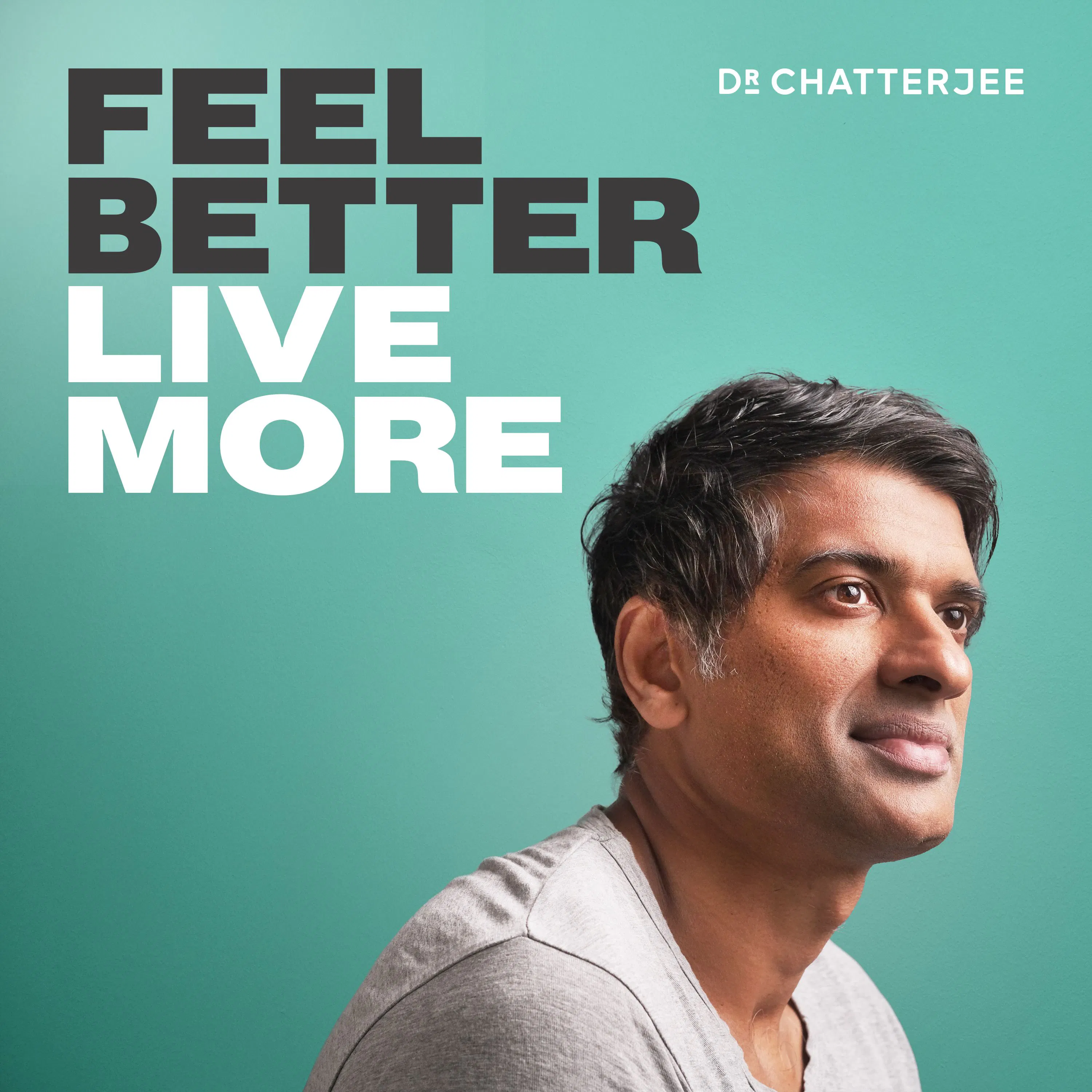
Feel Better, Live More with Dr Rangan Chatterjee
Dr Rangan Chatterjee: GP & Author
“Health has become overcomplicated. I aim to simplify it” In this podcast, we hear stories from leading health experts and exciting personalities who offer easy health life-hacks, expert advice and debunk common health myths giving you the tools to revolutionise how you eat, sleep, move and relax. Hosted by Dr Chatterjee - one of the most influential GPs in the country with nearly 20 years experience, star of BBC 1’s Doctor In the House, and author of 6 internationally best-selling books, including ‘The 4 Pillar Plan’ – Feel Better, Live More aims to inspire, empower and transform the way we feel. When we are healthier, we are happier because when we feel better, we live more. Support the podcast and enjoy Ad-Free episodes. Try FREE for 7 days on Apple Podcasts https://apple.co/feelbetterlivemore. For other podcast platforms go to https://fblm.supercast.com. https://www.drchatterjee.com/podcast https://www.instagram.com/drchatterjee https://www.twitter.com/drchatterjeeuk https://www.facebook.com/DrChatterjee
 In Clue öffnen
Folgen zum Englischlernen669

BITESIZE | Transform Your Life with a Digital Detox | Cal Newport #190
10. Juni 202115 minDigital technology is slowly eroding downtime from our lives. The constant flow of digital noise is affecting our ability to be alone with our thoughts, to focus, and to cultivate authentic relationships. Is it time for a digital detox? Feel Better Live More Bitesize is my weekly podcast for your mind, body, and heart. Each week I’ll be featuring inspirational stories and practical tips from some of my former guests. Today’s clip is from episode 50 of the podcast with Professor of computer science and author of the book ‘Digital Minimalism’, Cal Newport. In this clip, Cal explains how our digital interactions are pulling us away from real-world connections and activities, and the effect this is having on our attention, our health and our relationships. He gives some brilliant tips on how to declutter your digital world and pursue more meaningful connections. Thanks to our sponsor http://www.athleticgreens.com/livemore Show notes and the full podcast are available at drchatterjee.com/50 Follow me on instagram.com/drchatterjee Follow me on facebook.com/DrChatterjee Follow me on twitter.com/drchatterjeeuk DISCLAIMER: The content in the podcast and on this webpage is not intended to constitute or be a substitute for professional medical advice, diagnosis, or treatment. Always seek the advice of your doctor or other qualified health care provider with any questions you may have regarding a medical condition. Never disregard professional medical advice or delay in seeking it because of something you have heard on the podcast or on my website.

How To Achieve The Impossible with Steven Kotler #189
8. Juni 20211h 41mCAUTION: This episode contains swearing and themes of an adult nature. Today’s conversation is about unlocking your full potential, striving for peak performance and ‘going big’. My guest, Steven Kotler, lives and breathes ‘flow’. He’s an expert in this optimal state of consciousness, where we feel and perform at our best. And you don’t have to be part of the business or sporting elite to benefit from his research. Steven believes we can all attain flow, because as humans we’re hard-wired to achieve. Whether you’re taking a walk, writing an email or cooking a meal, you could find yourself in flow. Steven is a prolific author, journalist and entrepreneur. He founded the Flow Research Collective, which uses neurobiological findings to train people to achieve peak performance in all walks of life. By understanding what’s going on in the brain and body when humans are performing at their best, his goal is to help us access the flow state more often and realise our full potential. Flow is something I’ve written about in my own books and I describe it as being so absorbed in a pleasurable activity that time seems to disappear. Steven and I talk about how psychologists and neurobiologists identify and measure flow. He provides insights on the brain chemicals involved and we discuss the links between flow and happiness. We also uncover tools you can use to access this creative state; why initial struggles are part of the process, and why active recovery is vital if you want to avoid burnout. This is a super-charged episode, packed with insights, information and enthusiasm. Steven is certainly an advert for the energy and productivity that results from seeking out a flow state. I hope this conversation sets you on a path to finding yours. Show notes available at https://drchatterjee.com/189 Follow me on instagram.com/drchatterjee/ Follow me on facebook.com/DrChatterjee/ Follow me on twitter.com/drchatterjeeuk DISCLAIMER: The content in the podcast and on this webpage is not intended to constitute or be a substitute for professional medical advice, diagnosis, or treatment. Always seek the advice of your doctor or other qualified health care provider with any questions you may have regarding a medical condition. Never disregard professional medical advice or delay in seeking it because of something you have heard on the podcast or on my website.

BITESIZE | How to Reduce Anxiety and Improve Mental Health | Matt Haig #188
3. Juni 202117 minRates of stress and anxiety are increasing and it’s estimated that 1 in 4 of us will experience mental health problems at some point in our lives. Feel Better Live More Bitesize is my weekly podcast for your mind, body, and heart. Each week I’ll be featuring inspirational stories and practical tips from some of my former guests. Today’s clip is from episode 61 of the podcast with best-selling author, and one of the most prominent voices in the mental health arena, Matt Haig As someone who has suffered from depression and anxiety, Matt shares his personal journey and explains what has helped him find optimism. We explore how modern life is affecting our mental health, and Matt gives some great tips on how we can all improve the way we feel. Show notes and the full podcast are available at drchatterjee.com/61 Thanks to our sponsor http://www.athleticgreens.com/livemore Follow me on instagram.com/drchatterjee Follow me on facebook.com/DrChatterjee Follow me on twitter.com/drchatterjeeuk DISCLAIMER: The content in the podcast and on this webpage is not intended to constitute or be a substitute for professional medical advice, diagnosis, or treatment. Always seek the advice of your doctor or other qualified health care provider with any questions you may have regarding a medical condition. Never disregard professional medical advice or delay in seeking it because of something you have heard on the podcast or on my website.

The Power of Movement and How to Make It Easy #187
1. Juni 20211h 3mThis week's episode is a special compilation episode all about movement. As the weather is getting warmer and the days are getting longer (at least here in the UK), many of us feel a strong desire to get outside and move. But the question is, have we made movement and exercise too complicated? Have we lost sight of what it really means to move our bodies? The need to move our bodies has been gradually eroded from our modern lives and has been replaced with the modern concept of ‘exercise’. But, if we can incorporate regular movement into our daily lives, we will feel the profound benefits. As you will hear in this episode, movement helps to reduce stress, helps to improve our mood and so much more. And to reap the many benefits, movement doesn’t need to be difficult, it can be something you love already such as walking, dancing or even playing. This episode is full of information that will inspire you to move more and practical tips to help you incorporate movement into your everyday life. I really hope you enjoy this special compilation episode all around the joy of movement. Show notes available at https://drchatterjee.com/187 Follow me on instagram.com/drchatterjee/ Follow me on facebook.com/DrChatterjee/ Follow me on twitter.com/drchatterjeeuk DISCLAIMER: The content in the podcast and on this webpage is not intended to constitute or be a substitute for professional medical advice, diagnosis, or treatment. Always seek the advice of your doctor or other qualified health care provider with any questions you may have regarding a medical condition. Never disregard professional medical advice or delay in seeking it because of something you have heard on the podcast or on my website.

BITESIZE | Find Your Purpose and Transform Your Life | Rich Roll #186
27. Mai 202116 minSo many of us these days are living lives that are not truly ours. Feel Better Live More Bitesize is my weekly podcast for your mind, body, and heart. Each week I’ll be featuring inspirational stories and practical tips from some of my former guests. Today’s clip is from episode 28 of the podcast with the inspirational wellness advocate, best-selling author and podcast host Rich Roll. In this clip, he shares his incredible journey - from someone that struggled with his health as well as alcohol addiction, to becoming a plant-based ultra-endurance athlete. He also explains why finding your purpose in life can have a positive impact on your health and wellbeing. Show notes and the full podcast are available at drchatterjee.com/28 Thanks to our sponsor http://www.athleticgreens.com/livemore Follow me on instagram.com/drchatterjee Follow me on facebook.com/DrChatterjee Follow me on twitter.com/drchatterjeeuk DISCLAIMER: The content in the podcast and on this webpage is not intended to constitute or be a substitute for professional medical advice, diagnosis, or treatment. Always seek the advice of your doctor or other qualified health care provider with any questions you may have regarding a medical condition. Never disregard professional medical advice or delay in seeking it because of something you have heard on the podcast or on my website.

Life Lessons from a Brain Surgeon with Dr Rahul Jandial #185
25. Mai 20211h 54mToday I'm delighted to welcome one of the world's leading neurosurgeons, Dr Rahul Jandial back onto the podcast. I first spoke to Rahul back on episode 76 about the simple things that we can all do to improve and optimise our brain health. I decided to invite Rahul back onto the show after taking a look at his latest book, Life on a Knife's Edge: A Brain Surgeon’s Reflections on Life, Loss and Survival, which is a beautifully written account of the resilience, courage and belief he has witnessed in his patients, and the lessons about human nature he has learned from them. At this point in his career, Rahul has operated on several thousand skulls and brains. He is the last hope for patients with extreme forms of cancer. And in treating them, he's observed humanity at its most raw, but also at its most robust. He has journeyed to unimaginable extremes with his patients, guiding them through the darkest moments of their lives and in today's conversation, he shares some of the powerful lessons that he's learned that are applicable to us all. In our conversation, we cover a wide range of different topics such as Rahul’s own practices and rituals to get him ready for high pressure surgery. We also talk about what specific breathing technique he uses when stressful situations come up whilst he is in the middle of an operation. We discuss what Rahul has learned about the brain, our minds and our sense of self and what cancer patients at the ends of their lives have taught him about living. He explains the importance of balancing times of stress with time for rest, the importance of connection and compassion and we chat about resilience. This really was a fabulous conversation that I myself got a lot out of. I really hope you enjoyed listening. Show notes available at https://drchatterjee.com/185 Follow me on instagram.com/drchatterjee/ Follow me on facebook.com/DrChatterjee/ Follow me on twitter.com/drchatterjeeuk DISCLAIMER: The content in the podcast and on this webpage is not intended to constitute or be a substitute for professional medical advice, diagnosis, or treatment. Always seek the advice of your doctor or other qualified health care provider with any questions you may have regarding a medical condition. Never disregard professional medical advice or delay in seeking it because of something you have heard on the podcast or on my website.

BITESIZE | How to Build Closer Connections with Your Children | Philippa Perry #184
20. Mai 202115 minHow do we improve our relationships with our children? And what should we do when we make mistakes? Feel Better Live More Bitesize is my weekly podcast for your mind, body, and heart. Each week I’ll be featuring inspirational stories and practical tips from some of my former guests. Today’s clip is from episode 75 of the podcast with psychotherapist and author of ‘The Book You Wish Your Parents Had Read’, Philippa Perry. In this clip, she explains why being authentic with our children is important and why we all need time alone. Even when we get things wrong, learning how to repair our mistakes is key to building closer connections. Show notes and the full podcast are available at drchatterjee.com/75 Thanks to our sponsor http://www.athleticgreens.com/livemore Follow me on instagram.com/drchatterjee Follow me on facebook.com/DrChatterjee Follow me on twitter.com/drchatterjeeuk DISCLAIMER: The content in the podcast and on this webpage is not intended to constitute or be a substitute for professional medical advice, diagnosis, or treatment. Always seek the advice of your doctor or other qualified health care provider with any questions you may have regarding a medical condition. Never disregard professional medical advice or delay in seeking it because of something you have heard on the podcast or on my website.
How To Achieve Your Goals Effortlessly with Greg McKeown #183
18. Mai 20212h 2mWe’ve been conditioned to believe that the path to success is paved with relentless work. The more important the goal, the harder we have to grind. That if we aren’t perpetually exhausted, we’re not doing enough. Now, working hard is more exhausting than ever and many of us are stuck in an endless loop of “Zoom, eat, sleep, repeat” and we’re often working twice as hard to achieve half as much. This week, I’m joined by writer, speaker and podcast host, Greg McKeown who believes that getting ahead doesn’t have to be as hard as we make it. In his new book, Effortless: Make It Easier To Do What Matters Most, Greg explains that no matter what challenges or obstacles we face, there is a better way: instead of pushing ourselves harder, we can find an easier path. And that it's absolutely vital that we find it so that we can fulfil the most important missions of our lives. This conversation is full of relatable anecdotes and actionable advice for making the most essential activities in your life the easiest ones, so you can achieve the results you want, without burning out. There is so much freedom to be gained from Greg’s advice and I’m sure your life will be better for hearing it. Show notes available at https://drchatterjee.com/183 Follow me on instagram.com/drchatterjee/ Follow me on facebook.com/DrChatterjee/ Follow me on twitter.com/drchatterjeeuk DISCLAIMER: The content in the podcast and on this webpage is not intended to constitute or be a substitute for professional medical advice, diagnosis, or treatment. Always seek the advice of your doctor or other qualified health care provider with any questions you may have regarding a medical condition. Never disregard professional medical advice or delay in seeking it because of something you have heard on the podcast or on my website.

BITESIZE | The Benefits of Meditation for Body and Mind | Light Watkins #182
13. Mai 202114 minThere are many health benefits associated with a consistent practice of meditation, and the benefits of a regular practice can extend beyond the meditation itself into daily life, increasing our awareness and reducing stress responses. Feel Better Live More Bitesize is my weekly podcast for your mind, body, and heart. Each week I’ll be featuring inspirational stories and practical tips from some of my former guests. Today’s clip is from episode 23 of the podcast with meditation teacher, international speaker and author, Light Watkins. In this clip, he describes the many incredible ways meditation can improve our lives and explains how we can all make meditation an enjoyable daily habit. Show notes and the full podcast are available at drchatterjee.com/23 Thanks to our sponsor http://www.athleticgreens.com/livemore Follow me on instagram.com/drchatterjee Follow me on facebook.com/DrChatterjee Follow me on twitter.com/drchatterjeeuk DISCLAIMER: The content in the podcast and on this webpage is not intended to constitute or be a substitute for professional medical advice, diagnosis, or treatment. Always seek the advice of your doctor or other qualified health care provider with any questions you may have regarding a medical condition. Never disregard professional medical advice or delay in seeking it because of something you have heard on the podcast or on my website.
How Understanding Your Personality Will Make Your Life Better with Gretchen Rubin #181
11. Mai 20212h 2mToday I talk to one of the most thought-provoking and influential writers on the subjects of happiness, habits and human nature. Gretchen Rubin has sold over 3 million books worldwide and also hosts the Happier with Gretchen podcast. We begin the conversation discussing what happiness really means and why so many of us struggle with it. Happiness is such an elusive concept and Gretchen believes that it’s more helpful to think about being happier – to ask ourselves things like ‘if I do this, will I be happier next month or next year?’ or ‘will this bring me more love and less things like guilt, anger, resentment?’ These are simple questions that can actually make a profound difference to our lives. We also talk about the fact that happiness does not mean that we will feel good all of the time. Sometimes we do things because they're meaningful, or because they serve a higher value even though they don’t make us feel good in that moment. If you are stuck in your life and feel as though you are not getting nourished by either your work or life situation but don’t know what to do, Gretchen shares some brilliant strategies to help guide you onto the right path. We also discuss how we can encourage our kids to find the right path for them. We move on to talk about Gretchen’s insightful book, The Four Tendencies: The Indispensable Personality Profiles That Reveal How to Make Your Life Better (and Other People's Lives Better, Too). When researching human nature, Gretchen realised that by asking the simple question 'How do I respond to expectations?', we can gain life changing self-knowledge. She discovered that based on their answer to this question, people fit into Four Tendencies: Upholders, Questioners, Obligers, and Rebels. I think you will love discovering what tendency you and those around you have. We discuss exactly what those tendencies are and how knowing them gives us six key benefits - we’re more likely to achieve our aims, make better decisions, meet deadlines, meet promises to ourselves, suffer less stress, and engage more deeply with others. The wonderful thing about understanding these tendencies is that not only do we get the best from ourselves, we get the best out of other people as well. I really think that everyone will see themselves (and those around them) in one of these tendencies and that understanding them will improve the way you interact with yourself and others. Show notes available at https://drchatterjee.com/181 DISCLAIMER: The content in the podcast and on this webpage is not intended to constitute or be a substitute for professional medical advice, diagnosis, or treatment. Always seek the advice of your doctor or other qualified health care provider with any questions you may have regarding a medical condition. Never disregard professional medical advice or delay in seeking it because of something you have heard on the podcast or on my website.

BITESIZE | Train Your Brain to Create the Life You Want to Live | Tara Swart #180
6. Mai 202115 minIt’s easy to go through the motions every day and let life happen to us, but if we want to get the most out of life, we need a strategy. Feel Better Live More Bitesize is my weekly podcast for your mind, body, and heart. Each week I’ll be featuring inspirational stories and practical tips from some of my former guests. Today’s clip is from episode 58 of the podcast with Dr. Tara Swart – neuroscientist, executive coach, and author of the best-selling book ‘The Source’. In this clip, she explains how we can take back control of our lives by training our brains to create the life we want to live. Show notes and the full podcast are available at drchatterjee.com/58 Thanks to our sponsor http://www.athleticgreens.com/livemore Follow me on instagram.com/drchatterjee Follow me on facebook.com/DrChatterjee Follow me on twitter.com/drchatterjeeuk DISCLAIMER: The content in the podcast and on this webpage is not intended to constitute or be a substitute for professional medical advice, diagnosis, or treatment. Always seek the advice of your doctor or other qualified health care provider with any questions you may have regarding a medical condition. Never disregard professional medical advice or delay in seeking it because of something you have heard on the podcast or on my website.
Why Emotions Matter More Than You Think with Professor Marc Brackett #179
4. Mai 20211h 40mCAUTION ADVISED: this podcast contains mild swearing and themes of an adult nature. Today's conversation is all about our emotions and my guest is Professor Marc Brackett, the founding director of the Yale Center for Emotional Intelligence. He's published over 100 research articles over the course of his career, and has dedicated his life to studying and teaching emotional literacy. But why are our emotions so important? Marc explains the profound benefits of being better able to express and regulate our emotions on multiple aspects of our lives. Our emotions affect our creativity, learning and problem solving, but also our physical health and our mental health. Yet so many of us struggle to express and regulate our emotions. It's not something that is taught in schools or even modelled by much of society. Marc aims to help change this through his work and research. He has developed something called the ‘RULER’ approach to social and emotional learning, which is used in over 2000 schools across the world and is detailed in his brilliant book, Permission to Feel: Unlock the power of emotions to help yourself and your children. The ‘RULER’ approach sets out the five underlying skills of emotional intelligence and stands for Recognising, Understanding, Labelling, Expressing and Regulating emotions. The RUL, says Marc, is about our experience – whether of our own emotions or someone else’s. The ER is about what we do with the feelings. And I think it’s an invaluable tool for children and adults alike. Marc explains why he wants us all to become what he calls ‘emotion scientists’, rather than being ‘emotion judges’, and he wants us all to be able to better understand our own and each other's feelings. This episode is packed with personal insights, practical examples and brilliant tips to put his advice into practice in your life and perhaps that of your children. I hope you find it as useful and meaningful as I did. Show notes available at https://drchatterjee.com/179 Follow me on instagram.com/drchatterjee/ Follow me on facebook.com/DrChatterjee/ Follow me on twitter.com/drchatterjeeuk DISCLAIMER: The content in the podcast and on this webpage is not intended to constitute or be a substitute for professional medical advice, diagnosis, or treatment. Always seek the advice of your doctor or other qualified health care provider with any questions you may have regarding a medical condition. Never disregard professional medical advice or delay in seeking it because of something you have heard on the podcast or on my website.

BITESIZE | The 6 Keys to Happiness | Meik Wiking #178
29. Apr. 202113 minDespite our cultural differences, we have a very similar view of happiness across the world. So, what can we learn from the world’s happiest countries? Feel Better Live More Bitesize is my new weekly podcast for your mind, body and heart. Each week I’ll be featuring inspirational stories and practical tips from some of my former guests. Today’s clip is from episode 32 of the podcast with founder and CEO of the Happiness Research Institute - Meik Wiking. Meik has travelled the globe interviewing some of the world’s happiest people to discover the key components of happiness, and in this clip, he explains some of his fascinating findings. Show notes and the full podcast are available at drchatterjee.com/32 Follow me on instagram.com/drchatterjee Follow me on facebook.com/DrChatterjee Follow me on twitter.com/drchatterjeeuk DISCLAIMER: The content in the podcast and on this webpage is not intended to constitute or be a substitute for professional medical advice, diagnosis, or treatment. Always seek the advice of your doctor or other qualified health care provider with any questions you may have regarding a medical condition. Never disregard professional medical advice or delay in seeking it because of something you have heard on the podcast or on my website.

How to Build Exceptional Relationships and Why You Should with David Bradford and Carole Robin #177
27. Apr. 20211h 59mI believe that in many ways, the quality of our relationships determines the quality of our lives. Good quality relationships help us with our physical health, our mental health and our happiness. Today, I’m delighted to welcome two fantastic guests who are experts on how we can all build exceptional relationships. David Bradford and Carole Robin taught interpersonal skills to MBA students for a combined seventy-five years in their legendary Stanford course, Interpersonal Dynamics (affectionately known to students as “Touchy-Feely”). They have also coached and consulted with hundreds of executives all over the globe. Now, they’ve brought their invaluable lessons to all of us, in their fabulous book Connect: Building Exceptional Relationships with Family, Friends and Colleagues. We begin the conversation by defining what exceptional relationships are and why it is so important for us to have them in our lives. We talk about the concept of being ‘over the net’, which is a brilliant tool that you can use in interactions with others to make sure that you’re only ever owning your reality – not telling other people how they’re feeling or what they’re doing wrong. We talk about the risk involved in raising issues in a relationship and how we might prefer to avoid confrontation. But while there’s a risk in expressing your feelings, there is a cost to silence. David and Carole share a powerful example of a major setback in their own friendship, and how they managed to overcome it. There’s much more to discover in this conversation, including thoughts on parent-child relationships, friendships that are no longer nourishing, and how we can improve our digital interactions. David and Carole’s world-famous course may be taught around leadership, but their wisdom is relevant to us all. I thoroughly enjoyed having this conversation and I hope you enjoy listening. Show notes available at https://drchatterjee.com/177 Follow me on instagram.com/drchatterjee/ Follow me on facebook.com/DrChatterjee/ Follow me on twitter.com/drchatterjeeuk DISCLAIMER: The content in the podcast and on this webpage is not intended to constitute or be a substitute for professional medical advice, diagnosis, or treatment. Always seek the advice of your doctor or other qualified health care provider with any questions you may have regarding a medical condition. Never disregard professional medical advice or delay in seeking it because of something you have heard on the podcast or on my website.

BITESIZE | Why We All Need to Feel Connected | Johann Hari #176
22. Apr. 202112 minCAUTION ADVISED: this podcast contains swearing and themes of an adult nature. ‘When individuals see themselves as part of a connected tapestry of wider meaning, they feel much better about their lives.’ Feel Better Live More Bitesize is my new weekly podcast for your mind, body and heart. Each week I’ll be featuring inspirational stories and practical tips from some of my former guests. Today’s clip is from episode 94 of the podcast with Johann Hari. Johann went on a forty-thousand-mile journey around the world to interview leading experts about what causes depression and anxiety. However, he learnt the most, not from those experts, but from the incredible people on a council estate in Berlin called Kotti. In this clip he shares the heart-warming story of how the residents of this small district of Berlin formed an unlikely community and the profound effects this had on everyone involved. Show notes and the full podcast are available at drchatterjee.com/94 Follow me on instagram.com/drchatterjee Follow me on facebook.com/DrChatterjee Follow me on twitter.com/drchatterjeeuk DISCLAIMER: The content in the podcast and on this webpage is not intended to constitute or be a substitute for professional medical advice, diagnosis, or treatment. Always seek the advice of your doctor or other qualified health care provider with any questions you may have regarding a medical condition. Never disregard professional medical advice or delay in seeking it because of something you have heard on the podcast or on my website.

Gut Health: Everything You Need to Know #175
20. Apr. 202158 minGut health is a hot topic these days, with more and more research showing that our gut health impacts so much more than simply our digestive system. The gut is now being implicated in a host of different conditions, including joint pain, brain fog, insomnia and depression. Over the past few years on the podcast, I have had the pleasure of speaking about the importance of gut health with some incredible experts, including neuroscientists, immunologists, nutritionists, and clinical researchers and in this week’s special episode, I have pulled together some of the very best clips from these conversations to give you a detailed overview on the science of gut health as well as practical steps you can take to improve it. On this week's show, I speak to my guests about a variety of different gut-related topics. We discuss how the health of our guts is closely related to our physical health, our mental health, our immune systems and can impact how we respond to stress. We delve into what we should eat to improve our gut health and how restricting when we eat can also play a significant role as well. We talk about the role probiotics may play in improving our response to stressful events as well as their potential role in improving a variety of different health conditions. You will also hear advice for Irritable Bowel Syndrome and we discuss the low FODMAP diet and so much more. This episode really is full of actionable tips that you can put into practice straight away. I've seen time and time again with my patients that taking simple steps to improve their gut health can have a profound impact on their overall health. I hope this episode helps you improve yours. Show notes available at https://drchatterjee.com/175 Follow me on instagram.com/drchatterjee/ Follow me on facebook.com/DrChatterjee/ Follow me on twitter.com/drchatterjeeuk DISCLAIMER: The content in the podcast and on this webpage is not intended to constitute or be a substitute for professional medical advice, diagnosis, or treatment. Always seek the advice of your doctor or other qualified health care provider with any questions you may have regarding a medical condition. Never disregard professional medical advice or delay in seeking it because of something you have heard on the podcast or on my website.

BITESIZE | Why Friendships, Community and Compassion Matter for Our Health | Dr Julian Abel #174
15. Apr. 202112 minCompassion, friendships and strong community connections don’t just make us feel good, they can have powerful effects on our health and longevity. Feel Better Live More Bitesize is my new weekly podcast for your mind, body and heart. Each week I’ll be featuring inspirational stories and practical tips from some of my former guests. Today’s clip is from episode 138 of the podcast with Dr Julian Abel - a recently retired consultant in palliative care. Julian is joint leader of a project which aimed to end loneliness and improve health in the town of Frome in Somerset. In this episode, he describes the incredible results and explains why social relationships, compassion and a sense of community are so important for our quality of life, our health and wellbeing. If we choose to be compassionate, not only is it good for us, but it’s also good for everyone around us. Compassion is more powerful than many of the medicines we have, so let’s help it spread. Show notes and the full podcast are available at drchatterjee.com/138 Follow me on instagram.com/drchatterjee Follow me on facebook.com/DrChatterjee Follow me on twitter.com/drchatterjeeuk DISCLAIMER: The content in the podcast and on this webpage is not intended to constitute or be a substitute for professional medical advice, diagnosis, or treatment. Always seek the advice of your doctor or other qualified health care provider with any questions you may have regarding a medical condition. Never disregard professional medical advice or delay in seeking it because of something you have heard on the podcast or on my website.

The Voice In Our Head and How to Harness It, with Dr Ethan Kross #173
13. Apr. 20211h 41mCAUTION ADVISED: Themes of an adult nature. Do you have a voice inside your head? For most of us, the answer is a resounding ‘yes’. And we often turn to this voice for guidance, ideas and wisdom. But sometimes this voice can lead us down a rabbit hole of negative self-talk and endless rumination. So, is it possible to take back control and harness the power of this so called ‘inner chatter’? This is the question the award-winning psychologist and guest on today’s podcast, Dr Ethan Kross set out to answer 20 years ago, when he began to study the conversations that we have with ourselves. In his brand-new book, Chatter: The Voice In Our Head and How to Harness It, Ethan combines groundbreaking research with real life examples to illustrate how our inner voice controls our life. The language we use about ourselves, he says can be incredibly powerful. Yes, there is negative self-talk. But that same voice can also help us innovate, problem, solve, fantasize, rationalize, and in many ways, help us to shape our identity. It's our inner voice that makes us unique as humans, so rather than silencing the chatter, we need to learn how to harness it. If this all sounds intriguing, but too good to be true, rest assured, this conversation is packed with super-practical advice. You’ll find out: · Why it's not always good to talk · That sometimes ‘in the moment’ is not the best place to be · What distance self-talk is and how it can help us · How to harness the placebo effect · How to support others through their chatter · When social media is helpful, and when it's not · How rituals and awe create control and perspective · Why you might want to consider putting together your own ‘board of advisors’ This episode really is full of actionable tips that will help you redirect your inner chatter away from rumination and self-criticism towards reflection and self-improvement. I think this is a powerful conversation and I hope you enjoy listening. Show notes available at https://drchatterjee.com/173 Follow me on instagram.com/drchatterjee/ Follow me on facebook.com/DrChatterjee/ Follow me on twitter.com/drchatterjeeuk DISCLAIMER: The content in the podcast and on this webpage is not intended to constitute or be a substitute for professional medical advice, diagnosis, or treatment. Always seek the advice of your doctor or other qualified health care provider with any questions you may have regarding a medical condition. Never disregard professional medical advice or delay in seeking it because of something you have heard on the podcast or on my website.

BITESIZE | Why You Should Change Your Lifestyle With The Seasons | Dallas Hartwig #172
8. Apr. 202116 minHow we eat, sleep and exercise in January should be different to how we do those things in July. We intuitively know this, but have we lost touch with the natural rhythms and cycles of our lives? Feel Better Live More Bitesize is my new weekly podcast for your mind, body and heart. Each week I’ll be featuring inspirational stories and practical tips from some of my former guests. Today’s clip is from episode 102 of the podcast with nutritionist and author, Dallas Hartwig. In this clip he explains why, instead of sticking to the same habits and behaviours year-round, we can learn to live more in sync with the seasons, which has benefits for our health and our happiness. Dallas believe that we are becoming more and more disconnected from our natural cycles, and that this is at the core of the modern-day stress epidemic and most chronic disease. Dallas gives some great practical tips we can follow to live more in harmony with the seasons. He believes that listening to our own bodies is key – we intuitively know what is good for us if we just take the time to listen. Show notes and the full podcast are available at drchatterjee.com/102 Follow me on instagram.com/drchatterjee Follow me on facebook.com/DrChatterjee Follow me on twitter.com/drchatterjeeuk DISCLAIMER: The content in the podcast and on this webpage is not intended to constitute or be a substitute for professional medical advice, diagnosis, or treatment. Always seek the advice of your doctor or other qualified health care provider with any questions you may have regarding a medical condition. Never disregard professional medical advice or delay in seeking it because of something you have heard on the podcast or on my website.

How To Change Your Mindset and Transform Your Life with Ryan Holiday #171
6. Apr. 20211h 9mCAUTION ADVISED: This podcast contains swearing. Today's conversation takes a deep dive into an ancient philosophy and comes out with some practical strategies that really couldn't be more useful for these uncertain times. My guest is Ryan Holiday, someone who I've been really keen to speak with, ever since a close friend of mine gifted me his incredible book, The Obstacle Is The Way. Ryan is someone who's making timeless ancient wisdom accessible to millions of people all over the world through his books and blogs. And he's making a strong case that stoicism, the ancient Greek and Roman philosophy, is a viable life hack for our busy 21st century lives. Whether you are familiar with stoic philosophy or not, I think you'll get a lot of value from today's conversation. Ryan explains that it's not what happens to us in life that really matters, it's how we react to it. We can all learn from unwelcome challenges and, more often than not, become better as a result of them. He also explains how these ancient ideas can be applied to our busy modern lives and how we can use them to build resilience and humility, and how we can use simple tools such as journaling, to help us find more stillness. I think you'll find this conversation full of powerful advice and my hope is that you find it engaging, accessible and inspiring. Show notes available at https://drchatterjee.com/171 Follow me on instagram.com/drchatterjee/ Follow me on facebook.com/DrChatterjee/ Follow me on twitter.com/drchatterjeeuk DISCLAIMER: The content in the podcast and on this webpage is not intended to constitute or be a substitute for professional medical advice, diagnosis, or treatment. Always seek the advice of your doctor or other qualified health care provider with any questions you may have regarding a medical condition. Never disregard professional medical advice or delay in seeking it because of something you have heard on the podcast or on my website.

BITESIZE | Why Giving Back Is The Most Powerful Thing You Can Do | John McAvoy #170
1. Apr. 202115 minCAUTION: Contains swearing. Making changes in life and overcoming obstacles can sometimes seem insurmountable, but if this man can turn his life around, anyone can. Feel Better Live More Bitesize is my new weekly podcast for your mind, body and heart. Each week I’ll be featuring inspirational stories and practical tips from some of my former guests. Today’s clip is from episode 91 of the podcast with endurance athlete and author, John McAvoy. John was born into a notorious crime family and served 10 years in prison for armed robbery. In this clip he tells the inspirational story of how he turned his own life around and then helped positively influence the lives of others. John believes that he’s not exceptional – anyone can change, and everyone has a gift they were born to share. He believes legacy is important and the impact we have on others throughout our lives can help lift them up and change their lives for the better. The lessons and life advice John shares are relevant to each and every one of us. If there’s a change you want to make in your own life but you’re not sure where to start I hope this conversation gives you the encouragement to begin. Show notes and the full podcast are available at drchatterjee.com/91 Follow me on instagram.com/drchatterjee Follow me on facebook.com/DrChatterjee Follow me on twitter.com/drchatterjeeuk DISCLAIMER: The content in the podcast and on this webpage is not intended to constitute or be a substitute for professional medical advice, diagnosis, or treatment. Always seek the advice of your doctor or other qualified health care provider with any questions you may have regarding a medical condition. Never disregard professional medical advice or delay in seeking it because of something you have heard on the podcast or on my website.

Dr Gabor Maté on Why We Are All Addicts #169
30. März 20211h 25mCAUTION ADVISED: This podcast contains themes of an adult nature. This week, I’ve decided to re-release a conversation that I had over 2 years ago, yet one that still remains one of the most important conversations that I’ve had to date on this podcast. Since I first released this conversation back on episode 37 of the podcast, the number of listeners has grown exponentially and I’m really keen that all of my new listeners hear this conversation. For those of you who have already heard the conversation, I think you will still get a huge amount of value from re-listening. Dr Gabor Maté is one of the world’s most revered thinkers on the psychology of addiction, his radical findings based on decades of work with patients, challenged by catastrophic drug addiction and mental illness are reframing how we view all human development. Dr Maté firmly believes that addiction is not a choice, neither is it all about drugs and illicit substances. Instead, he believes that addiction affects most of us – whether it be to alcohol, nicotine, sugar, work, or exercise…the list is endless. According to Dr. Maté, the source of addiction is not to be found in our genes but in our early childhood. He calls for a compassionate approach toward addiction, whether in ourselves or others. As he puts it, the question we need to ask is not why the addiction, but why the pain. We also talk about how we now live in a culture that doesn’t meet our human needs. Indeed, the conditions necessary for healthy child development are increasingly under threat in today’s society. We delve into how our emotional stress can translate into physical chronic illnesses. Loneliness and a lack of meaningful connection are on the rise, as are the rates of autoimmune disease and addiction. It was a real honour to sit down and talk eye-to-eye with Gabor about his truly revolutionary work. This was a deep and powerful conversation and I hope it helps you in your life. Show notes available at https://drchatterjee.com/169 Follow me on instagram.com/drchatterjee/ Follow me on facebook.com/DrChatterjee/ Follow me on twitter.com/drchatterjeeuk DISCLAIMER: The content in the podcast and on this webpage is not intended to constitute or be a substitute for professional medical advice, diagnosis, or treatment. Always seek the advice of your doctor or other qualified health care provider with any questions you may have regarding a medical condition. Never disregard professional medical advice or delay in seeking it because of something you have heard on the podcast or on my website.

BITESIZE | Understand Your Motivation and Transform Your Life | Ross Edgley #168
26. März 202111 minWe can all harness the power of intrinsic motivation – it can be the reason we get out of bed in the morning, go for that run or push ourselves out of our comfort zone. Feel Better Live More Bitesize is my new weekly podcast for your mind, body and heart. Each week I’ll be featuring inspirational stories and practical tips from some of my former guests. Today’s clip is from episode 73 of the podcast with strongman swimmer and adventurer, Ross Edgley. He’s the first ever swimmer to circumnavigate the whole of Great Britain without ever setting foot on land. This is just one of his extraordinary accomplishments, and in this clip Ross explains what he’s learned about mindset and the power of intrinsic motivation. Ross talks about his epic journey, how he kept going, and why understanding our true motivations can be so powerful. It doesn’t matter where you start, just start somewhere. Show notes and the full podcast are available at drchatterjee.com/73 Follow me on instagram.com/drchatterjee Follow me on facebook.com/DrChatterjee Follow me on twitter.com/drchatterjeeuk DISCLAIMER: The content in the podcast and on this webpage is not intended to constitute or be a substitute for professional medical advice, diagnosis, or treatment. Always seek the advice of your doctor or other qualified health care provider with any questions you may have regarding a medical condition. Never disregard professional medical advice or delay in seeking it because of something you have heard on the podcast or on my website.

The Truth About Fitness and Keeping Your Brain Healthy with Dr Tommy Wood #167
24. März 20211h 44mThis week's guest is someone who I really respect - Dr. Tommy Wood has a biochemistry degree from the University of Cambridge, a medical degree from the University of Oxford and a PhD in physiology and neuroscience from the University of Oslo. He's currently a research assistant professor at the University of Washington, and he conducts research focusing on ways to increase resilience and treat injury in the developing brain. What I love about Tommy is that not only is his knowledge and education second to none, he's also got an incredible range of experience across a variety of different disciplines, which gives him a really broad perspective and an ability to see the big picture. Alongside his career in medicine and research, Tommy has invested a lot of time in developing easily accessible methods with which to track human health, performance and longevity. He’s published multiple scientific papers and lectured all over the world about the root causes of multiple sclerosis and insulin resistance. Tommy's goal, much like my own is to cut through the mixed health messages that we’re given in the media, by healthcare professionals, and even from scientific studies. His objective is to shine a light on the best way for people to approach these conflicting issues, and to help find ways to practically implement them in our daily lives. In this conversation, we cover a variety of fascinating different topics. We start off talking about fitness and endurance sports and how being fit might not be as healthy as you think. Tommy shares his own health journey through low self-esteem and orthorexia and we discuss how the language we use when talking about health is so important. We also cover the value of failure and how vital it is to keep challenging our brains as adults. Tommy explains the latest thinking on the various factors that can influence our brain health, from sleep and stress to movement and food. Finally, we touch on the crucial role that emotional health and human connection plays in brain health and the powerful idea that your brain needs a reason to be alive. I think one of the most empowering things to come out of this conversation is that the changes you need to make to improve your health and well-being are much smaller than you'd think. I hope you find this conversation inspiring. Show notes available at https://drchatterjee.com/167 Follow me on instagram.com/drchatterjee/ Follow me on facebook.com/DrChatterjee/ Follow me on twitter.com/drchatterjeeuk DISCLAIMER: The content in the podcast and on this webpage is not intended to constitute or be a substitute for professional medical advice, diagnosis, or treatment. Always seek the advice of your doctor or other qualified health care provider with any questions you may have regarding a medical condition. Never disregard professional medical advice or delay in seeking it because of something you have heard on the podcast or on my website.

BITESIZE | How 10 Minutes of Exercise a Day Can Improve Mental Health | Dr Brendon Stubbs #166
19. März 202111 minWe all know that exercise is good for our physical health, but exercise can be just as powerful for our mental health. Feel Better Live More Bitesize is my new weekly podcast for your mind, body and heart. Each week I’ll be featuring inspirational stories and practical tips from some of my former guests. Today’s clip is from episode 97 of the podcast with clinical-academic physiotherapist, Brendon Stubbs. His work is helping to provide much needed evidence of what we know instinctively - physical activity makes us feel good. In this clip he explains why movement is not just good for our body, but also for our mind and why you don’t need to exercise for hours to feel the benefits. Just 10 minutes of light exercise a day can result in meaningful changes happening within your brain. Show notes and the full podcast are available at drchatterjee.com/97 Follow me on instagram.com/drchatterjee/ Follow me on facebook.com/DrChatterjee/ Follow me on twitter.com/drchatterjeeuk DISCLAIMER: The content in the podcast and on this webpage is not intended to constitute or be a substitute for professional medical advice, diagnosis, or treatment. Always seek the advice of your doctor or other qualified health care provider with any questions you may have regarding a medical condition. Never disregard professional medical advice or delay in seeking it because of something you have heard on the podcast or on my website.
How To Talk To Children About Race with Dr Pragya Agarwal #165
17. März 20211h 38mThis conversation is about a really important topic - how we should talk about bias, discrimination and race. The advice is relevant for everyone, whether you have children or not but will be particularly helpful if you’ve ever felt confused or conflicted about how to talk to children about race. My guest is the brilliant Dr Pragya Agarwal, she’s a behavioural scientist, an academic, a journalist and an award-winning author, who has written widely on unconscious bias and prejudice, racial inequality, parenting and gender. Dr Agarwal’s most recent book Wish We Knew What To Say: Talking With Children About Race is a super-practical, readable manual for people of all backgrounds and ethnicities. I think many people want to get involved in the conversation around race and discrimination but can sometimes feel fearful and scared of saying the wrong thing. I had these common sentiments at the top of my mind when having this conversation with Dr Agarwal and I hope you will find this conversation non-judgmental and compassionate. We begin by talking about at what age it’s appropriate to bring up the subject of race with children – and why ignoring differences in race or skin my not be helpful if we want our children to thrive in a diverse, multi-cultural world. We also discuss the importance of proactively talking about race and privilege with your children no matter what your skin colour. In fact, research shows that when children witness racism, or even see it in the media, it can have adverse effects on their health and wellbeing – even if it’s not directed at them. Dr Agarwal and I share our own personal experiences of racism and why an open dialogue on these issues is vital. We talk about a wide range of related issues including, unpacking what bias really means, understanding where it comes from, and how to know what the right terminology is to use when it comes to race. I love how Pragya explains how we can help our children to stay comfortably curious but non-judgemental, how to teach them to recognise and address unfairness and how to discourage them from shame and guilt but promote empathy and allyship. This episode is a hugely practical guide for anyone, of any skin colour, who wants to learn the methods, tools and vocabulary that we can use to talk about people’s differences. This really was a wonderful conversation and I hope that it will contribute towards a more equal and connected world. Show notes available at https://drchatterjee.com/165 Follow me on instagram.com/drchatterjee/ Follow me on facebook.com/DrChatterjee/ Follow me on twitter.com/drchatterjeeuk DISCLAIMER: The content in the podcast and on this webpage is not intended to constitute or be a substitute for professional medical advice, diagnosis, or treatment. Always seek the advice of your doctor or other qualified health care provider with any questions you may have regarding a medical condition. Never disregard professional medical advice or delay in seeking it because of something you have heard on the podcast or on my website.

BITESIZE | How to Reduce Anxiety and Build Self-Confidence | Chloe Brotheridge #164
12. März 202113 minWe all have times when we lack self-confidence, but loss of confidence, low self-esteem and anxiety can sometimes hold us back and stop us living the life we want to live. Feel Better Live More Bitesize is my new weekly podcast for your mind, body and heart. Each week I’ll be featuring inspirational stories and practical tips from some of my former guests. Today’s clip is from episode 65 of the podcast with hypnotherapist, anxiety expert and author, Chloe Brotheridge. Chloe explains why it’s important to be kind to ourselves and how we can train our mind to have a more positive outlook in order to grow our confidence and self-esteem. Striving for perfection can be problematic and it’s important for us to acknowledge that sometimes we are going to fail. Chloe explains how we can reframe these ‘failures’ as learning experiences and focus on things being ‘good enough’. We discuss the power of journaling to help us process our thoughts and emotions. Chloe also recounts her own struggles with self-confidence and gives some great tips to help us decrease negative self-talk and cultivate more self-acceptance. Show notes and the full podcast are available at drchatterjee.com/65 Follow me on instagram.com/drchatterjee/ Follow me on facebook.com/DrChatterjee/ Follow me on twitter.com/drchatterjeeuk DISCLAIMER: The content in the podcast and on this webpage is not intended to constitute or be a substitute for professional medical advice, diagnosis, or treatment. Always seek the advice of your doctor or other qualified health care provider with any questions you may have regarding a medical condition. Never disregard professional medical advice or delay in seeking it because of something you have heard on the podcast or on my website.

How to Silence Your Inner Critic (and Why You Should) with Dr Kristin Neff #163
10. März 20211h 33mCAUTION ADVISED: this podcast contains mild bad language and themes of an adult nature. Today’s conversation is all about one of my favourite topics – compassion. But it’s not about compassion for others, it’s about compassion for ourselves and how this can lead to a happier and healthier life. Self-compassion is not only linked to better emotional health, it is important for our physical and mental health too. In fact, there are now over 3000 studies showing the amazing benefits of self-compassion on our wellbeing and my guest this week is one of the leading researchers in this area and along with several others, is responsible for putting self-compassion on the scientific map. Dr Kristin Neff is a professor at the University of Texas in the department of psychology. She’s co-founder of the Center for Mindful Self-Compassion and the author of several best-selling books on the topic. In our conversation, Kristin explains what self-compassion is and why it matters. She explains the difference between self-compassion and self-esteem. Self-compassion is not about making excuses for yourself nor is it about self-pity, instead, it is very much an active, mindful state. Now I know from my patients that the very notion of self-love can make a lot of people feel very uncomfortable. Kristin explains why this might be and shares many different ways we can give ourselves compassion. She recommends that people experiment and find a method that feels easy and pleasant for them. We also talk about the ever-present problem of our brain’s ‘inner critic’ and how our parents influence the way we talk to ourselves. She also explains why self-compassion is most definitely not selfish, in fact, people who have it are kinder, more loving and less controlling of others. Kristin also makes a key distinction between acts of self-care – such as taking a bath, having a massage – and self-compassion. She explains that self-compassion is actually a state of mind. It’s not something you have to do, it doesn’t take time or resources. It’s simply the opposite of being self-critical. It’s a way of thinking that has your own best interests at heart. But, this way of thinking doesn’t come naturally to us. As humans, we are hard-wired for self-criticism - it’s an evolutionary mechanism that makes us feel safe. But when navigating life, who do you want in your head: an enemy who belittles you or a friend who supports you? At the end of our conversation today, Kristin takes us through a beautiful practical exercise in finding self-compassion that I think you will really enjoy. This is such an important topic that doesn’t get spoken about enough in the conversation around health – I hope you enjoy listening. Show notes available at https://drchatterjee.com/163 Follow me on instagram.com/drchatterjee/ Follow me on facebook.com/DrChatterjee/ Follow me on twitter.com/drchatterjeeuk DISCLAIMER: The content in the podcast and on this webpage is not intended to constitute or be a substitute for professional medical advice, diagnosis, or treatment. Always seek the advice of your doctor or other qualified health care provider with any questions you may have regarding a medical condition. Never disregard professional medical advice or delay in seeking it because of something you have heard on the podcast or on my website.
BITESIZE | Why Rest Is Important and How To Get More | Claudia Hammond #162
5. März 202113 minRest isn’t an indulgence - it’s good for our health, our wellbeing and our productivity. Feel Better Live More Bitesize is my new weekly podcast for your mind, body and heart. Each week I’ll be featuring inspirational stories and practical tips from some of my former guests.' Today’s clip is from episode 95 of the podcast with the award-winning broadcaster and author Claudia Hammond. In this clip she explains how our attitudes to rest and relaxation have changed and why busyness is often seen as a ‘badge of honour’. Rest seems to be something we do when everything else is done, if there’s time. But our ‘to do lists’ will never be done and we shouldn’t feel guilty about taking some downtime. Claudia reveals how to re-frame wasted time as rest time and how to find more opportunities for rest throughout the day. Rest means different things for different people, but it can be anything that helps you to relax and switch off. Rest can be active, like running, walking or reading. So, find out what works for you and schedule some time for rest to feel the many benefits for your body and mind. Show notes and the full podcast are available at drchatterjee.com/95 Follow me on instagram.com/drchatterjee/ Follow me on facebook.com/DrChatterjee/ Follow me on twitter.com/drchatterjeeuk DISCLAIMER: The content in the podcast and on this webpage is not intended to constitute or be a substitute for professional medical advice, diagnosis, or treatment. Always seek the advice of your doctor or other qualified health care provider with any questions you may have regarding a medical condition. Never disregard professional medical advice or delay in seeking it because of something you have heard on the podcast or on my website.

How To Keep Your Brain Healthy At Any Age #161
3. März 202139 minToday’s episode is a little bit different to usual, it's a special compilation episode, all about how to look after our brains. The brain is our most vital and complex organ and it controls and coordinates all of our actions, thoughts and interactions with the world around us. It’s the source of our personality, our sense of self, and it shapes every aspect of our human experience. Yet most of us don't actually know or think that much about how our brains really work, and what we can do to improve its performance. So, this special episode aims to bring you some of the highlights from previous episodes of my podcast, all themed around the brain. You're going to hear about growing new nerve cells, how learning a new language can impact your brain, the powerful effects of music, as well as the importance of movement and human touch and so much more. My hope is that by the end of this podcast, you will have learned some new fascinating information about the brain, as well as some practical brain boosting strategies that you can adopt immediately. I really hope you enjoy listening. Show notes available at https://drchatterjee.com/161 Follow me on instagram.com/drchatterjee/ Follow me on facebook.com/DrChatterjee/ Follow me on twitter.com/drchatterjeeuk DISCLAIMER: The content in the podcast and on this webpage is not intended to constitute or be a substitute for professional medical advice, diagnosis, or treatment. Always seek the advice of your doctor or other qualified health care provider with any questions you may have regarding a medical condition. Never disregard professional medical advice or delay in seeking it because of something you have heard on the podcast or on my website.


